If you are convinced that electric cars are the thing of the future that humanity has invented within the last three decades, congrats, you are wrong. Some of the first electric cars were moving around in the streets back in the 1880s. Even though EVs dropped off the map for a long time after the 1930s, they hit the ground running during the early 2000s and are still going strong. According to a 2025 report from the IEA, electric car sales went up by 25% YoY and have sold over 17 million electric cars in 2024 alone. Clearly, the future is electric; hence, it is more important than ever to understand how electric cars work. So here’s your complete guide that answers the question: How do electric cars work?
How Do Electric Cars Work? From Plug-in to Drive
The workings of an electric car are relatively easier to understand and easier to work with, mainly because they have up to 60% fewer components compared to a gas-powered car.
Given below is the list of components in an electric car’s powertrain and how they work together as one system.
Charging the Battery
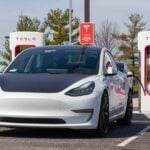
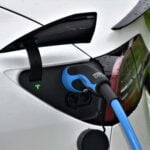
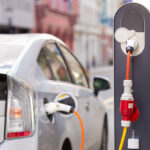
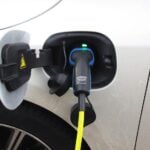
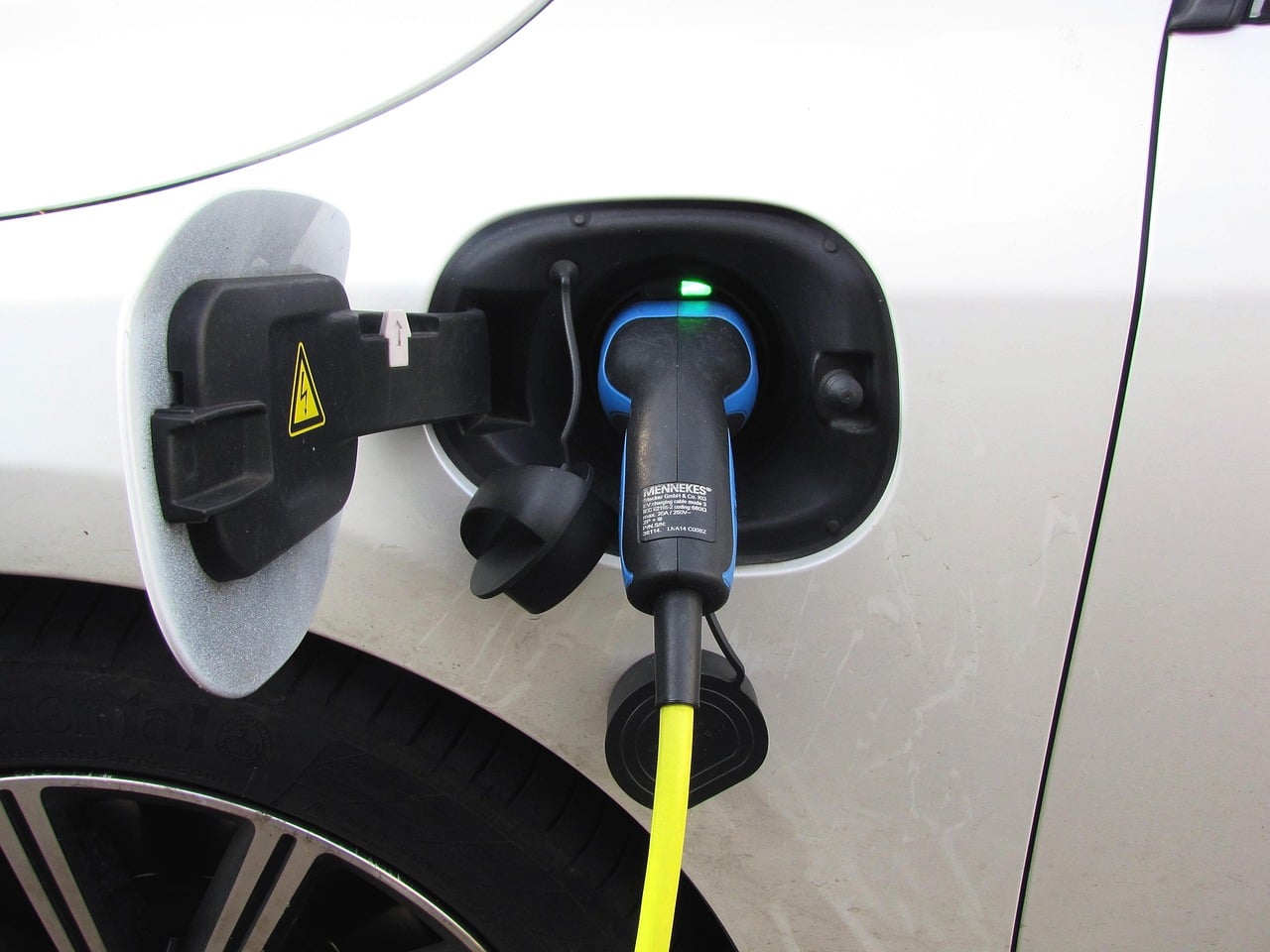
Just like you fill up a gas car with gas, you need to fill up an electric car with electricity. Electricity is a form of energy, and that energy is later used to generate power. Your electric car gets its charger based on the model and brand of car that you purchase. If you want to get into detail on that, here is a list of the various types of EV chargers. So yeah, you can begin by charging your vehicle at your home or a public charging station.
The charger sends electricity (AC) to the car through cables. Inside the car, there is a device called an onboard charger (OBC). An onboard charger converts the AC power from the charger to DC, which is then used to fill up the EV’s battery.
Inside the EV Battery Pack
While in traditional cars, fuel is stored in the fuel tank, electricity is the fuel in an electric vehicle. Just like your smartphone or laptop, an EV uses a large battery, which is made up of many Li-ion cells that can store much more energy than your smartphone. The capacity of the battery is measured in kilowatt-hours or kWh. Generally, an electric car with a higher kWh battery can travel farther than one with a battery with a lower kWh value. However, electric cars with higher capacity batteries naturally cost more. In simpler terms, more kWh means more miles.
What the Inverter Does
When you turn your electric car on and press the accelerator, the battery sends the electricity to a component called the inverter. An inverter is a device that is used to convert DC back into AC power. Most electric cars use an AC motor because they are more efficient at higher speeds, require lower maintenance, and have several other performance advantages. So, this AC power produced by the inverter is sent straight to the electric motor.
How the Electric Motor Moves the Car
The motor uses the AC power received to generate torque (torque is the turning force). This motor spins, and that torque is transferred to the car’s wheels, causing them to rotate.
The harder you press down the accelerator, the more electricity flows, thereby making the motor spin faster. Unlike gas cars, electric cars have no delay, and acceleration is instant and smooth.
How the Control System Manages the Drive
Like gas cars, electric cars also have a control system that takes readings from various sensors and makes sure that everything is working properly. Some of the most important jobs of a control system in an electric car are:
- Checking how much power the motor needs.
- Managing battery temperature.
- Preventing overcharging or overheating.
- Controlling traction and stability for a smooth, safe ride.
The control unit is a very important component in any car, whether electric or gas-powered. It’s called the brain for a reason. It’s like Doctor Strange: It calculates everything, makes the right choices, and gives you the best.
Capturing Energy Through Regenerative Braking
Regenerative braking is a common feature in most modern electric cars. When you brake or take your foot off the accelerator, instead of wasting that energy as heat, the electric motor turns in reverse and becomes a generator. The energy that would have otherwise been wasted is captured as usable energy and sent back into the battery. That means every time you slow down the car, your car’s battery charges up a little bit.
How It All Comes Together
This process continues as long as your car’s battery is charged. When it gets low, you plug your electric car in for charging, and the whole process happens again.
So, if you’ve ever wondered “how do electric cars work,” now you’ve got the full picture. This is how a fully electric car or a battery electric car works. Battery electric cars, or BEVs, run only on battery power, but there are several other kinds of electric cars too.
Other Types of Electric Cars
We have talked about fully electric cars, now let’s talk about the other types of EVs
How Plug-in Hybrid Electric Vehicles (PHEVs) Work
PHEVs are the next most common type of electric car out there. These are not fully electric; they add a gas engine alongside the electric system. They use electricity to travel short distances, and when the charge is over, they switch to the gas engine to drive longer. They still need to be plugged into a charger to refill the drained battery. Sometimes, performance cars use hybrid tech to produce an extra power boost and to give the car an instant torque boost, resulting in better acceleration and top speed.
How Hybrid Electric Vehicles (HEVs) Work
The main difference is that HEVs can’t be plugged in to charge the battery. Like PHEVs, HEVs also have a gas engine and an electric motor, but instead of plugging in to charge, the battery charges itself using the gas engine when needed, and also by using regenerative braking.
At their core, HEVs are gas-powered vehicles. They can go fully electric momentarily during slow drives, especially during traffic and city driving, to consume less fuel, and some vehicles also use them to improve acceleration. They can’t use electric motor for a long time and need to switch back to gas engines for extended drives.
How a Fuel Cell Electric Vehicle (FCEV) Works
Fuel Cell vehicles are electric cars that make their own electricity while you drive. Instead of plugging it in for charging you fill the tank up, but not with gasoline, but with hydrogen. FCEVs have a device called the fuel cell stack. Inside the fuel cell, the hydrogen combines with the oxygen from the air, causing a chemical reaction, which in turn creates electricity. That electricity is then transferred to the electric motor and from there to the wheels, just like a BEV. The end product of all this is just the water vapor that goes out through the tailpipe, making FCEVs zero-emission vehicles.
The catch, however, is that finding hydrogen stations is challenging and is rare in most places. However, if hydrogen stations are available, then you get a long driving range like a gas car, and the emission-free drive of an electric car, truly the best of both worlds.
How Did the First Electric Cars Work
Like I said at the beginning of this blog, electric vehicles have been around for as long as 140 years. Unlike current electric cars, these first-generation electric cars relied on basic technology to function.
Battery
They used rechargeable lead-acid batteries to store electricity. But these didn’t store much energy, were really heavy, and had a range of less than 50 miles. Charging took a lot of time, making them unreliable.
DC Motors
The electricity from the motor was used to power a simple and small DC motor. These DC motors were not at all powerful and wasted energy as heat. And the throttle control was done using a “drum switch” or a “knife switch,” and changing speed was pretty jerky, basic, and rough. You had to flip the switches to various positions to get different speeds.
The Drivetrain: Direct Connection
The DC motor was directly connected to the wheels via a simple gear or chain, like the ones on a bike. Unlike gas cars, these electric cars didn’t require a multi-speed transmission. The electric motor could start spinning right away, and it was simpler and easier to drive.
Body
These early electric cars looked like horse carriages because they were, in fact, horse carriages, with the horse deleted and an electric motor in place of it. They were usually made of wood, open-topped, and basic in design.
How They Drove
These early electric cars were quiet and smooth because they had no loud engine and a smoky exhaust. They were easy to start and drive, as no cranking and gear shifting were required. However, these electric cars were only good for short distances and were slow, which is why gas cars started to outshine electric cars by 1930.
There you have it. We have explained the workings of electric cars, from the early ones to the latest models, and even about fuel Cell EVs. You can bet that in the coming years, technology is going to advance exponentially. This will make it possible that in the future, EVs will be more capable than the current ones, with improvements in efficiency, range, and affordability. Owning an EV means a smaller carbon footprint and air pollution, reduced reliance on fossil fuels for energy, and ultimately, a better planet for the generations to come. So, the big question- are you ready to join the electric revolution?
Sources
- IEA (2025), Global EV Outlook 2025, IEA, Paris https://www.iea.org/reports/global-ev-outlook-2025, Licence: CC BY 4.0
- https://www.energy.gov/articles/history-electric-car
- https://evreporter.com/ev-powertrain-components/
- https://afdc.energy.gov/vehicles/how-do-all-electric-cars-work
- https://www.sunrise-ev.com/controllers.htm
- https://www.energy.gov/articles/history-electric-car
- https://afdc.energy.gov/vehicles/how-do-fuel-cell-electric-cars-work
- https://afdc.energy.gov/vehicles/how-do-plug-in-hybrid-electric-cars-work