P0420 is a diagnostic trouble code (DTC), which means your car’s catalyst system is not working as well as it should, i.e., below the threshold. Therefore, it is also called the ‘catalyst system efficiency below threshold’ code.
A P0420 code indicates that your vehicle’s computer (PCM) has detected a problem with the catalytic converter. The catalytic converter breaks down dangerous pollutants produced during the combustion cycle, lowering emissions from the exhaust pipe. While this code is not dangerous for the driver, they should fix it as soon as possible to avoid more issues, including a failed emissions test.
A car’s catalytic converter is a part of its exhaust system. It functions by converting the unburned fuel and carbon monoxide (CO) produced from the combustion process into carbon dioxide (CO2) and water (H2O). It also converts NOx (nitrogen oxides) to nitrogen.
The converter employs two oxygen sensors, one upstream and one downstream. If these sensors produce comparable results, something is wrong. When the Powertrain Control Module (PCM) triggers the P0420 code, the check engine light illuminates, alerting you to a catalyst problem.
Do note that several more circumstances could result in fault P0420. However, the code usually indicates a problem with the catalyst/emissions system.
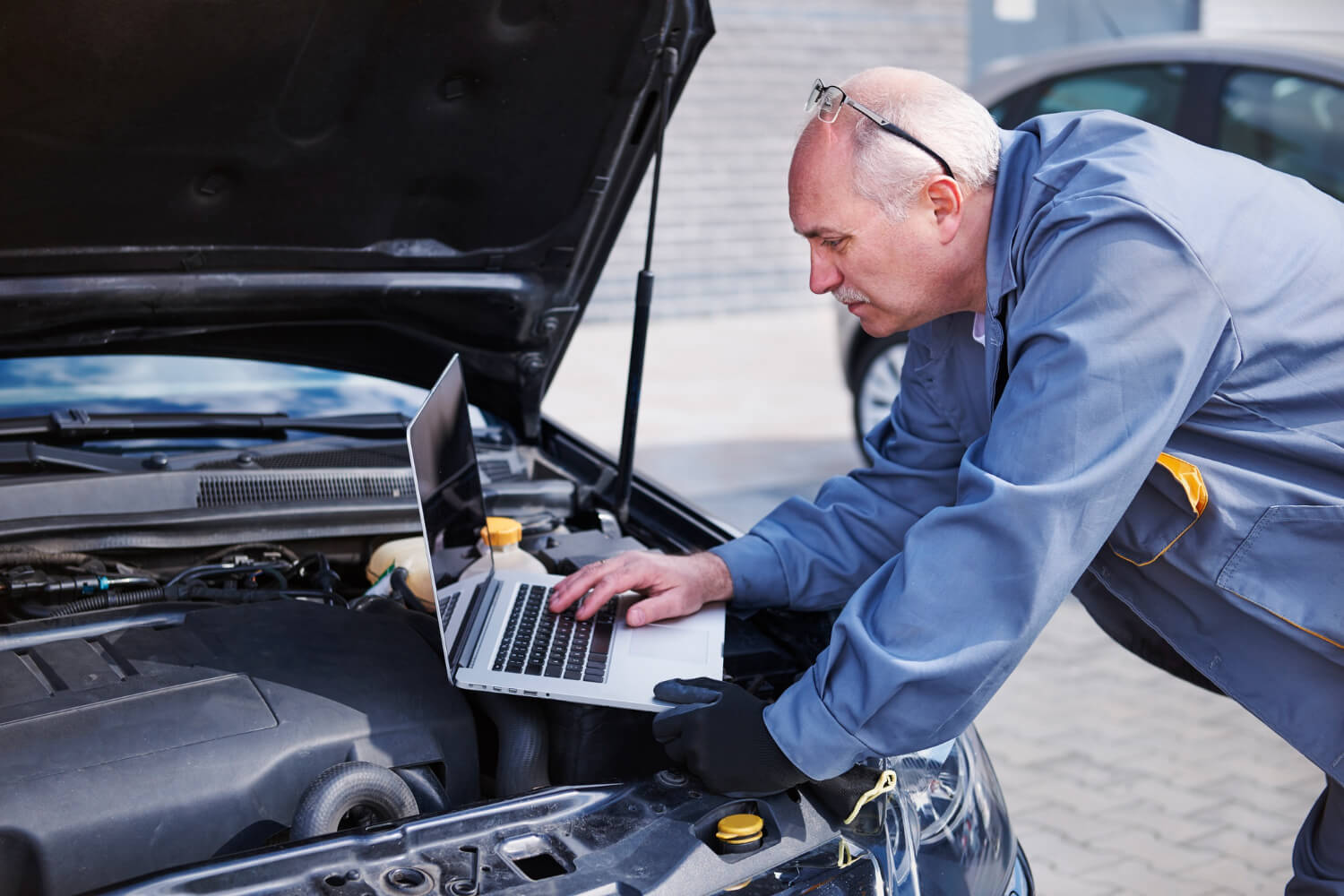
How serious is engine code P0420?
This engine code isn’t frequently a threat to driving safety. It is unlikely to cause issues of drivability or reliability. However, your engine may emit more dangerous pollutants because the bank 1 catalyst system is underperforming. As a result, together with the check engine light, you may not pass emissions inspections.
Like any engine problem, diagnosing and repairing the P0420 code as quickly as possible is the safest option. So we do not suggest you overlook these issues for weeks or months. Rather, it’s probably safe to continue driving with engine code P0420. Use your best judgment. Play it safe in case the automobile feels at risk or if there are other engine codes, major symptoms, etc.
Can you drive with a P0420?
Yes, it is safe to drive with P0420 present in most instances. Aside from the check engine light blinking, a person may not notice any substantial changes in how a car performs.
For example, if you detect the engine running lean, it’s advisable not to drive it or, at least, keep the throttle input and RPMs low. Lean engine operation may put the engine in danger of more significant issues. Driving with insufficient power and other drivability difficulties might also endanger one’s safety.
How to diagnose code P0420
Here are the steps to troubleshoot and diagnose the P0420 engine code:
- First off, make sure that code P0420 is the only issue.
- Clear it and drive for about 15 minutes. Check and see if the code has returned. If not, repeat the process a few times just to be sure. If DTC P0420 appears, there is a genuine problem.
- Examine the exhaust system for any physical damage, holes, rust, or other potential leaks. Don’t forget about the exhaust manifold, a common source of leaks.
- Examine the voltage value from the O2 sensor. On most engines, standard readings should be about 0.4 to 0.5 volts. If it’s dramatically off or bouncing about, it’s likely due to an issue with the catalytic converter.
- Engines occasionally experience minor problems, and fault codes occur at random. In these circumstances, just clear and delete the code to resolve the issue. Otherwise, it’s time to figure out what’s triggering DTC P0420. The techniques outlined above are fairly successful for exhaust leaks and cat failure. However, if you’re receiving additional engine codes, you’ll need to be more creative and problem-solving.
What are the signs of a P0420 code?
The most common sign of a P0420 code is the switching on of your check engine light. Second, your engine won’t operate as smoothly as it usually does, which may prevent you from exceeding 30 to 40 mph.
This is due to a decrease in engine power output. You may also detect a rotten egg odor coming from the exhaust. This also occurs when the catalytic converter is used in excess or outside normal driving conditions.
What are some possible causes of a P0420?
A malfunctioning catalytic converter is the usual suspect for a P0420 code. Some more possible causes are:
- Damage to or leakage from the exhaust manifold
- Damage or leaking in the exhaust pipe
- Engine misfire
- Contamination of catalytic converter oil
- Sensor for engine coolant temperature that isn’t working properly
- A malfunctioning oxygen sensor in the back or front
- Damage to the oxygen wiring
- The O2 wiring has a loose connection
- Leaking fuel injectors
- Excessive fuel pressure
- Using the incorrect gasoline type in your car (i.e., leaded instead of unleaded fuel)
How hard is it to examine a P0420 code?
Before you begin any repairs, you must correctly diagnose the P0420 error code. Most service technicians will use an OBD-II scanner to acquire the specific code displayed by the Power Control Module (PCM).
If the downstream oxygen sensor voltage drops and fluctuates like the voltage of the upstream oxygen sensor, it is a sure sign that the oxygen levels are too high, and the PCM will display the P0420 code.
However, if there are no evident abnormalities with the upstream and downstream oxygen readings, the mechanic will check for engine misfires, ignition problems, and even faults in the fuel system. The mechanic may also inspect the rear O2 sensor for excessive wear or damage.
An expert will test drive the vehicle and monitor the freeze-frame data. This enables them to establish whether or not the back O2 sensor is functioning properly. Finally, we recommend updating the PCM to the most recent version in case something is wrong with it. It’s not uncommon for an out-of-date PCM to be the source of your vehicle’s problems.
How much does a DTC P0420 repair cost?
The cost to repair DTC P0420 changes greatly depending on the diagnosis. If it’s a minor exhaust leak, you may be able to weld the holes yourself without incurring any expense. However, Catalytic converters can be costly. P0420 repairs may cost anywhere from $10 to $2,000 or more.
Can I repair the code P0420 at home?
You certainly can repair the P0420 engine code at home. But there’s a hitch – it is absolutely essential to correctly diagnose the problem before proceeding with any modifications. Depending on the source of the problem, you may need to:
- Change the catalytic converter.
- Replace one or both O2 sensors.
- Replace the wiring or connectors for the O2 sensor.
You may also need to repair or replace the muffler, update your car’s software, or replace any leaking exhaust system components. If you’re unsure what repairs your automobile requires, take it to a professional for a comprehensive diagnostic inspection and repairs.
How do I fix the error code P0420?
P0420 is a typical error code caused by exhaust leakage. First, examine the exhaust system for evident damage. Welding it can be a simple and inexpensive solution. However, if your exhaust system is in bad general condition, it will likely only be a temporary repair. After that, it could come down to the necessity for a new exhaust system, exhaust manifold, etc.
Here’s a step-by-step guide to fix the P0420 error code
Step 1 – Fix other codes
First, resolve any other codes that may have come up besides the P0420; the P0300 series of cylinder misfire codes are especially troublesome. A P0300 code may indicate a problem with the ignition system, such as the spark plug or coil, issues with the fuel injector, low compression, or fuel contamination.
Step 2- Check and resolve exhaust system leaks
Pressurize the exhaust system with compressed air and spray soapy water around suspected areas. Once identified, fix it using exhaust tape, epoxy, gasket replacement, tightening loose bolt/s, or cutting a portion out and joining it with new pipe and clamps.
Step 3- Check for cylinder imbalance
If one cylinder is running lean while the other cylinders are running rich, it indicates that the engine has an imbalanced power output. This, in turn, can create excessive emissions by simultaneously raising hydrocarbon and nitrous oxide output. Most advanced diagnostic scan tools can run a cylinder imbalance test, but there is another way to check for cylinder imbalance. Simply scope the ignition pattern. Generally, cylinders with short burn lines indicate lean cylinders.
Step 4- Check your spark plugs
Another cause of high emissions is worn-out or faulty spark plugs. Most modern vehicles have iridium spark plugs that last a long time. These spark plugs help meet strict emissions standards and can last 80,000 miles or more. These long-lasting iridium spark plugs are sometimes replaced with spark plugs made of other materials, which may not last as long. When a spark plug begins to fail, it can increase emissions. While doing this, make sure to clean your catalytic converter efficiently.
Will the P0420 code clear itself?
Ideally, it should clear itself once you have rectified the root cause of the problem. If you don’t have an OBD-II scanner to clear the error code, it should get automatically cleared in a couple of drives.
Can P0420 cause a car not to start?
The PCM will record the P0420 code, which may cause your car not to start. This happens because the voltage of the downstream oxygen sensor drops and begins to vary like the upstream oxygen sensor when the oxygen levels are very high.
Can bad spark plugs cause P0420?
When the error code activates, it signifies either a problem with the oxygen sensors or a problem with the catalytic converter that decreases efficiency. A defective spark plug may enable unburned fuel to enter the converter, causing damage over time.
Can dirty fuel injectors cause P0420?
A false P0420 code may activate if defective fuel injectors in one or more cylinders are affecting combustion. If necessary, replace the fuel pipe and injector sets.
How long does it take for P0420 to reset?
The car’s PCM will reset the code after a fixed interval, during which it rechecks all of its sensors. After around 10-20 cycles, the reset may happen automatically. A cycle is a phase in which you turn the ignition on and off.
Can an exhaust leak cause a P0420?
Yes, this engine error code can be caused by an exhaust leak.
Can a blown head gasket cause P0420?
A blown head gasket could cause code P0420. When the head gasket gets blown, coolant leaks into the exhaust.