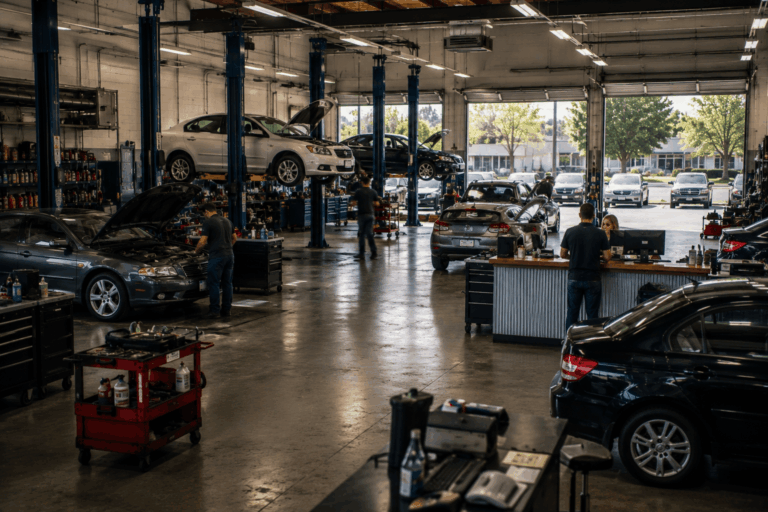
You’ve done everything from spending thousands of dollars on ads to putting up posters around town, but it’s still not enough to fill your empty bays. Here’s something you may have overlooked: online marketplaces.
How does an auto repair marketplace work?
The auto repair industry has always had a trust issue. How can someone count on a business they haven’t heard of before to give them the right diagnosis for their car and confirm whether the repair is reasonably priced?
They can go through your website, but your customers have to discover it first. Online marketplaces solve that problem. Your shop will be visible to more customers without you putting in much effort. There are also several other advantages to marketplaces:
- When a customer sees a badge that says “RepairPal Certified,” they’re more likely to trust your shop without needing additional proof because it acts much like a recommendation from a friend.
- Every customer wants to know how much repairs will cost. If your estimates and quotes can be found online, your customers will not second-guess whether the prices are fair. Providing exact prices will be difficult because not every repair is the same, but you can offer a ballpark and mention that these prices may vary.
- With a marketplace, customers can type in their vehicle’s issue and neighborhood to quickly receive a list of vetted options, including yours.
What are some examples of marketplaces?
There are quite a few auto repair marketplaces today, but here are a few common ones that you may have already heard of:
RepairPal is one of the largest certified-shop networks available today. RepairPal has partnerships with credible brands like CarMax and USAA, so your potential customers are directed to a platform that they already trust.
Openbay is another popular online marketplace. According to Openbay’s website, once you apply to become a member, your shop becomes visible to nearby drivers looking for repair services. Openbay gets a flat-rate booking fee when the platform brings you a new customer.
YourMechanic was acquired by Wrench, so if you see both names online, know that they’re now the same company. YourMechanic connects drivers with mechanics for on-demand and mobile services.
Google Business Profile, Maps, and ads are actually marketplaces, even though nobody calls them that. They’re considered marketplaces because it’s usually the very first place drivers look the moment their “check engine” light turns on.
AI search platforms are comparatively new. More drivers are starting their searches by asking AI tools like ChatGPT or Google’s AI Overviews instead of typing queries into a search engine. Getting discovered through AI search is something you need to start paying attention to if you haven’t already.
The problem with having two systems
You probably already have a shop management system running in the background, and now you’ve started using a marketplace to get more customers. That’s a good move!
Now comes another problem. If you have your software open in one tab and a marketplace in another, you have to copy the leads manually, which only makes your work more difficult. But what if your shop management software could get you customers in a way that creates a win-win situation? That’s exactly what Way Repair Tech is for.
How does Way Repair Tech help?
Arnold Gold, EVP of the Repair and Maintenance Division at Way, noted that traditionally, shop management systems helped shop owners manage their operations but failed to generate new customer leads. Way Repair Tech connects local repair shops directly to car and fleet owners who already use Way.com for parking, fuel, car washes, insurance, refinancing, and roadside assistance. “Way already connects millions of drivers to car services every day, and now we can refer them to your Way-powered shop.”
You can’t always rely on a customer already knowing your shop’s name. Instead, Way Repair Tech puts your business in front of local drivers searching for repair or maintenance shops in their neighborhood, much like how a diner discovers a restaurant through a delivery app rather than a roadside billboard.
It doesn’t matter how many drivers see your shop if they don’t book appointments. Since Way is the same platform running your business, a driver can book directly on your calendar without multiple phone calls or you having to manually add their information into your system.
Not every shop that appears in a marketplace search gets equal visibility. Way’s Marketplace Boost highlights your shop in front of the drivers who are most likely to book by placing priority listings on Way.com, so instead of hoping a driver scrolls far enough to find you, you’re one of the first names they see.
Why marketplaces are becoming more useful
If you feel like your ad dollars aren’t getting you more customers, you’re not imagining it. Each customer you’re getting through paid ads costs you more money every time, and the second you stop paying, the traffic you used to get stops too.
A marketplace that comes with your shop software works differently because you’re not bidding for a driver’s attention from scratch. You become part of a network of drivers who are actively looking for repair shops.
What’s the biggest takeaway?
Wondering whether this is worth the investment? Here’s a simple way to think about it. Most shop owners focus on only one thing when it comes to shop management software: “Does it save me time?” You need faster estimates, fewer manual steps, less time spent organizing paperwork, and real-time reports. A system that only saves you time can still leave your bays empty on a slow day.
What about a system that also brings you new customers and lets you actually track what those customers are worth over time? They’re doing both jobs at once.
So next time you’re looking at your software, don’t just ask, “How much time does this save me?” Ask, “How many of my bays does this actually help fill?”
Want to see how Way Repair Tech gets you found by drivers that’s already on Way.com? Schedule a demo!
FAQs
The cost actually depends on the platform. Some marketplaces are completely free, while others are free to start but ask for a recurring subscription fee once you’re officially part of their network.
The results vary but most shops see a difference in the number of customers they get within a few weeks.
Local SEO relies on your website and Google Business Profile which takes time to take off. With a marketplace, you become a part of a network that has earned trust already.