Regularly refilling transmission fluid is essential for your car. Transmission fluid leaks can lead to severe engine damage. It is important to check your manual transmission fluid (MLF) levels periodically to prevent this. Read below to learn how to check manual transmission fluid (MLF).
Manual transmission fluid (MLF)
An anti-wear and anti-scoring ingredient blend, transmission oil has an excellent thermal oxidation resistance. For instance, heavyweight hypoid gear oil or even automatic transmission fluid can be used in manual gearboxes, as can normal motor oil in others. Above all, transmission oil is primarily responsible for lubricating the hypoid gears in manual and automatic gearboxes.
When should transmission fluid be checked?
A manual transmission car’s transmission fluids are different from those of an automatic transmission car. Therefore, check it differently. The driver can swap gears in a manual gearbox with the help of internal gears, bearings, and synchronizers. Heavy petroleum-based oils are commonly used to lubricate manual gearboxes. When the lubricating characteristics of this oil degrade, the driver may have difficulty shifting the gearbox into gear.
The transmission fluid level should be checked between service intervals on a regular basis. Leaving the transmission fluid in your car to dry out might cause it to shift incorrectly or not at all. The lack of lubrication in the interior elements of your transmission might also cause damage. Transmission fluid leaks can go undetected for a long time, even if you hear noises or see other signs.
Things you will need
- Fluid pump
- Jack and Jack stand
- Ratchet with sockets (standard and metric)
- Torque wrench
- Transmission fluid
- Wheel chocks
How to check manual transmission fluid (MLF)
Prep for checking
- First, place the wheel chocks behind the back wheels and secure them.
- Next, raise the front of the car one side at a time using the hydraulic floor jack on the manufacturer’s recommended jacking points.
- Lift the car just enough to allow you to safely get underneath.
- To keep the car safe, use jack stands. Follow the car maker’s instructions to place the jack stands under the car and gently lower the car onto them.
Checking and reinstallation
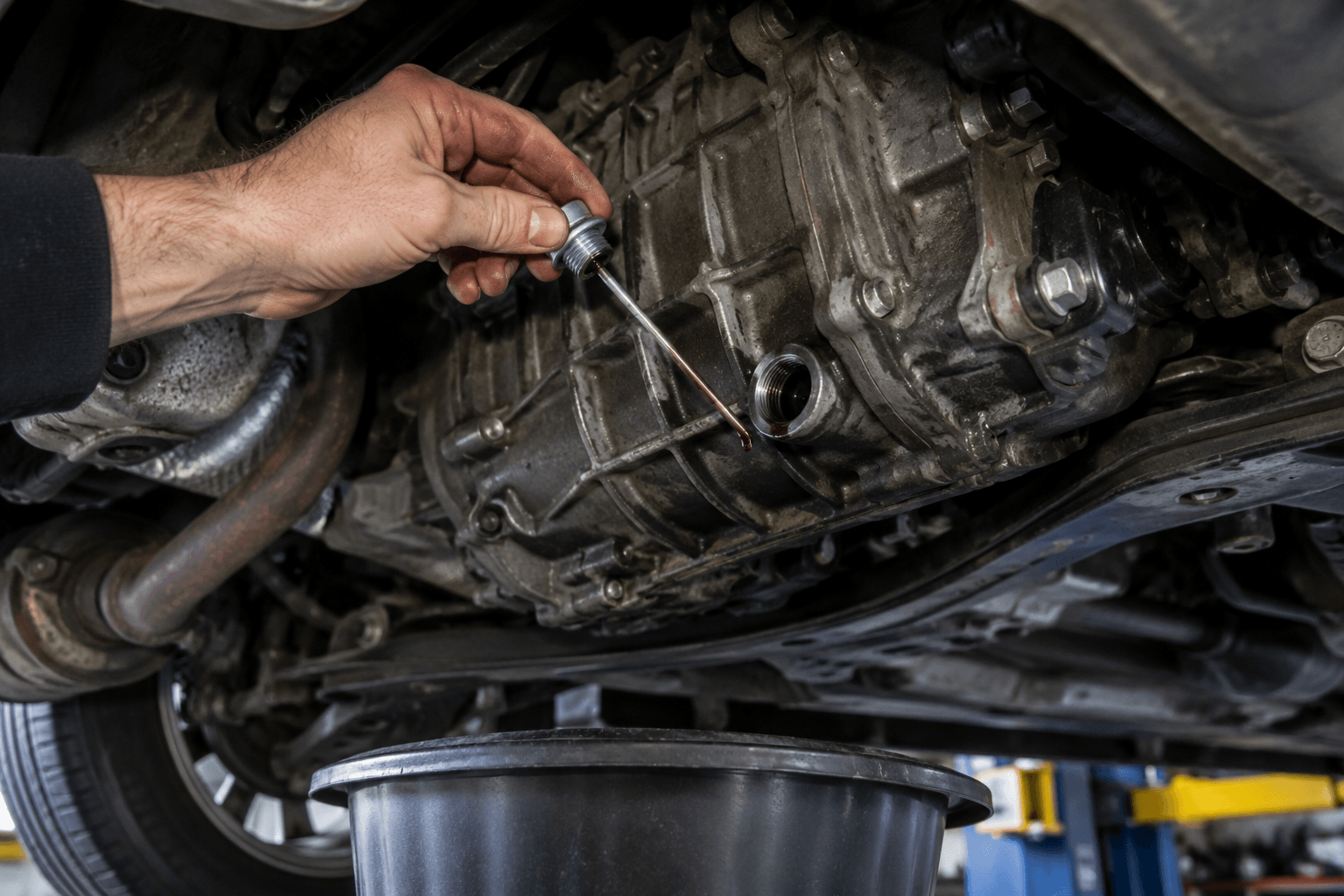
- Identify and locate the fluid fill plug. It’s not uncommon for the filler plug to have a huge bolt that protrudes from the side of the transmission around halfway up.
- Take out the plug where you add fluid. Use a tool that fits well on the plug to do this.
- Check that there’s enough fluid. Follow your car maker’s guide to know how much you need.
- You can check the fluid level through the plug hole. Put your finger in the hole and see if you get fluid on it. If you do, the fluid is low. If the fluid is at the hole, you don’t need to add more.
- Next, add transmission fluid. You can do this by using a pump to put fluid in through the plug hole.
- Check the fluid level again and again until you have enough.
- Finally, remove and reinstall the filler plug, tightening it to the manufacturer’s recommendations. Lower the car to the ground. To lift one side at a time, use your floor jack.
It is important to know how to check and refill your transmission fluid to prevent future issues with your vehicle’s gearbox. If you are unsure about your vehicle’s transmission system or do not feel confident in refilling the fluids yourself, seek assistance from professionals.