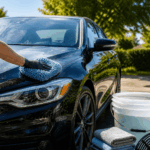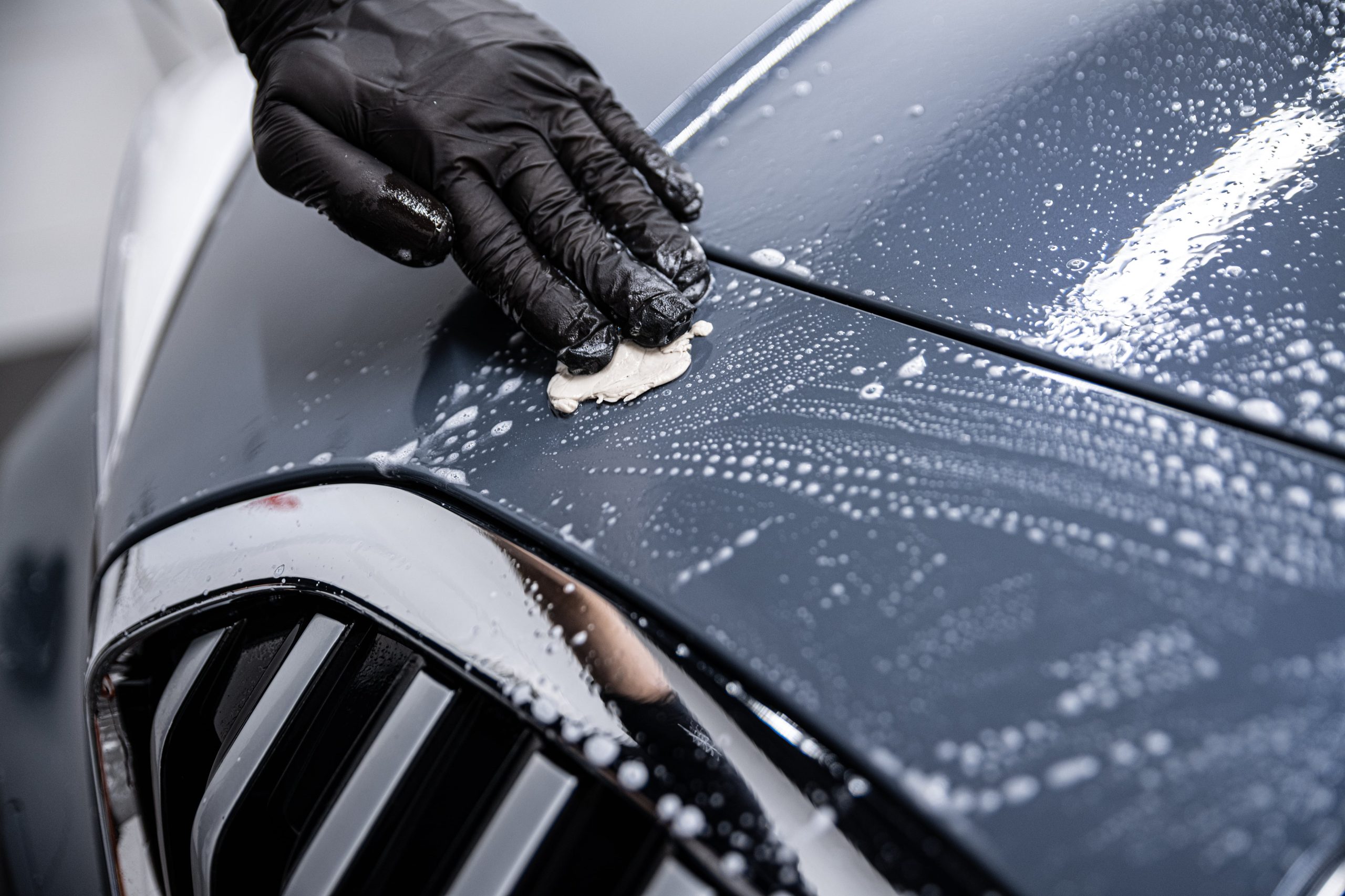
You might be aware that clay is good for your skin, but did you know that your car’s paint also appreciates it? Yes, you read that right. Your car LOVES clay. Clay bars are great for your car’s paint. A clay bar treatment is an excellent choice if you are looking to enhance the luster of your car or just planning on restoring the paint of an older model. Read on as we’ve compiled everything you need to know about clay bar treatment.
What Is Clay Bar Treatment?
A clay bar treatment removes dirt and pollutants from your car’s surface. Common contaminants include rail dust, sea salt, brake dust, and industrial fallout. These substances can damage and wear down your car over time. Even after washing and polishing, dirt and other substances can still stick to paint, glass, and metal. It’s not just dust that causes problems; being exposed to sunlight for a long time, tree sap, and bird droppings can also harm the clear coat and paint. This is where the clay bar treatment comes into play.
How to see if your car needs a clay bar treatment?
If you feel that the surface of your car is bumpy even after a car wash, then your car certainly needs the clay bar treatment. It will ensure that the particles will stick to the clay lubricant that is used and will leave the surface clean without damaging the clear coat.
Using detailing clay appropriately ensures that it is nonabrasive and safe at all times. As a matter of fact, it is far less abrasive than either polishing or buffing.
What is the process?
Resin in car detailing clay bars is used to remove contaminants from the areas they are used to clean up. The clay bar scoops up everything that extends from the car’s surface as it is gliding over it. Eliminating confinements by adhering the dust and debris to the clay is more effective.
You should always use a lubricant or detailer spray before you begin claying. The lubrication prevents your automobile from being scratched by loose particles. Clay is preferable to polishing because it is nonabrasive. Because polishing can remove a thin coat of paint, clay is preferable to polishing.
How often should you use clay bar treatments?
We recommend claying twice a year, but if you’re confident in your technique, it’s OK to do it whenever you choose.
How to Choose the Best Clay Bar for Your Car
Many types of clay bars are available, ranging in price from free to expensive. However, aggression is the most important thing to consider when purchasing a clay bar for the treatment. As a general rule of thumb, clay bars can be classified as either “consumer-grade” (medium-grade) or “professional-grade” (fine-grade).
Consumer-grade clay bars are milder than professional-grade clay bars, but they will take longer to clean heavily dirty surfaces. The fine-grade bars are more successful in removing dirt, but they are also more prone to scratching your paint. If you have a lot of claying expertise and know what you’re doing, we recommend purchasing professional-quality clay bars (fine grade). Even while fine-grade bars are better at removing dirt, you run the risk of damaging your paint if you use them on it.
The clay bar has to be stored properly to get the best results. You may either keep the clay bar in its original container or in a zip-top plastic bag that has been sealed. The lubricant should be sprayed on to keep it moist. Avoid storing the clay at temperatures higher than 200 degrees Fahrenheit and avoid allowing it to freeze.
Things You’ll Need for the Treatment
Clay bar
Clay bars typically range in size from 2 to 8 ounces. 2 ounces of the product can easily cover 3 to 4 cars. A single 2 oz. A clay bar should last you between 18 and 24 months if used on the same vehicle.
Microfiber towel
For vehicle detailers, microfiber towels (also referred to as microfiber cloths) are vital equipment. There are now more microfiber towels to choose from for a variety of uses. Choose the more convenient for you. Keep multiple ones handy.
Lubricant or Detailer spray
Using a detailer spray or lubricant before beginning the claying process is vital. So that the clay bar doesn’t adhere to the surface or harm it with debris, the lubricant forms a thin coating over the surface. Without lubrication, clay is also more difficult to work with since it doesn’t slide around the work surface as easily.
Clay lubricant is available in two varieties: quick detailers and a mixture of water and shampoo. We recommend spraying the water and shampoo solution with a detailing spray. The clay bar may be damaged by the solution, resulting in the need for more clay. In order to make the clay bars glide more easily across a variety of surfaces, the detailer sprays were developed to work in tandem with them.
How to Use a Clay Bar
- Thoroughly clean your car: In order to remove the majority of the contaminants from the surface, thoroughly wash and dry your car.
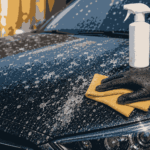
- Carefully use detailer spray over the surface: Begin by using the lubricant or detailer spray on smaller areas of your car. Keep the sprayed areas no more than 2 feet away from one another.
- Glide the clay bar: The next step is to carefully move the clay bar across the oiled surface. You may expect the clay to be pulled off the surface as it removes all of the impurities. You can tell if the area is clean if you can feel the clay sliding over the surface.
- Check the efficiency of the clay bar: Keep an eye on the clay to make sure you’re utilizing a fresh side at all times. Fold the clay a few times, press it, and then straighten it once you’ve utilized both sides. You may now proceed, but make sure you keep an eye out for anything that could scratch the paint on your automobile. Start again with a new piece of clay if the clay becomes discolored or rough.
- Ensure the quality of your work: Wipe the area with a microfiber towel when you’ve completed claying. The lubricant can also be used to remove any remaining clay. Slide your fingertips over the paint to see if it’s clean. It’s perfect if it’s smooth. Re-claying that region will be necessary if it’s not. Re-lubricate as necessary.
- Wax your car: Use wax to seal the deal. There will be no corrosion on the paint as the wax fills up any voids.
Is It Advisable to Do a Clay Bar Treatment at Home?
Preferably, NO. The process appears simple and easy to do in the comforts of your home. But this entire process needs precision and experience. It’s best to leave it to the professionals.
Commons Queries
How much does a clay bar treatment cost?
It will cost between $50 and $100.
Is clay bar treatment worth it?
If you would like to improve the overall look of the car and maintain it by removing the dirt and grime, then a clay bar treatment is certainly worth it. It will leave the surface smooth and will give it a cleaner look.
How long does a clay bar treatment last?
The longevity of a clay bar treatment typically ranges from six months to a year, based on the level of contamination present on your car’s surface. However, after 6 months, you can check if your car needs the treatment by gliding your hand across the surface of the car. Consequently, a smooth texture indicates a clean, clear coat, while any detected bumps signify the presence of contaminants, indicating a clay treatment.
Does a clay bar remove scratches?
Since the clay bar doesn’t contain abrasives, it won’t remove scratches. However, it can clean the dirt and give a smoother finish.
Is waxing after a clay bar treatment necessary?
Yes, waxing after the clay bar treatment is essential to provide the finish.
Should I remove wax before the clay bar treatment?
It is not necessary to remove the wax before the clay bar, as the clay will itself remove some of the wax. However, waxing should be done to ensure a smooth finish after the treatment.

Renée Martin is a travel and car expert who focuses on road and air travel in the U.S. For the past 6 years, she’s been helping make driving and trip planning easier and budget-friendly for everyday travelers.