Running an auto repair shop keeps getting harder. Vehicle systems get more complex, and profit margins continue to get smaller, while customers expect more from you. That is why you need to opt for smarter ways of working, like adopting shop management software. Today, a shop management software is more than just a “nice to have” tool. It is a strategic necessity.
Those of you who are already using a legacy shop management software might be feeling limited. You might be dealing with a broken workflow or too much manual work. The new generation, all-in-one shop management software platforms available today address many of these limitations. Read on to find out what to look for when upgrading.
What is shop management software?
An automotive shop management software streamlines operations. It handles everything from customer management to payment processing. In the early days, shop management software platforms only focused on replacing paper orders and whiteboards and digitizing manual processes like invoice creation. But in 2026, they do so much more.
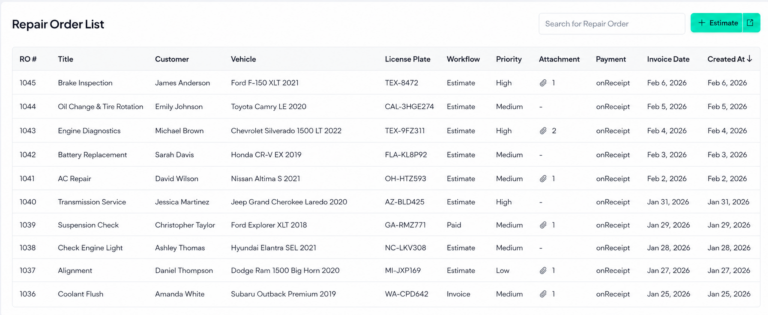
Modern shop management systems do not just solve single problems. They now function as a unified system that connects every task in your auto repair shop’s workflow. They are not just about simple record keeping anymore. They integrate different aspects like repair orders, parts inventory, customer communication, technician workflows, reporting, etc., into a single platform.
According to PartsTech’s 2025 State of General Auto Repair Shops report, 28 percent of U.S. repair shops now rely entirely on a shop management system. That figure represents a 47 percent increase compared to 2023.
This increase in the adoption of SMS clearly shows the negative impact of using separate tools. Shops that rely on systems needing manual updating report significantly slower turnaround times. Research shows that manual handoffs between tools can improve job completion times.
Repair costs for cars have gotten more expensive for customers, but auto shops aren’t making more money. That is because shops are spending more on skilled labor, costly spare parts, and daily expenses of running the business.
Another main reason is the growing pressure in the auto repair industry. The way repairs are done has changed as more electric vehicles, ADAS, and connected car technologies are now being used. These modern vehicles require real‑time updates to repair steps, calibration, and diagnostics. Old, static systems or tools cannot handle these requirements.
What does a streamlined shop workflow look like?
An all-in-one auto repair shop management platform makes work easier from start to finish. Customers can book online, and the system shows vehicle history right away. Jobs are assigned to technicians with mobile or AR-guided workflows to minimize errors. Customers can easily approve work and sign digitally, speeding up the process. When the job is done, invoices are auto-generated based on the parts and labor data that are collected, and payments are easily processed. After the service, the system sends follow-up messages and loyalty offers to bring customers back. In this way, manual entry, delays, and paperwork are significantly reduced.
Why does a smooth workflow matter?
Shops that use tools that do not work together lose a lot of time and effort. Research shows that entering data manually and gaps in the work process can make jobs take 25% longer to finish. On the other hand, all-in-one shop management systems that work together can lower the number of mistakes by up to 31 percent while helping technicians get paid for more hours. These improvements come from fewer interruptions, live updates, and better teamwork.
Using a single platform for all tasks makes the process easier and removes delays between steps. This no-stop workflow leads to faster job completion, less office work, and better output.
Core capabilities checklist
When choosing a new shop management software, it is not just the features that you need to consider. What really matters is whether those features make work easier, save time, and help your business grow. The following key features set modern shop management software platforms apart from older ones.
All-in-one repair order management
Having a single system for price quotes, checks, approvals, billing, and payments cuts down on paperwork and delays. Linking every step of the process prevents mistakes caused by using separate tools. Shops with fully connected shop management systems have reduced the time to finish and bill a job by 31 percent, which helps cash flow and proper use of work bays.
Mobile‑first technician tools
Modern workflows let technicians stay on the shop floor instead of being stuck at a desk. Mobile tools give them access to work orders, inspections, and approvals right from their devices, even without a strong internet connection. Research shows that 68 percent of technicians prefer mobile tools that work offline and save and update automatically, making their work faster and smoother.
Smart inventory and parts integration
Knowing what parts are available in stock is key to quick repairs and good profits. Software that updates available parts, prices, and orders instantly helps avoid delays and costly mistakes. Studies show that automatic stock updates can reduce wrong orders by up to 44 percent, especially where updates are usually done by hand.
Automatic customer communication
Updating customers automatically through text message and getting digital approvals reduces phone calls. It makes things clearer and speeds up the process. Customers are more likely to say yes when they get direct, timely updates. Shops that are using these tools see approval numbers rise by 22 percent, thanks to faster replies and more trust.
Multi‑location oversight
For businesses with multiple shops, it is crucial to have a single screen view of every location. Dashboards that collect data from all locations save time on reports and help you make decisions faster. Having all reports in one place helps you track multiple locations. It also cuts the time spent making reports by up to 60 percent.
Conclusion
If you are looking at systems that effortlessly manage the full job from start to finish, explore how Way Repair Tech provides solutions.
Shop management software is no longer something simple that replaces paperwork with digital records. It is now an all-in-one system that manages the whole repair business. When every minute matters in the shop, your software should work just as hard as your team.