Can you jump cars in the rain? A guide for mechanics and roadside crews
It's raining and one of the best customers your garage has needs a jump-start. But can you or one of your techs really go out and jump a car in the rain?
October 20, 2026 · Rajeswari MenonLinkedIn profile of Rajeswari Menon · 11 minutes read

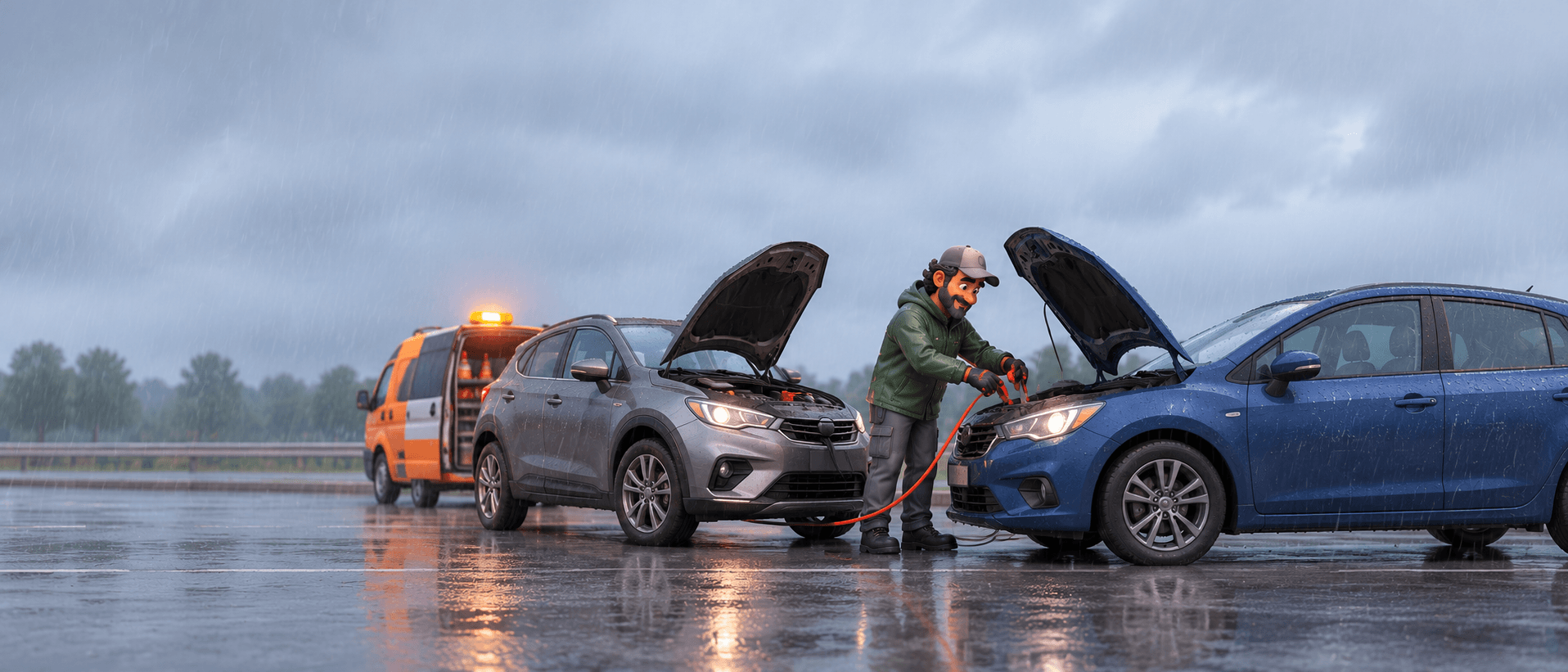
It’s raining cats and dogs when the call comes in. Amanda is stuck on the interstate and needs a jump. She’s one of the best customers your garage has, and you can’t really leave her stranded. But can you or one of your techs really go out and jump a car in the rain?
Here are the facts. Just because it’s raining, it doesn’t mean you can’t jump-start a car. But it does mean mechanics and roadside crews need to pay closer attention to the vehicle, their equipment, and the conditions around them.
Most car batteries are 12-volt and don’t usually pose a big risk of electric shock. Still, jump-starting isn’t risk-free. If you connect things the wrong way, you might get sparks, burns, or damage the car’s electrical system. Lead-acid batteries can also give off explosive hydrogen gas and have corrosive acid inside.
Before you connect jumper cables in the rain, look over the area, check the battery and your equipment, and review the vehicle manufacturer’s instructions.
Is it safe to jump-start cars in the rain?
In most situations, yes. Rain by itself doesn’t stop you from jump-starting a regular 12-volt car battery. Still, wet weather can make roadside work more dangerous, especially if there’s traffic, low visibility, standing water, or storms.
Before starting, check the following:
- The location: Make sure the vehicle is positioned safely away from moving traffic. If the roadside is exposed or visibility is poor, check to see if you can relocate to a safer area.
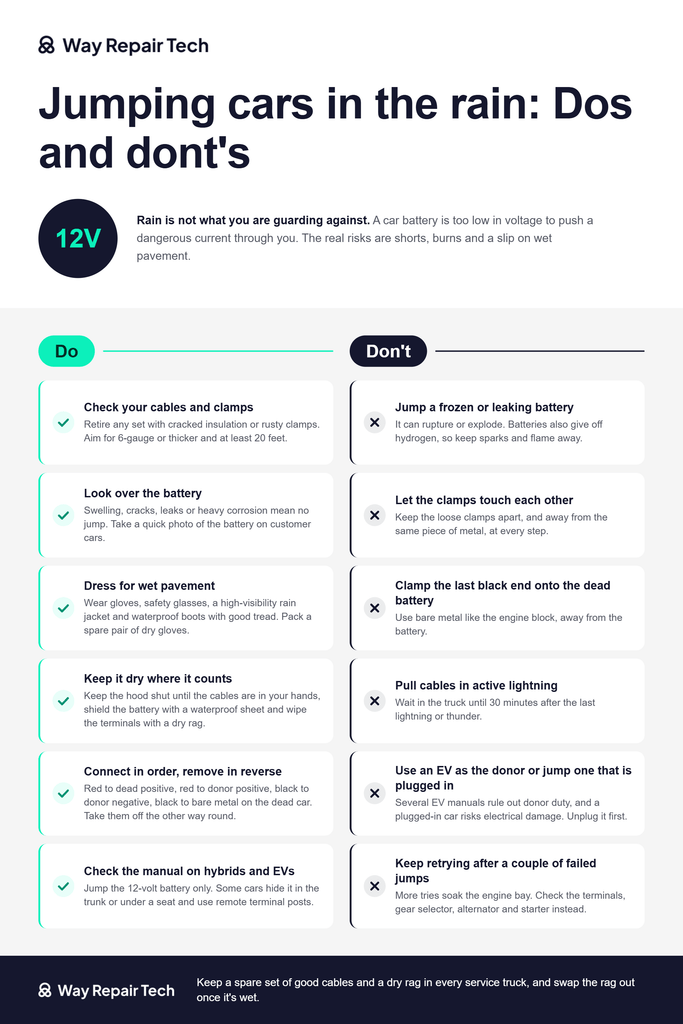
- The battery: Look for cracks, swelling, leaks, or other signs of damage. Do not attempt to jump-start a damaged battery, especially when it’s raining or drizzling.
- The connections: Check the battery terminals, cable clamps, and insulation for corrosion, damage, or exposed conductors.
- The equipment: Use a jump starter or jumper cables rated for the vehicle and suitable for the conditions. Follow the equipment manufacturer’s instructions.
- The weather: Stop work if lightning threatens the area. A covered shop canopy or open-sided shelter is not adequate protection from lightning.
Just because the vehicle’s exterior is wet doesn’t mean it’s unsafe to jump-start. Consider the battery’s condition, your equipment, what that particular vehicle’s instructions say, and most importantly, listen to your gut. Whether you can work on it or not is your call.
What equipment should roadside crews carry?
Roadside crews need gear that stands up to frequent use, changing weather, and different kinds of vehicles. The best setup depends on the types of vehicles you usually work with.
Jumper cables or a portable jump starter
Choose cables with adequate current capacity for the vehicle you plan to work on. They should have insulated clamps and undamaged insulation. Longer cables can provide more flexibility when positioning vehicles, but that shouldn’t come at the expense of cable capacity.
Portable jump starters mean you don’t always need a second vehicle close by. Choose one that’s rated for the vehicles you service, and always follow its instructions, especially in wet weather.
Check the equipment before every shift. Look for damaged insulation, loose clamps, corrosion, and other signs of wear. Do not use equipment with exposed conductors or that is damaged.
If your device has an IP (ingress protection) rating, check what it really covers. An IP rating doesn’t always mean it’s safe to use when wet, submerged, or in all weather conditions.
Personal protective equipment
Roadside work calls for more than a pair of gloves. Depending on the conditions and task, crews should carry:
- Protective eyewear to guard against battery acid and debris.
- Suitable gloves for handling equipment and working around the battery.
- High-visibility clothing appropriate for roadside conditions.
- Weather-appropriate clothing and footwear with good traction.
Always keep extra dry gloves and protective gear in your service vehicle. Replace anything that’s wet or damaged so you stay protected on the job.
How to inspect a battery before jump-starting
Don’t jump-start every car that won’t start right away. Always check the battery first.
Do not attempt a jump-start if the battery is cracked, leaking, swollen, or frozen. A damaged or frozen battery can rupture or explode during charging. Lead-acid batteries also contain corrosive sulfuric acid and can release hydrogen gas, which may ignite if exposed to a spark or flame.
Before you start:
- Check the battery case to see if there are cracks, swelling, leaks, and other visible damage.
- Make sure the terminals and connections are not corroded or loose.
- Check for any damaged cables, exposed conductors, and signs of overheating.
- There should be no flames, smoking materials, or other ignition sources near the battery.
- Make sure that you check the type of battery and the voltage, and also refer to the vehicle’s manual to verify the approved starting procedure.
You should not open a sealed battery or try to check its electrolyte level unless the manufacturer has given a safe procedure for that particular type of battery.
If the battery is damaged or you’re unsure why the car won’t start, stop and follow the proper diagnostic or recovery steps.
How to jump-start a conventional car in the rain
The basic procedure for jump-starting a normal car that has a 12-volt lead-acid battery is the same whether the battery is wet or dry. But the connection points and the order might differ, so you should always adhere to the manufacturer’s instructions for that particular vehicle.
Step 1: Secure the location
Park the vehicles safely, set the parking brakes, and make sure they don’t touch. Turn off the ignition and any electrical accessories as the vehicle manuals instruct.
If the area becomes unsafe because of traffic, flooding, or poor visibility, you should wait until you have made the situation safer before beginning.
Step 2: Inspect the battery and equipment
Check that the battery is not damaged and ensure that the cables or jump starter are suitable for the vehicle. If the battery is frozen, leaking, obviously damaged, or if the equipment is not working properly, do not proceed.
Step 3: Locate the correct connection points
Locate the positive terminal and the grounding point, although in some cars the battery terminals are not easily accessible. There are special jump-start terminals situated elsewhere. Refer to the locations given in the owner’s manual.
Step 4: Connect the equipment in the prescribed order
Stick to the instructions provided by the manufacturers of the vehicle and the jump starter regarding the order of connection. On a great many conventional vehicles, the final negative connection is made to a specific grounding point located away from the discharged battery rather than being connected directly to its negative terminal.
You must make sure that the clamps do not come into contact with one another or with any metal surface that they shouldn’t. When connecting the cables, don’t lean over the battery.
Step 5: Start the assisting vehicle or activate the jump starter
Start the vehicle or switch on the power supply according to the instructions. You should not attempt to start the car more times than is recommended or keep the equipment connected for a longer time than is allowed.
Step 6: Try to start the vehicle
Try to start the car in the way that the manual instructs. Once the number of attempts recommended has been reached without success, you should stop and check for any problems rather than continuing to try and start the engine.
Step 7: Disconnect in the recommended order
Before you start the engine, take out the cables or jump starter as shown in the manuals and make sure that the clamps are kept separate and away from any moving parts of the engine.
Step 8: Check what happens next
The fact that the car starts doesn’t prove that the battery is in good condition, so if necessary, check both the battery and the charging system and inform the customer if you recommend any further tests or repairs.
If there is a procedure that is specific to a vehicle, refer to the appropriate manual. Examples of the guidance provided by the manufacturer are not general instructions applicable to all vehicles.
How to jump-start hybrid and electric vehicles in the rain
Hybrid and electric vehicles require special attention since their high-voltage traction batteries are unlike their low-voltage systems and the right procedure will vary according to the make and model.
The National Highway Traffic Safety Administration (NHTSA) explains that their high-voltage battery cannot be jump-started like a conventional 12-volt battery. In many cases, the low-voltage battery can be jump-started, but the manufacturer’s procedure must be followed.
Roadside crews should remember these key points:
- Identify the vehicle first to confirm the make, model, and year before choosing a procedure.
- Stick to the specified low-voltage connection points and don’t try to jump-start the high-voltage traction battery with a standard 12-volt source.
- Look in the owner’s manual because certain vehicles need a particular sequence, a reset procedure, or a special connection point.
- It is wrong to assume that an electric vehicle can be used as a donor vehicle since the approved method depends on the model; one vehicle must never be used to jump-start another unless the manufacturer specifically permits it.
- A jump starter doesn’t work every time, so be sure that it’s suitable for the vehicle and the job in question.
If you are not sure about the procedure or if the problem appears to be related to the high-voltage system, then you should stop and ask a technician who has the appropriate training and equipment for help.
When should you stop work because of lightning?
Rain and lightning represent two separate hazards; while rain alone does not prevent you from jump-starting a vehicle, lightning can make electrical work carried out on the side of the road dangerous.
If you hear thunder or see lightning, you should stop what you’re doing and go into a safe shelter. The most suitable option is a solid, enclosed building; if this isn’t possible, a vehicle with a hard top and the windows shut is safer than remaining outside under a canopy or in an open shelter.
The lightning safety advice issued by the National Weather Service says that you should wait at least 30 minutes after the last thunder before going back to outdoor activities.
You shouldn’t begin working again merely because the rain has lessened or as if the storm is moving off. You must adhere to your workplace safety rules and check the conditions before returning to the vehicle.
What if the car still won’t start?
A jump-start may get the car running, but it doesn’t always address the actual issue; if the car still fails to start, then carry out a step-by-step diagnostic procedure.
Check the connections first: If the clamps are loose, the terminals are corroded, or the connection is at the wrong point, then the starting system will not receive enough current.
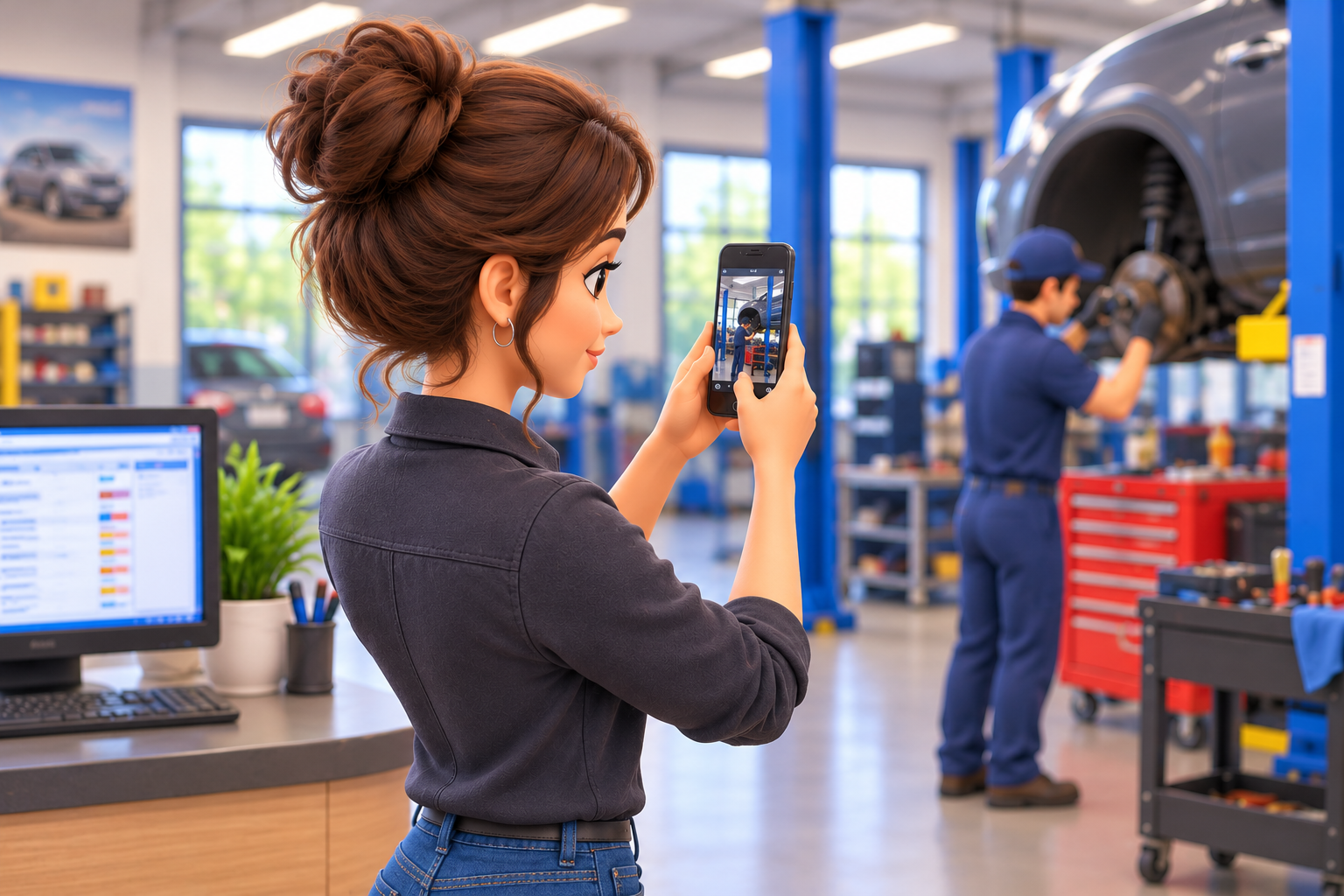
Check the battery: If the connections are correct, then use an appropriate method to test the battery, since it might be discharged, degraded, or incapable of holding a charge. Take a quick photo of the battery before you start. Add it to the digital vehicle inspection in Way Repair Tech, and you’ll have a dated record of how the battery looked when you got there.
Consider the starting system: If the battery and connections check out, look into possible faults with the starter motor, solenoid, or related components.
Check the charging system: If the vehicle starts but the battery fails to recharge as expected, then have the charging system inspected. Cars with conventional engines may have problems related to the alternator; hybrid and electric vehicles use different systems and therefore require diagnostics that are specific to the model.
Look for a recurring discharge: If the battery is found to be in good condition yet keeps on losing its charge, then there may be a parasitic electrical draw or some other underlying fault which should be investigated.
Wet weather could reveal a problem which was already present. Still, it won’t indicate what caused it, so you should identify the actual issue before proposing any repairs or replacing any parts.
A final checklist for roadside crews
Before attempting a jump-start in wet weather, confirm that:
- The vehicle and the area where the work is being done are safe.
- The battery is still there and has not frozen.
- The cables or the jump starter are in good condition and appropriate for use with the vehicle.
- The right procedure for starting the vehicle is what you have.
- Proper protective equipment has been put in place.
- There is at the moment no danger from lightning.
- There is a point at which you should stop and get specialist assistance.
Spending just a few minutes getting ready can save time when carrying out the job. More importantly, it enables the crews to prevent a simple call from becoming a safety issue that could have been avoided.