Vehicle inspection checklist
Sam visited your shop a few days ago, complaining about a shrill, high-pitched squeal when starting the engine. Your tech took a glance and fixed the noise, figuring it might’ve been the belt without taking a closer look. A couple of days later, Sam is back because the car broke down in the middle of […]
September 21, 2026 · Eric BucknerLinkedIn profile of Eric Buckner · 6 minutes read

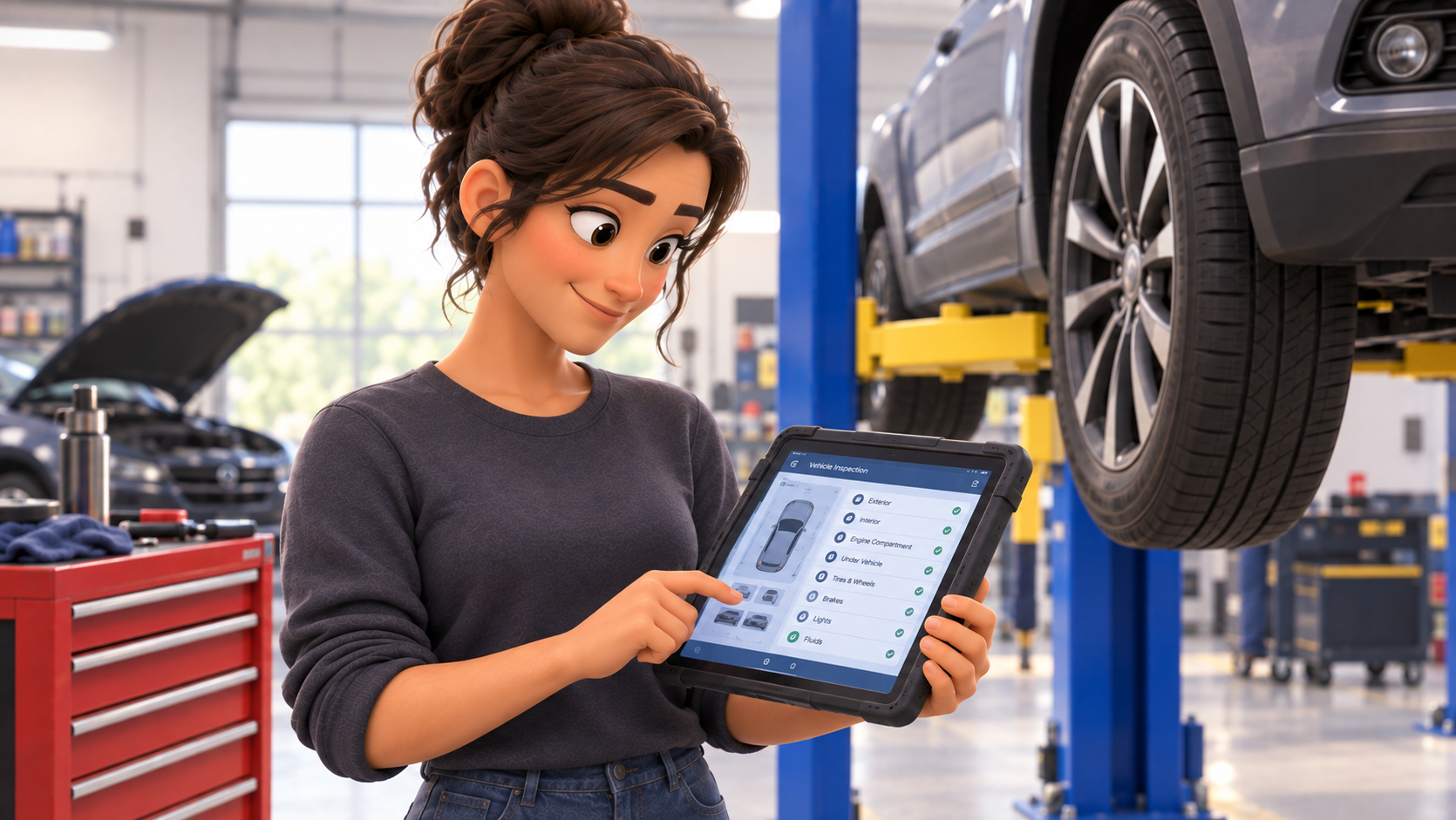
Sam visited your shop a few days ago, complaining about a shrill, high-pitched squeal when starting the engine. Your tech took a glance and fixed the noise, figuring it might’ve been the belt without taking a closer look. A couple of days later, Sam is back because the car broke down in the middle of the road. The squeal was actually because of an aging serpentine belt, which is a problem that could’ve been easily discovered the first time if the tech had gone through a vehicle inspection checklist.
Instead of being a regular customer, Sam is now wondering whether to trust your shop at all.
The thing is, no matter what kind of auto repair shop you’re running, whether it’s a general repair shop, a quick lube, a tire shop, or a dealership, thorough inspections aren’t just good practice. What you need is a consistent and standardized checklist that your entire team can use regularly.
Because quick lube shops focus on routine maintenance, many items in a typical Repair Order’s “needs attention soon” section may not be relevant. That’s fine; just focus on the fluids/maintenance and under-hood items. However, if you’re a full-service shop or a dealership, you should be going through the entire list every time.
Why a vehicle inspection checklist is a requirement
The most important reason for having a checklist is to catch the problem before it becomes an emergency. But that’s not the only reason why your shop should have one.
Consistency protects every inspection
Without a checklist, inspections can vary from one technician to another. What gets checked may depend on who is working on the vehicle, how busy the shop is, or how much time the technician has that day.
A standardized checklist gives your team a consistent process to follow for every car. It reduces the chance of missed issues, helps protect customer safety, and lowers the risk of problems that could damage your shop’s reputation.
Later, if a customer comes back with an issue or if a dispute arises, you’ll have records of what took place that will protect your shop. Having proof also helps when a customer declines repair work because of cost or time but later experiences a breakdown.
A quick once-over doesn’t show a lot of hidden problems, so a real inspection turns up more work than expected. This is not a sales tactic to upsell, but what a proper inspection should actually do.
What a good vehicle inspection checklist should cover
Most checklists are categorized by exterior, interior, under the hood, brakes, and so on. That’s useful for techs but not so much for your customers who want to know whether their cars are safe to drive or whether something needs attention soon.
So, we’ve organized this checklist the same way most digital inspection tools present the findings: by priority. This can double as both a checklist your techs can use and an outline your service advisors can walk through with your customers.
The checklist
Needs immediate attention
There are certain items you can’t compromise on because they affect the way a car drives on the road. Since these are highly critical when it comes to safety, they should be flagged before the car leaves your shop. These include:
- Brakes (pads, rotors, fluid, leaks)
- Tires (tread, sidewalls, embedded objects)
- Steering (response, play, tie rods/ball joints)
- Lights (headlights, brake lights, signals)
- Warning lights (ABS, airbag)
- Seatbelts
Needs attention soon
The following are the items that aren’t an immediate danger, but they will become a bigger problem if ignored for too long:
- Belts and hoses
- Battery
- Shocks/struts
- CV boots and wheel bearings
- Exhaust system
- Air filters (engine and cabin)
- Wipers and washer fluid
Fluids and maintenance items
These are routine checks but are worth looking into and documenting on every visit:
- Engine oil
- Coolant
- Transmission/power steering fluid
- Tire pressure (incl. spare)
- TPMS
- Fuel filter
Vehicle intake and documentation
You need to record these details to make the rest of the inspection useful and justifiable later:
- VIN, plate, odometer
- Customer’s stated concern
- Open recalls
- Pre-existing damage (photos/notes)
Road test
The road test is to confirm what the visual inspection can’t catch. These are the items that will only be seen when you actually drive the car for a while:
- Idle and start-up
- Brake feel
- Steering tracking
- Noise/vibration/smoke
- Shift quality
Going from paper to digital: why shops are making the switch
Paper used to be the norm when it came to checklists. It was easy to scribble the repairs on a piece of paper that costs very little to replace and could be taken everywhere on the shop floor. Paper checklists work for a while until a tech misplaces one, or the illegible handwriting makes it hard for a service advisor to explain the repair that needs to be done to a customer.
Most auto repair shops now use a digital vehicle inspection (DVI) tool instead. You can select from templates already stored in the system to create multiple inspection checklists depending on what your tech needs for a specific car. Your tech can also add photos and videos for visual proof. This works in favor of service advisors as well because they can show the customer what’s wrong and not just tell them. The visuals can then be sent to the customers via email or message. A lot of shop management software available in the market today has DVI within the system, so you aren’t paying extra.
What you should be doing moving forward
That squealing belt Sam brought in the first time is the kind of thing a standardized checklist catches before it becomes a breakdown. If you’re running the shop with one tech and service advisor, printing the checklist and putting it somewhere that’s easily accessible for everyone makes the most sense. Once your shop grows, you can invest in a shop management system that includes DVI to make the inspection process easier.