New-car prices just set an all-time January record. Monthly payments are closing in on $811. The sticker is just the opening bid, not the final number. Here is an unfiltered look at the average cost of owning a car in 2026.
What is the average cost of owning a car in 2026
Walk into a dealership in early 2026, and the inventory is there. The shortage era is over. What has not come back down is the price. The average transaction price for a new vehicle hit $49,191 in January 2026, an all-time January record, according to Kelley Blue Book’s monthly pricing report published by Cox Automotive on February 10, 2026. That is a 1.9% increase from a year earlier. To put that in perspective: a decade ago, the average new-car price sat below $34,000.
The shift happened gradually, then all at once, driven by the industry’s relentless drift toward larger SUVs, premium trims, and the near-disappearance of true entry-level models. That single price figure ripples outward in ways most buyers never fully account for in the showroom. A higher purchase price means a larger loan principal. A larger loan means a bigger monthly payment, a longer term to keep that payment manageable, and more total interest paid over the life of the vehicle. Often, that adds up to tens of thousands of dollars that never appear on the window sticker.
Here is a table to understand this better
| Model | Sticker Price (MSRP, before destination) | Destination Charge | Tax (8% of MSRP)* | Doc + Reg Fees** | Dealer Markup*** | Final OTD (Est.) | % Above Sticker |
|---|---|---|---|---|---|---|---|
| Toyota RAV4 LE Hybrid FWD (2026) | $31,900 | $1,450 | $2,552 | $700 | $0–$800 | ~$36,602–$37,402 | +14.7–17.2% |
| Honda CR-V LX FWD (2026) | $30,920 | $1,395 | $2,474 | $700 | $0 (selling ~3% below MSRP as per Edmunds) | ~$35,489 | +14.8% |
| Tesla Model Y RWD (2026) | $39,990 | $0 (direct sales) | $3,199 | $350 (reg only, no doc fee) | $0 (fixed price) | ~$43,539 | +8.9% |
| Ford Explorer Active FWD (2026) | $38,330 | $1,695 | $3,066 | $700 | $0 (selling ~4% below MSRP as per Edmunds) | ~$43,791 | +14.2% |
*Tax at 8% is a midpoint. Your state might charge nothing (Montana, Oregon, Delaware) or push past 10% depending on where you register.
**Doc and reg fees are basically whatever your dealership and DMV feel like charging. $700 is a fair guess nationally. Could be $200. Could be $999. Ask before you sign.
***Most 2026 mainstream models are selling at or below sticker right now. CR-V and Explorer buyers are routinely paying 3 – 4% under MSRP per Edmunds. RAV4 Hybrid is the outlier. Demand stays high, so some dealers still tack on $500 – $800. Not all. Shop around.
Here is where things stand right now:
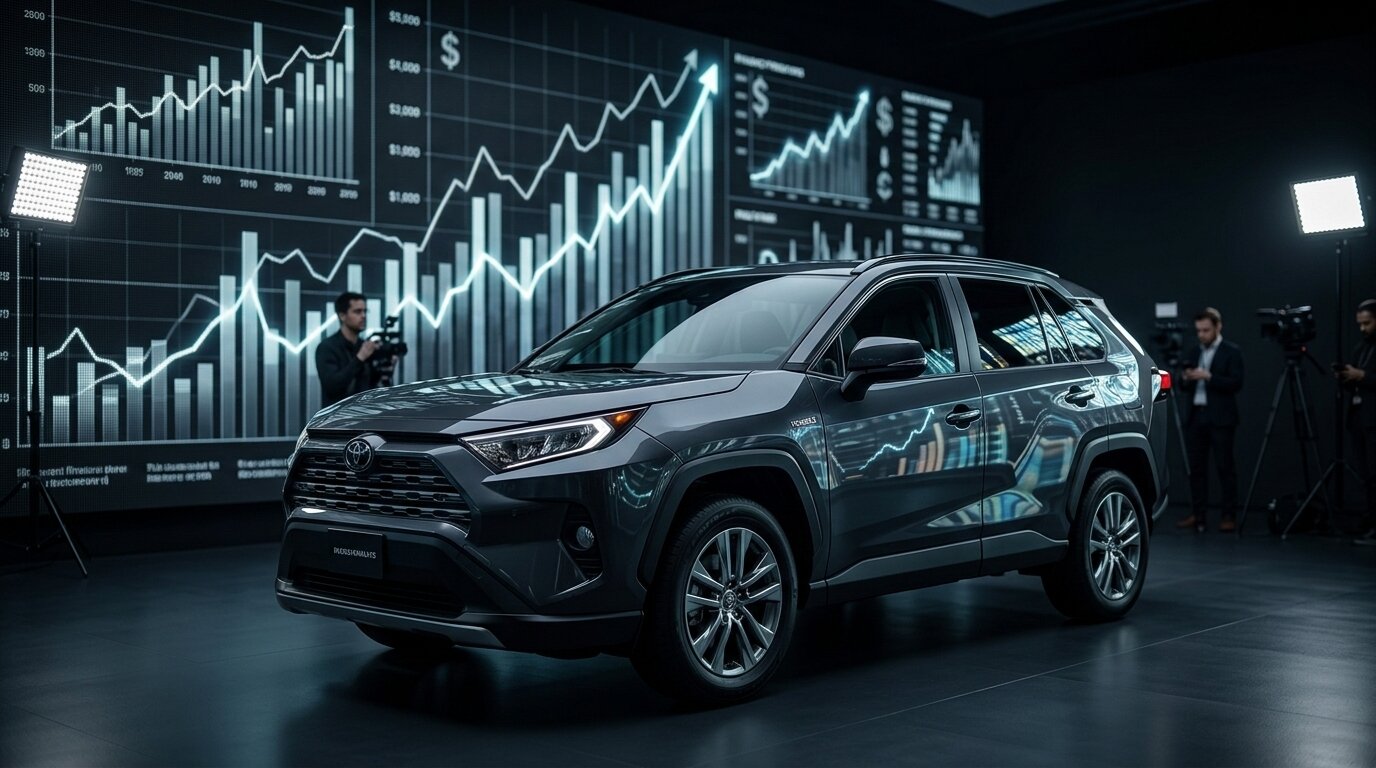
- $49,191 is the average new-vehicle transaction price as of January 2026, an all-time January high.
- $811 per month is the pace of average monthly finance payments as of February 2026, up $32 from a year ago.
- More than 1 in 5 buyers (20.3%) committed to monthly payments of $1,000 or more in Q4 2025, a record.
- 20.8% of financed new-car purchases in Q4 2025 used loan terms of 84 months or longer, up from 17.9% in Q4 2024.
- 12.7% of all financed February 2026 sales are on 84-month terms, up from just 7.7% a year earlier.
- 31.5% of trade-ins carry negative equity in February 2026, an increase of 3.4% points from a year ago.
- 5.0% of outstanding auto debt was at least 90 days past due in Q3 2025, according to the New York Fed, up 9.4% from Q3 2024.
Even though it looks like abstract macroeconomic data points. They are the context in which every car-buying and car-owning decision gets made right now. And they all lead to the same uncomfortable place: the purchase price is only the beginning.
The costs nobody puts in the ad
Car advertisements sell the vehicle. They almost never sell the ownership experience, and there is a reason for that. When you tally the recurring costs that follow a $49,000 car home, the monthly loan payment starts to look like the tip of a much larger iceberg. Here is the actual average cost of owning a car in 2026.
Insurance
In 2025, the average cost of car insurance increased 12%, reaching $2638, according to Bankrate’s automobile insurance cost report. As reported by Jeremy Robb, Acting Chief Economist at Cox Automotive, auto insurance costs have been increasing 13% each year for the last five years. For a high-value vehicle, policies with significantly different yearly premiums ($600-$1200) can have very similar coverages.
Parking
A reserved urban spot runs $150 to $300 per month in most major cities. Suburban commuters using paid lots routinely spend $50 to $100 per month without ever consciously tracking it. Over a year, that is $600 to $3,600 more than many people spend on routine maintenance.
Fuel or charging
If you drive 15,000 miles per year in a 28-mpg car and pay $3.20 per gallon for gas, you will spend approximately $1,700 a year on just fuel alone. The amount that an Electric Vehicle (EV) driver will spend on fuel will vary greatly and depends on the charging plan, provider, and driving habits.
Maintenance and repairs
Routine maintenance costs for a new vehicle run between $500 and $900 each year. However, if you skip an oil change or ignore an indicator light for your brakes, you could face a costly reactive repair, which would cost far more than two years of proactive maintenance.
Registration and taxes
Sales tax on a $49,000 vehicle runs $2,500 to $5,000 at purchase depending on the state, with annual registration fees scaling to vehicle value in most jurisdictions.
Add those five categories to a $750 per month loan payment, and a realistic total monthly cost of ownership lands somewhere between $1,200 and $1,700. Before parking tickets, tolls, or a single surprise repair. That figure almost never comes up during the buying conversation.
Why longer loans raise the average cost of owning a car in 2026
The auto industry’s response to rising prices has been to stretch loan terms. As of February 2026, 84-month loans account for 12.7% of financed new-car sales, up from just 7.7% a year ago, according to J.D. Power. In Q4 2025, more than one in five financed new-vehicle purchases used terms of 84 months or longer, according to Edmunds data, a sharp jump from 17.9% in Q4 2024. Extending the term is the easiest lever to pull when a buyer needs to hit a monthly payment target. It works mathematically. It is often a poor deal financially.
Research from the Federal Reserve Bank of Philadelphia found that default rates on six- and seven-year auto loans are multiple times higher than those on five-year loans. Most of that default risk comes from borrowers being more financially constrained to begin with, which is precisely the profile of someone stretching a loan to afford a $49,000 vehicle. Beyond default risk, long-term loans extend the period during which you are “underwater,” meaning you owe more than the car is worth. As of February 2026, 31.5% of trade-ins already carry negative equity, up 3.4 percentage points from a year ago.
The average new-car loan term is now 69.1 months, according to Experian data cited by LendingTree. That is approaching six years as the baseline, before even accounting for the growing share pushing toward seven.
The uncomfortable truth is this: no amount of ownership optimization fully compensates for a loan that was structurally wrong from the start. But for the millions of people already in a vehicle, or who need one despite the market conditions, there is still a meaningful playbook for reducing what they actually spend each year.
Seven moves that actually reduce what you pay
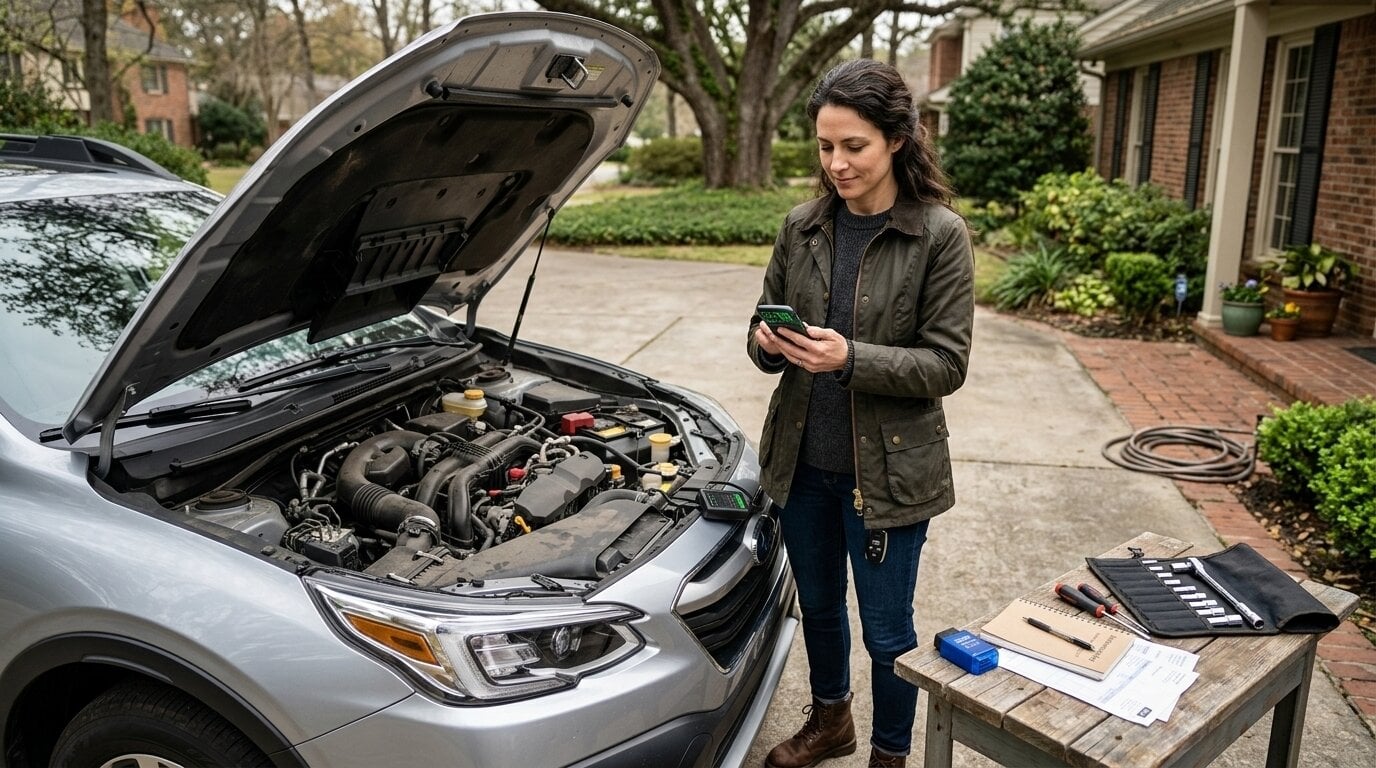
These tactics are detailed, repeatable actions that can give you measurable monetary savings. Implementing these together can reduce your car/vehicle ownership cost by thousands of dollars annually.
1. Shop your insurance every 6 to 12 months, not just when you buy
Auto insurance premiums have risen roughly 13% per year for five consecutive years, according to Cox Automotive’s acting chief economist. Insurance loyalty rarely pays. A driver who compares quotes annually and adjusts deductibles strategically can realistically save $200 to $600 per year on identical coverage.
Also read: Could Your Car Be Costing You Extra on Insurance?
Do this: Contact two or three comparison services before your next renewal date. Call your current carrier and ask specifically about discounts you may not be receiving.
2. Audit and prepay parking, which is the most underestimated line item
Daily rates at garages and meters typically run 15 to 30% higher than monthly permit rates for the same location. If you commute even three days a week, a prepaid monthly pass almost always wins. Many employers also offer pre-tax commuter benefits that reduce the real cost further.
Also read: Hidden Airport Costs Sneaking Up on Every Traveler
Do this: Add up what you actually spent on parking last month. Compare it to the monthly permit rate for the same garage or lot.
3. Treat maintenance as an investment, not an expense
A $90 oil change feels optional. A $2,400 engine repair because you delayed maintenance does not. Regular maintenance on a schedule, including oil, filters, brakes, and tires, is one of the highest-ROI activities in car ownership. It also protects resale value on a vehicle you may need to sell into a difficult market.
Do this: Set calendar reminders tied to mileage milestones, not memory. Memory fails every time.
4. Enable diagnostic monitoring before a warning light becomes a repair bill
Modern vehicles generate diagnostic data continuously. A check-engine code caught early, such as a failing O2 sensor, a loose gas cap, or an early battery warning, costs a fraction of what it costs once the vehicle has compensated for the problem long enough to cause secondary damage.
Do this: Do not wait for a warning light to think about what it might mean.
5. Refinance when your credit or the rate environment improves
Many buyers accept whatever rate the dealership presents at signing. According to a LendingTree study of its own marketplace users, Americans who refinance their auto loans cut their monthly payments by an average of $142. If your credit score has improved since purchase, or if market rates have shifted, refinancing can meaningfully reduce monthly payments or shorten your term. The average interest rate on a new-vehicle loan in February 2026 is 6.72%, down 0.31 percentage points from a year ago, according to J.D. Power. Movement in either direction creates refinancing opportunities worth checking.
Do this: Run a refinance calculator 12 months after purchase and compare competing lenders before assuming your original rate is your only option.
6. Optimize fueling and charging behavior systematically
Gas loyalty programs, apps that surface the lowest nearby prices, and EV charging plans structured around off-peak hours each deliver modest per-transaction savings that compound over 12,000 to 15,000 annual miles. Small behavior changes, including proper tire pressure, anticipatory braking, and highway speed discipline, also improve fuel efficiency measurably over time.
Do this: Track your average mpg monthly and set a 3 to 5% improvement target. The awareness alone tends to change behavior.
7. Build a three-year total cost model before you sign anything
The best time to implement all of the above is before purchase. A three-year total cost projection covering payment, insurance, parking, fuel, and maintenance often reveals that a lower trim or slightly smaller vehicle yields dramatically better economics. A $6,000 price difference can become $9,000 to $11,000 in total savings once interest, insurance, and depreciation are factored in.
Do this: Build the model in a spreadsheet before you step onto a dealer’s lot.
Where Way fits, and what it will not promise
The tactics above work. What makes them stop working is friction. The insurance comparison you meant to run before renewal. The parking spot you overpaid for because booking in advance felt like too many steps. The refinance check you kept putting off because digging up your loan details sounded like a headache. Way is built around one premise: removing that friction, across every cost category that follows a car home.
Way is not a niche parking app that added a few extra features. It is a full-spectrum car ownership platform, used by over 10 million drivers across the U.S., that covers the six recurring costs that quietly inflate what you actually pay to own a vehicle every year.
Parking, with genuine price transparency
Way partners with thousands of parking locations across airports, cities, and event venues nationwide. You find, compare, and book in advance, with upfront total pricing before checkout, so hidden fees do not show up after the fact.
The November 2025 product update added Apple Pay and Google Pay at checkout, a Scan and Pay option at participating lots, and a Total Price Toggle that shows the full cost before you commit. Way’s VP of Parking Aman Chheda put it plainly:
“Nothing frustrates a customer more than discovering hidden fees after they’ve reached checkout. Parking should never come with surprises.”
Auto insurance comparison across hundreds of carriers
Way connects drivers with insurance carriers covering all 50 states, letting you compare personalized quotes in seconds inside the app. Given that auto insurance premiums have risen roughly 13% annually for five consecutive years, having instant access to competing quotes is not a nice-to-have. For most drivers, it is a guaranteed savings opportunity they are currently leaving on the table.
Auto refinance, including the legwork
Most refinance programs require you to gather your own loan details and shop for lenders yourself. Way’s Recapture Program interfaces directly with real-time credit data, identifies your existing loan terms, and presents a firm offer of credit without the usual paperwork burden. On average, Way provides annual savings of $1,850 to members who refinance their auto loans through its program. For a driver currently on a 7% loan who qualifies for a better rate, this is one of the highest single-action returns available.
Car wash, gas cashback, and EV charging
Way connects drivers to top-rated car washes nationwide, including single washes and monthly unlimited subscription options. The gas cashback program surfaces the lowest nearby prices and returns cashback at participating stations. For EV drivers, Way maps compatible charging stations and offers cashback on charging sessions. None of these are headline features, but together they represent the kind of habitual, per-transaction savings that compound meaningfully over 12,000 to 15,000 annual miles.
Auto repair access and a mileage tracker
In January 2026, Way launched AI software for repair shops, designed to connect drivers with service providers more efficiently. The platform also includes a mileage tracker, which underpins two of the most impactful ownership decisions: knowing when maintenance is actually due, and documenting mileage for tax or resale purposes.
Way+ membership: cashback plus protection
Way+ bundles cashback on gas, EV charging, parking, car washes, and repair and maintenance into a single membership. The company reports that Way+ members earn an average of $531 in cashback per year. The membership also includes glass breakage protection, digital roadside assistance, a free mechanics hotline, a free 100-point inspection, and layoff protection.
Way does not make a bad loan good. It will not fix a vehicle that was overpriced at purchase. What it does is consolidate the controllable, recurring costs of ownership into one platform, with real pricing transparency, real diagnostic access, and real cashback that offsets what you spend. For drivers already carrying $750 to $1,000 monthly payments, every dollar recaptured from the costs below the loan payment is a dollar that does not have to come from somewhere else.
Frequently asked questions
What is the average monthly car payment in 2026?
According to J.D. Power’s February 2026 forecast in partnership with GlobalData, the average monthly finance payment is on pace to reach $811 in February 2026, up $32 from a year ago. J.D. Power also reports that 84-month loan terms are expected to account for 12.7% of financed sales in February, up from 7.7% in February 2025, as buyers stretch loan terms to manage elevated prices.
Is $50,000 really the average price of a new car now?
Close. Kelley Blue Book’s report, published by Cox Automotive on February 10, 2026, put the average transaction price at $49,191 in January 2026, an all-time January record. The December 2025 price was $50,318, an all-time record for any month. The shift toward SUVs, higher trim packages, and the near-disappearance of sub-$30,000 entry-level models has structurally lifted the average. Cox Automotive notes the Nissan Versa has now become the most affordable vehicle in the market at an average MSRP of $22,315. This is a clear sign of how thin the bottom of the market has become.
Are 84-month car loans a bad idea?
For most buyers, yes. Research from the Federal Reserve Bank of Philadelphia found that default rates on six- and seven-year auto loans are multiple times higher than those on five-year loans. Long terms also extend the period of negative equity. As of February 2026, 31.5% of trade-ins carry negative equity, per J.D. Power. If an 84-month term is the only way a vehicle fits your monthly budget, that vehicle is likely priced above what the budget can safely carry.
What is the fastest way to start saving on car ownership right now?
Three quick wins require almost no upfront cost or time. First, get competing insurance quotes before your next renewal. Auto insurance premiums have risen roughly 13% annually for five consecutive years, according to Cox Automotive’s acting chief economist. Second, calculate your actual monthly parking spend and compare it to prepaid permit rates for the same location. Third, enable vehicle diagnostic monitoring so warning signs get caught early, before they escalate into expensive repairs.
How do rising car prices affect auto loan delinquencies?
Higher car prices are doing more than raising the sticker price. They are increasing loan amounts and shrinking the financial cushion many buyers once had. When loans get bigger, monthly payments rise. If income drops or an unexpected bill shows up, staying on track becomes harder. Many households are already living paycheck to paycheck, which leaves little room for mistakes. The pressure is already showing in the data. Economists at the Federal Reserve reported that auto loan late payments, meaning loans at least 30 days past due, reached 3.88% in Q3 2025. According to figures cited by Bankrate, that is the highest level since 2011.
More serious payment issues are rising too. Data from the Federal Reserve Bank of New York shows 5.0% of auto loan balances were at least 90 days past due in Q3 2025. That is 9.4% higher than the same period in 2024. The issue goes beyond just the loan payment. Jeremy Robb, acting chief economist at Cox Automotive, said the total cost of owning a vehicle is much higher today. Insurance costs more. Maintenance costs more. Monthly payments are larger. In short, the loan is only part of the problem. When every cost rises, the pressure builds. For many buyers, late payments become more likely.
The bottom line
The sticker shock is real. A $49,191 average transaction price, $811 monthly payments, and loans stretching toward seven years represent a genuine shift in what car ownership costs American households. The purchase price is the opening number, not the final one. The actual average cost of owning a car in 2026 is a number that will balloon once the hidden costs of ownership begin to pile up.
What drivers can control is everything that follows: the insurance they carry, the parking they pay for, the maintenance they schedule, and the loan terms they accept or negotiate. None of these decisions are glamorous. All of them add up. If you want to act today, start with three questions. When did you last compare your insurance rate? Do you know your actual monthly parking spend? Is your vehicle generating diagnostic data you are not reading? Answer those three honestly and you are already ahead of most drivers sharing the road with you.
The good news is that acting on all three costs nothing to start. Way is a free app used by over 10 million drivers that puts insurance comparison, parking search and booking, gas cashback, EV charging, car wash access, and auto refinancing in one place. No trial. No paywall to get started. You can compare insurance rates or find a lower parking rates in the time it takes to read this sentence. The savings are real and the starting point is free. Get the Way app or visit way.com and start cutting what your car actually costs you.
Source directory
- https://www.coxautoinc.com/insights-hub/jan-2026-atp-report/
- https://www.bankrate.com/loans/auto-loan-delinquencies-hit-15-year-high/
- https://www.jalopnik.com/2068520/20-percent-new-car-loans-over-1000-dollars-per-month/
- https://www.jdpower.com/business/press-releases/jd-power-globaldata-forecast-february-2026
- https://www.cbtnews.com/vehicle-affordability-crisis-deepens-as-1000-payments-become-more-common/
- https://gmauthority.com/blog/2026/01/monthly-car-payments-reached-record-high-in-q4-2025/
- https://www.edmunds.com/industry/press/more-than-1-in-5-new-car-shoppers-committed-to-1000-monthly-payments-in-q4-2025-according-to-edmunds.html
- https://www.autoremarketing.com/subprime/edmunds-more-than-26-of-q4-used-new-car-deliveries-backed-by-monthly-payments-topping-1000
- https://www.autoblog.com/news/new-edmunds-data-exposes-bitter-reality-of-new-car-affordability
- https://www.carpro.com/blog/20-of-q4-buyers-are-making-over-1000-car-payments
- https://www.jalopnik.com/2068520/20-percent-new-car-loans-over-1000-dollars-per-month/
- https://www.carscoops.com/2026/01/more-americans-than-ever-are-paying-over-1000-in-monthly-car-payments/
- https://www.autofinancenews.net/allposts/risk-management/20-of-new-vehicle-buyers-paying-over-1k-per-month-in-q4/
- https://news.dealershipguy.com/p/record-share-of-new-car-buyers-sign-on-for-1-000-monthly-payments-2026-01-06https://www.newyorkfed.org/microeconomics/hhdc
- https://www.lendingtree.com/auto/refinance-savings-study/
- https://www.experian.com/content/dam/noindex/na/us/automotive/finance-trends/experian-safm-q3-2025.pdf
- https://www.lendingtree.com/auto/debt-statistics/
- https://www.federalreserve.gov/econres/notes/feds-notes/a-note-on-recent-dynamics-of-consumer-delinquency-rates-20251124.html
- https://www.bankrate.com/insurance/car/the-true-cost-of-auto-insurance/
- https://www.bankrate.com/loans/auto-loan-delinquencies-hit-15-year-high/
- https://www.philadelphiafed.org/consumer-finance/consumer-credit/extended-loan-terms-and-auto-loan-default-risk
- Full PDF: https://www.philadelphiafed.org/-/media/FRBP/Assets/working-papers/2020/wp20-18.pdf
- https://www.consumerreports.org/money/car-insurance/why-most-drivers-switch-car-insurance-how-much-they-save-a7899329065/
- https://www.consumerreports.org/money/car-insurance/how-to-save-big-on-your-car-insurance-a5155263103/
- https://www.consumerreports.org/money/car-insurance/how-to-lower-your-car-insurance-rates-a9179717041/
- https://www.lendingtree.com/insurance/switching-insurers-survey/
- https://www.valuepenguin.com/auto-insurance-shopping-survey
- https://www.aaa.com/autorepair/articles/your-driving-costs-study
- https://contracosta.news/2025/04/11/as-cars-age-and-costs-rise-aaa-urges-importance-of-auto-repair-and-maintenance/
- https://www.consumeraffairs.com/automotive/car-repair-statistics.html
- https://cluballiance.aaa.com/the-extra-mile/advice/car/car-repair-and-maintenance-costs
- https://autos.yahoo.com/average-cost-car-maintenance-161026763.html
- https://www.edenredbenefits.com/tax-limits
- https://www.spacer.com/blog/why-you-should-invest-in-a-monthly-parking-spot-in-nyc
- https://www.townepark.com/monthly-parking-programs/
- https://financebuzz.com/commuting-statistics
- https://inrix.com/press-releases/parking-pain-us/
- https://usa.streetsblog.org/2016/10/20/comparing-the-price-of-parking-across-u-s-cities
- https://www.consumerreports.org/money/car-insurance/how-to-lower-your-car-insurance-rates-a9179717041/

Aaron Marshal is a mechanic turned writer who loves three things: cars, food, and travelling. For the past two years, he has been helping readers understand vehicles, different destinations, and food spots, helping them make wise choices.