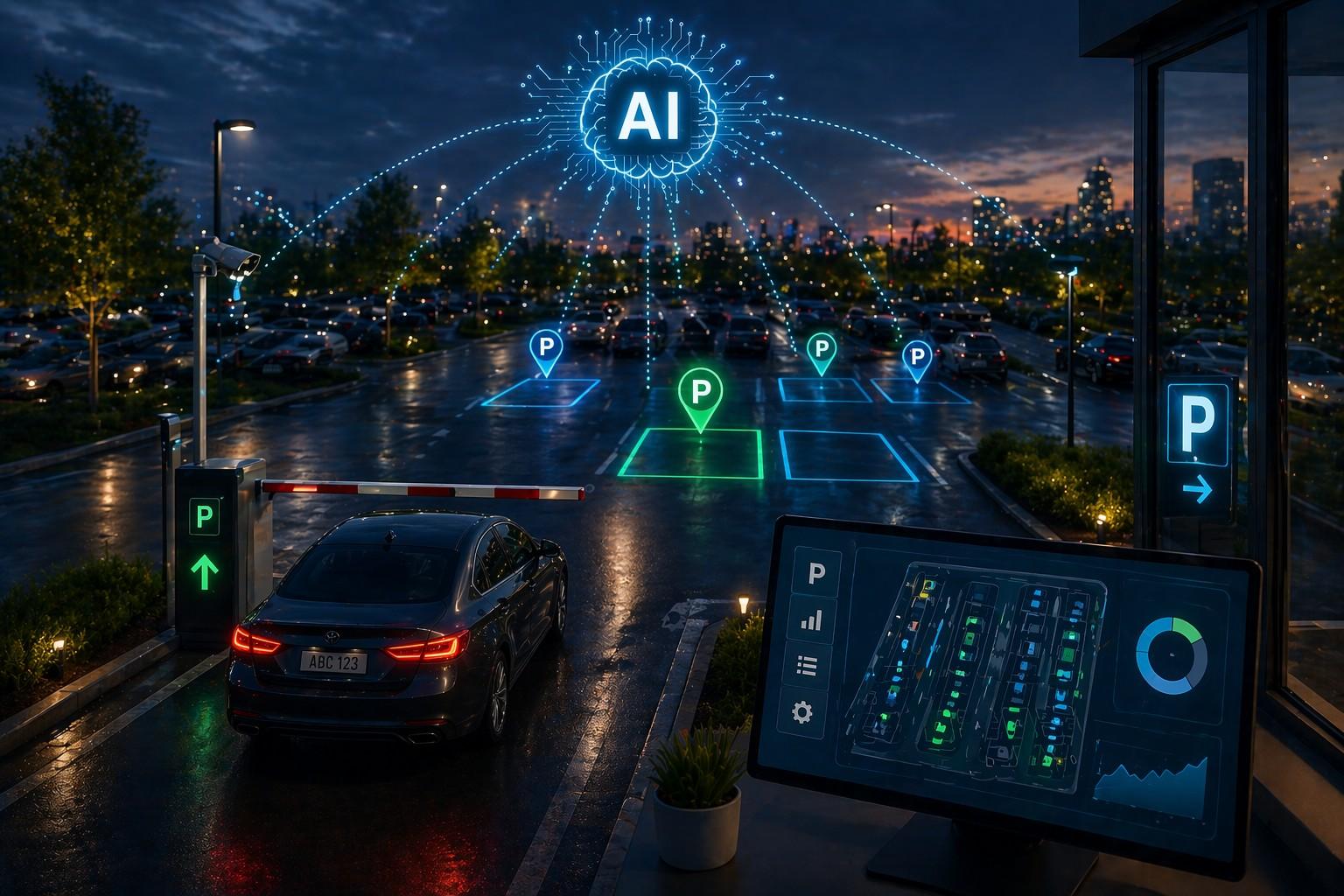
5 ways to optimize parking operations with AI
The reactive approach has long been the operating plan for the parking business. It relies on manual intervention to handle complex tasks such as occupancy monitoring, real-time pricing, etc. But as the number of customers grows, this method makes operations slow, decisions delayed, and implementation ineffective. With AI in play, the traditional method is being replaced by a predictive approach.
As per the NPA Parking Pulse Report for 2026, technology adoption is critical to the success of the parking industry. It predicts that 49% of the operational success of a facility depends on technology. It shows that the competition in the industry is now shifting from pricing and accessibility to the implementation of the latest technology. Hence, AI becomes more of a basic requirement than a luxury for the optimization of parking operations.
What are the 5 ways to optimize parking operations with AI
AI tools for daily operations make parking more predictive, proactive, and profitable. Here are the five critical ways AI optimization helps to increase revenue and efficiency.
1. Monitor real-time occupancy
Unoccupied spaces are a common reason for revenue loss in parking. Cameras and sensors integrated with AI can show such real-time details on your dashboard. By connecting it with a CRM, you can send the right information to customers without delay, which delivers them a friction-free experience . Such features can inform a customer who might immediately want parking access to spot the right space in your parking lot.
2. Deploy dynamic pricing
The existing static pricing often turns out to be underpriced in peak times and overpriced during off-peak times. Dynamic pricing helps to match pricing with demand in real time. AI algorithms can automatically lower prices to increase demand among customers looking for cost-effective parking. Thus, adjusting prices instantly helps keep revenue steady.
3. Roll out predictive analytics
Finding yourself short-staffed and overbooked is common during peak hours. While regular hours don’t require more workforce, an unforeseen rise in traffic catches you in an operational bottleneck and often leads to service conflicts with customers. Such occasions make customers unhappy, and the repeat business is lost. Meanwhile, AI can spot demand spikes early and alert your team. It avoids confusion for both parties in peak traffic.
4. Automate security & payments
AI LPR and cameras in your parking lot/garage enhance security and streamline payment. Drivers don’t need to stop, collect tickets, or make payments at the exit. An automated payment system that integrates AI into license plate recognition or RFID makes it friction-free. Also, the surveillance cameras installed at strategic points inside the parking lot lower the risk of theft and other adverse events, which can be projected as a competitive differentiator for safe parking and contactless payment. This helps improve customer retention and the loyal base of regular customers.
5. Upgrade booking & guidance systems
The IoT sensors in your parking show the exact spots that are unoccupied. Displaying occupancy status at the entrance and integrating a parking guidance system in your app delivers a hassle-free experience for customers. According to the survey by T2 Systems, 66% of vehicles entering the facility take an average of 15 minutes to find the right spot to park. Hence, the AI upgrades in the reservation and guidance system resolve a major challenge in the parking industry.
How to implement parking operations with AI
Implementing smart parking optimization using a domain-specific AI model requires a strategy. Here is a structured implementation framework for the AI-driven transition.
Prioritize use cases & technology stack
Key drivers for AI optimization vary among operators. Some of the major hurdles to consider include entry/exit friction, improving enforcement efficiency, etc. By setting the priorities right, you get a clear overview of the technological stacks to be installed. Based on the priority, you can choose the best available integrated hardware, software, and analytics systems that sync with your parking management dashboard. The technology stack to deploy is:
- Hardware: sensors, computer vision, and automatic license plate recognition
- Software: IoT gateways and edge servers for processing data in real time.
- A cloud analytics platform with AI: Machine learning models, dynamic pricing engines, and algorithms for finding and classifying vehicles.
- Dashboards: Mobile apps (either owned or shared platforms), dashboards, and payments that don’t require contact.
Deploy incrementally
Instead of initiating AI-led optimization all at once, a phased rollout with minimal disruption can be more ideal. Here is an overview of three phases through which operators can roll out the optimization.
- Phase 1: In this cost-effective stage, operators can upgrade existing non-AI devices, such as surveillance cameras, to IP-enabled cameras that can be integrated with computer vision models. It helps to convert video footage into actionable data. Also, deploying basic traffic-counting analytics helps build historical data, which later contributes to training AI models.
- Phase 2: Once reliable data flow and decisions based on actionable data are ensured, the second phase involves AI integration. AI-powered license plate recognition systems and automated enforcement steps are used in this phase.
- Phase 3: The advanced features of AI are explored in the third phase of optimization. Here, operators can unlock advanced AI capabilities, such as Dynamic Pricing, Predictive Occupancy Mapping, and Predictive Maintenance.
Measure and optimize
Even after implementation, AI systems need regular tracking for functional improvement. To maintain efficiency, factors like accuracy, financial impact, and accountability need to be regularly measured, monitored, and refined. This, in turn, helps operators understand the current supply-to-demand ratio in your parking. Though these algorithms are automated, it is best to audit the data accuracy on a routine basis. It helps minimize errors in data transfer, processing, and decision-making.
AI optimization: Measurable outcomes for parking operators
AI optimization makes customer touchpoints in car parking more friction-free and checks revenue loss. Moreover, the strategic shift from static to dynamic data processing helps the operators in:
- Monitor the occupancy status of spaces.
- Dynamic pricing engines that auto-adjust prices as per demand
- Predict the upcoming traffic to avoid unnecessary confusion between the customer and the operator.
- Hands-free payment methods and optimized security measures without entry or exit friction.
- The sensors and cameras, when integrated with AI systems, can provide parking guidance.
More than half of the operators across the US have started implementing various phases of the process. Considering the long-term benefits and sustainable solution for both traditional and rising pain points, now is the best time to step into AI-led upscaling. Hence, choose the right strategy and initiate the shift to an intelligent operational framework.

