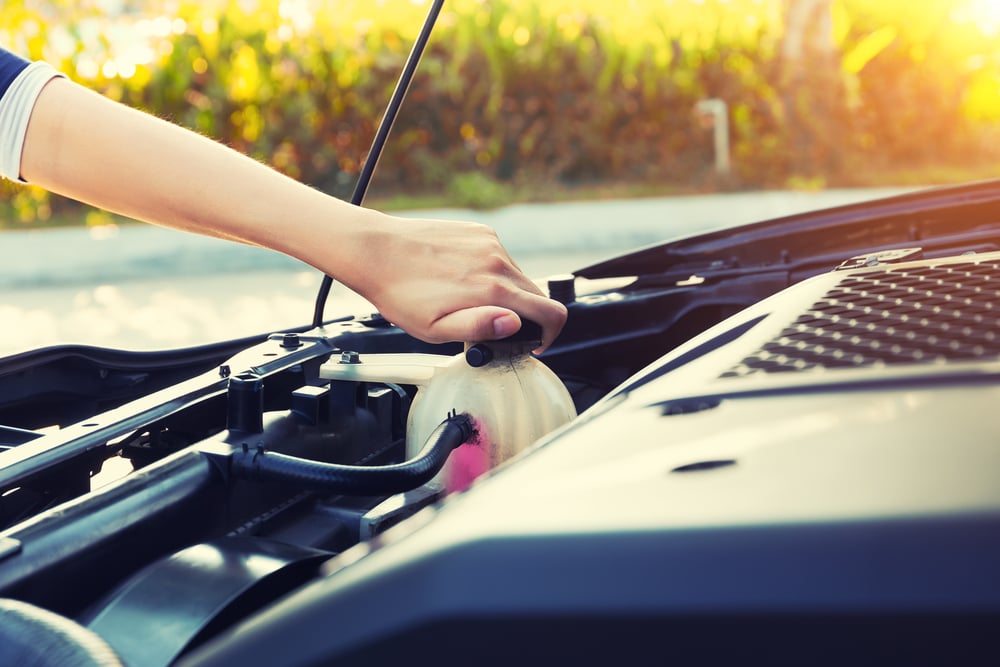
While checking your coolant level, take a moment to inspect your car’s coolant reservoir as well. If it looks dirty or has visible buildup and deposits, it may be time for a proper cleaning. Not sure where to start? Here’s a complete guide on how to clean a coolant reservoir.
What is a coolant reservoir?
The coolant reservoir or overflow tank is where the excess coolant produced because of the engine’s heat is stored. When your car’s engine heats up, the warmth makes the coolant expand. This expanded coolant overflows into the coolant reservoir, and when your car cools down, it is sucked back into the radiator.
The coolant reservoir plays a vital role in this cycle, and therefore, any damage or harm to the reservoir can cause your car to overheat. That’s why it’s important to keep the coolant reservoir in its best condition all the time.
Why should you clean your coolant reservoir?
Over time, your coolant reservoir tank can get filled with dirt, mud, and sludge. These contaminants deposited inside the reservoir can affect the quality of the coolant. This, in turn, can negatively affect the car’s performance. Therefore, make sure you check the coolant reservoir’s status during your car maintenance schedule or while changing the coolant. If you notice it is dirty and yellowish, clean it as soon as possible.
How to clean a coolant reservoir
Cleaning your coolant reservoir is a simple maintenance task. It helps you monitor coolant condition more easily. It also keeps the cooling system looking clean. Follow the steps below to clean your coolant reservoir properly without any hassle.
Step 1
Before you start the cleaning process, make sure the engine is cool. Turn off the engine and wait for at least two hours before touching the coolant reservoir.
Step 2
Disconnect the hoses and remove the coolant reservoir tank. If the tank still contains any fluid, transfer it to another bucket. Now, closely inspect the reservoir and check its condition.
Step 3
To remove the deeply embedded dirt, you should soak the reservoir in a container with bleach, water, and dishwashing liquid. Now place the reservoir into this container and allow it to sit for a few hours, or you can also let it stay overnight. Make sure you remove the reservoir’s cap to allow the solution to enter and loosen the dirt.
Step 4
Scrub the reservoir’s outer part to remove the dirt using a brush. Repeat the process till the pale-yellow color disappears.
Step 5
To clean the inner part. Clear all the liquid present inside and use a brush to clean it. Next, rinse it with a high-pressure hose. Repeat the process until you see a noticeable change of color. Once you’re satisfied with the result, place the reservoir back as it was.
Coolant reservoir FAQs
How do I know if my coolant reservoir is clogged?
Drain the radiator and inspect the coolant flow. The flow should be steady and consistent. If it appears slow or irregular, there may be a blockage in the cooling system.
Some common signs of a clogged radiator or reservoir include:
- Engine overheating
- Low coolant level
- Coolant leaks
- Warm air from AC vents
- Damaged radiator hoses
- Smoke from under the hood
- Rusty or dirty coolant
Why is my coolant reservoir dirty?
A coolant reservoir can become dirty for several reasons, including:
Contaminated coolant: A damaged head gasket or cracked cylinder head can allow oil to mix with coolant, creating sludge. Transmission fluid contamination can also dirty the coolant.
Corrosion: Coolant reacting with metal components can create rust and reddish deposits inside the system.
Incorrect coolant mixture: Using incompatible coolants may break down additives and create sludge or buildup.
Is it normal for the coolant reservoir to be empty?
No. An empty coolant reservoir can prevent the cooling system from maintaining proper coolant levels, which may lead to overheating. Refill the reservoir with the recommended coolant and inspect the system for leaks or other issues.
Can a car run without a coolant reservoir?
No. Driving without coolant can quickly cause the engine to overheat and suffer severe damage. Always maintain proper coolant levels before driving.
What happens if the coolant reservoir is clogged?
A clogged coolant reservoir or radiator can restrict coolant flow and cause pressure buildup, overheating, or coolant overflow.
Can I pour water into the coolant reservoir?
Yes, but only in emergencies. Water can temporarily help cool the engine if coolant is unavailable. However, it should only be used for short distances and replaced with the correct coolant mixture as soon as possible.

Anna Hughes enjoys turning complicated automotive topics into practical, reader-friendly content that helps everyday drivers feel more confident about car ownership. Her goal is to make learning about cars less stressful and a little more interesting along the way.