How to remove cement from a car is one of those things nobody thinks about until it actually happens to them. You park somewhere, go about your day, come back and there it is. White crusty splatters across the hood, the door, maybe the windshield. Construction sites are the usual culprit. Sometimes it is a neighbor doing driveway work. Either way, the result is the same.
Here is the thing most people get wrong: they panic and start scrubbing. That is exactly how you end up with scratches on top of the cement stain. Cement on car paint needs to be dissolved, not scraped off dry. The process takes a bit of patience but it is not complicated once you understand how it works. Fresh cement is significantly easier to deal with than cement that has been sitting for days, so if you catch it early, you are in good shape.
This guide covers the full process, including what to do when it has already dried.
What you need before you start removing cement from car paint
Get everything together before you touch the stain. Once a dissolving solution is sitting on the paint, you do not want to be searching for the clay bar.
Here is what you need:
* Painter’s tape or masking tape
* Spray bottle
* White vinegar or a commercial cement dissolver
* A plastic or wooden spatula
* Clean microfiber cloths (a few of them)
* Clay bar kit with lubricant spray
* Car wash soap
* Car wax or a paint sealant
The clay bar is the part people avoid most often. Do not skip this process. It handles the microscopic cement particles that stay bonded to the clear coat even after the visible stuff is gone.
How to remove cement from a car: Step by step
Step 1: Tape off the area
Use painter’s tape around each cement stain before you do anything else. Put a few strips on each side. The tape keeps your cleaning solution from drifting onto clean paint nearby. Duct tape is not the right call here. It can pull at the clear coat when you peel it off, especially in warm weather.
If there are multiple spots, tape all of them before starting. Jumping between spots mid-process tends to cause you to rush the soak time, and that is where mistakes happen.
Step 2: Choose your cement dissolver
You have two real options here.
Commercial cement dissolver: This is the better choice for anything thick or dried. These products are designed specifically to break down the calcium compounds in cement without eating into the paint underneath. Most hardware stores carry them. Look for one that is labeled safe for automotive paint.
White vinegar solution: Works fine for light cement dust and thin splatter. Mix equal parts white vinegar and lukewarm water in a spray bottle. The mild acidity in the vinegar breaks down the alkaline compounds in the cement. It will not touch a proper concrete splatter that has cured for 48 hours, but for fresh or minor staining it does the job and costs almost nothing.
One thing worth saying clearly: do not use muriatic acid or any strong household acid on car paint. The risk of etching through the clear coat is real and it is not worth it.
Step 3: Apply the solution and wait
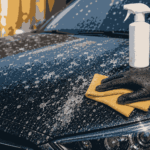
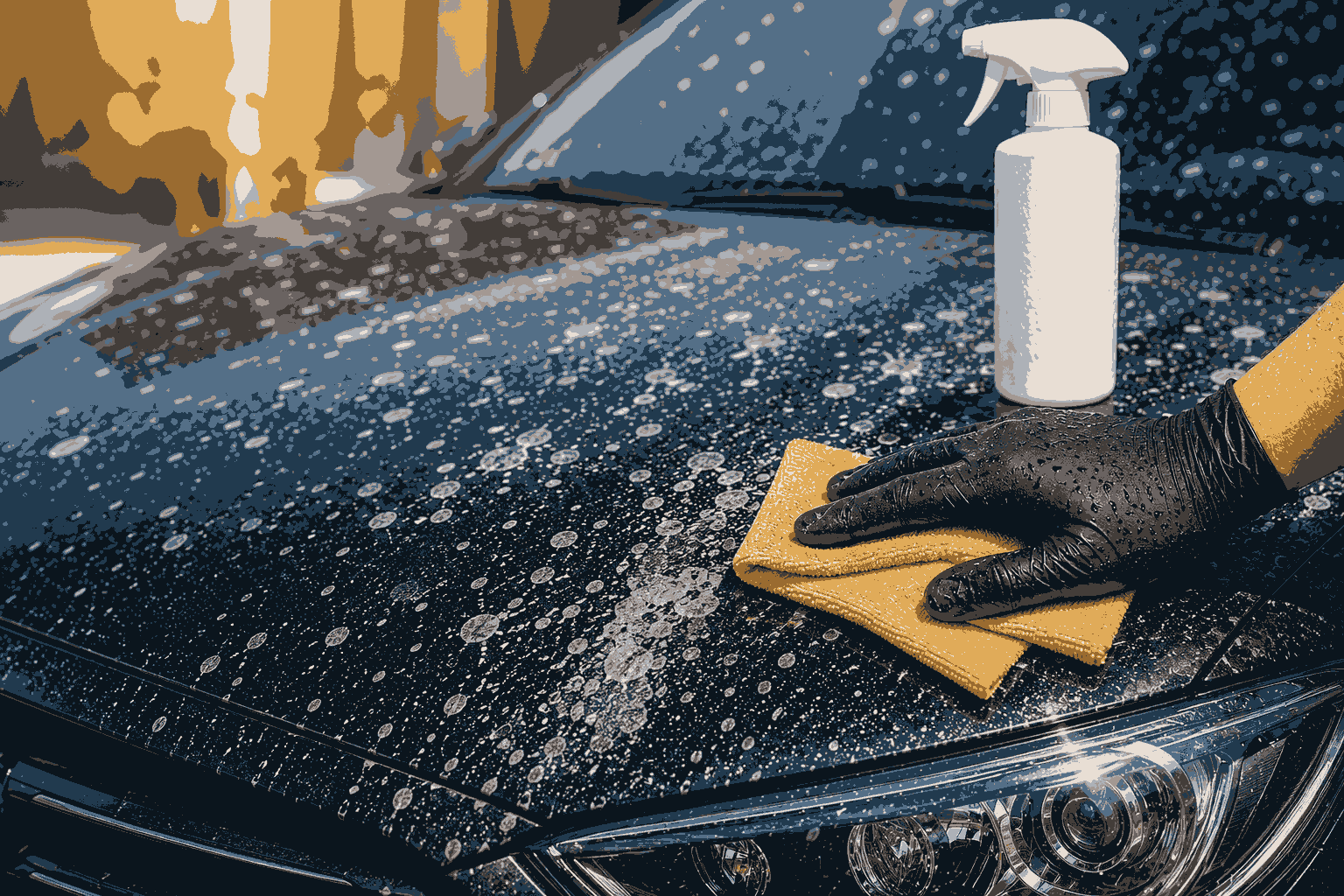
Spray your chosen solution over the stain and make sure the whole area is covered. Then leave it. Five to ten minutes at minimum. The solution needs time to work its way into the cement.
If the surface starts drying out before the time is up, spray a little more. Do not let it dry completely on the paint.
Step 4: Scrape gently
Take a clean microfiber cloth, wrap it around your plastic/wooden spatula and use it to gently work under the loosened cement applying light pressure as you do it. Use short strokes and remember you are lifting, not digging. If it is not coming off easily after a few passes, let the solution soak for a few more minutes rather than pressing harder.
Step 5: Work through the remaining residue
After scraping, there is almost always a thin haze of cement residue left on the surface. Spray the solution again, press a fresh cloth against the spot and just hold it there for a few minutes. Then lift it off. Swap to a clean cloth each time. Repeat this until you cannot see any more residue.
The important thing here is pressing, not rubbing. Rubbing moves those abrasive cement particles across the paint and can leave fine scratches you will notice later in direct sunlight.
Step 6: Clay bar the surface
Even when the paint looks clean, cement particles are often still stuck to the clear coat at a level you cannot see. Run your fingertip over the area. If it does not feel completely smooth, you are not done yet.
Knead the clay bar until it softens, flatten it into a small disc, and spray clay lubricant onto the surface. Glide the clay bar back and forth using light, even pressure. As it picks up debris the bar will feel a little grabby, then smooth out. When it feels smooth across the whole area, the surface is clean. Fold the clay bar to expose a fresh side whenever it picks up visible grime.
Do this on every affected spot across the car before moving to the washing step.
Step 7: Wash the car
Wash the whole car with car wash soap and warm water to clear away any chemical residue from the dissolving solution. Rinse thoroughly. Dry it with a clean microfiber towel.
Step 8: Wax the treated areas
This step gets skipped a lot and it really should not be. Cleaning cement off car paint strips away some of the wax protection in the process. Without re-waxing, those sections are more exposed than the rest of the car.
Apply a small amount of car wax to a microfiber cloth and work it into the treated areas using small circular motions. Buff it off once it hazes. It does not take long and the paint will look noticeably better for it.
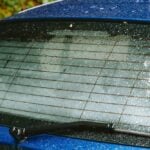
How to remove cement from a car windshield
Windshields are a bit more forgiving than paint, but not by much. Spray the vinegar solution directly on the stained area and leave it alone for 10 to 15 minutes. A damp sponge usually gets most of it off after that. If there are spots that won’t budge, a plastic razor blade at a very low angle can slide under dried cement on glass without leaving a mark. The angle matters though. Too steep and you will scratch it.
Steel wool is a hard no on glass. Same with abrasive scrub pads. They feel like they’re doing something but you’ll see the scratches in sunlight and there’s no coming back from that.
A glass-specific clay bar also works well if the stain is spread across a wider area of the windshield.
Fresh cement vs. dried cement on car paint
Fresh cement is soft and still reactive. Vinegar solution, a few minutes of soak time, a gentle scrape and you are mostly done. If you catch it within an hour or two, this does not have to be a big ordeal.
Dried or cured concrete on car paint is a different situation. It has bonded harder to the surface and a single treatment usually is not enough. Plan on repeating the dissolve and scrape steps two or three times. Use a commercial cement dissolver rather than vinegar. Take breaks between rounds to let the solution work properly rather than trying to rush it.
If the cement has been sitting on the car for more than a few days, or if you can see paint discoloration or dull patches forming under the stain, a professional detailer is probably worth the money at that point. Dried concrete that has started etching into the clear coat may need machine polishing to fully restore.
A few things that will prevent this from happening again
Avoid parking near active construction zones when you can. If there is no other option, a car cover is cheap enough that one ruined afternoon makes it worth keeping in the trunk.
A ceramic coating or a fresh wax before construction season makes a bigger difference than most people expect. Cement splatter does not bond as aggressively to a well-protected surface and tends to rinse off more easily when it is caught early.
And if you notice fresh cement dust or splatter on the car, rinse it with water right away. The window where it is still easy to remove is short.
For a thorough professional wash after dealing with cement or road construction debris, you can find a car wash near you through Way.com and compare prices before you book.
Frequently asked questions
Does vinegar actually remove cement from car paint?
For light cement dust and fresh splatter, yes it works. Mix equal parts white vinegar and water, spray it on and let it soak for about 10 minutes, then scrape and wipe. The acidity breaks down the alkaline compounds in cement well enough at that level. But if the stain has been sitting more than a day, or it is thicker splatter, vinegar probably will not get it all. That is when you need a commercial cement dissolver.
Can dried concrete actually damage car paint?
Yes, and it does not take that long. The alkaline compounds in cement continue reacting with the clear coat as they sit. Heat speeds this up. Dull patches and etching can appear within a few days on cars parked in direct sun. The sooner you deal with it, the better your chances of getting the paint back to normal without machine polishing.
Does WD-40 remove cement from cars?
It gets passed around online as a fix but it really does not work on concrete splatter. WD-40 has no acid in it, so it cannot touch the calcium compounds that actually hold cement together. On a very fresh, barely-there residue it might loosen the surface slightly. On dried cement though, it leaves a waterproof film behind that makes the real removal harder afterward. Just use vinegar or a proper cement dissolver and skip the WD-40 entirely.
What is the best product to remove cement from car paint?
A dedicated automotive cement dissolver. That is the straightforward answer. They are built to break down calcium compounds in cement specifically, and the good ones do it without touching the clear coat. For light cement dust that is still fresh, diluted white vinegar works fine and costs almost nothing. But for anything heavier or older, go with the dissolver.
Whatever you pick, test it on a small hidden spot first. A door jamb works. Under the side mirror works. Somewhere you are not going to notice if something goes slightly wrong. Cement dissolvers are generally fine on modern car paint but not every car is the same, and 30 seconds of testing is a lot cheaper than repainting a hood.
How do I remove concrete splatter from a car without scratching the paint?
Do not scrape it dry. That is the mistake that causes scratches. The cement has to be chemically softened first with a dissolving solution, then you lift it off with a cloth-wrapped plastic spatula. After that, go over the area with a clay bar and lubricant spray to pull out the particles still bonded to the clear coat. Doing both steps is what actually removes concrete splatter from car paint without leaving marks behind.
Can I remove cement stains from car paint at home?
Most cases, yes. You need painter’s tape, a cement dissolver or vinegar solution, a plastic spatula, clean microfiber cloths, a clay bar kit and some car wax. For fresh or moderate staining, home methods work well. Heavily cured concrete that has been on the car for days is where a professional starts to make more sense.
How do you remove cement dust from a car?
Cement dust is easier than solid splatter. Rinse the car with water first to wash off the loose stuff, then apply diluted vinegar or a detailer spray and wipe gently with a microfiber cloth. Finish with a clay bar pass. Do not try to wipe off dry cement dust with a cloth alone. You will scratch the paint.
Should you wax the car after removing cement stains?
Yes. The cleaning process removes some of the existing wax layer. Applying car wax to the treated areas after you are done restores that protection and brings the finish back to the same level as the rest of the car.
How long does removing cement from a car take?
Light staining on a couple of panels takes 30 to 45 minutes. Heavy dried concrete across multiple areas, where you need to repeat the process a few times, can stretch to a few hours. Do not try to speed through it. The damage from rushing takes longer to fix than just doing it properly.
When should I take the car to a professional?
If the cement has been on the car for more than a few days, if you can see paint discoloration forming underneath, or if home treatment after two or three attempts is not clearing it fully, take it to a detailer. Machine polishing may be needed to restore the clear coat, and that is not a DIY job for most people.
Will a regular car wash remove cement stains?
A standard car wash will not touch dried cement. You need to manually pre-treat the stain with a dissolving solution and clay bar before a wash can help. Once the cement is gone though, a good car wash clears away the remaining residue and finishes the job cleanly.

Aaron Marshall grew up in a house where cars were never just transportation. Weekend projects, road trips, heated opinions on engine specs at dinner. That stuff never left him. He joined Way in 2023 and has been writing about cars and what it actually costs to own one ever since.