

Question
When is your tire pressure considered to be low?
The lowest tire pressure you may drive on is 20 psi. This is, in fact, not recommended.
A flat tire is defined as a tire with a pressure of less than 20 psi. Driving on a flat tire will cause harm to your car. You should inflate your tires if they are this low. Tire pressures should be between 32 and 35 pounds per square inch.
A ten-degree temperature change affects tire pressure by one psi. If your tires are at 28 psi, that is lower than the recommended pressure, but it won’t damage your vehicle. When you drive, the friction heats the tires and increases the pressure.
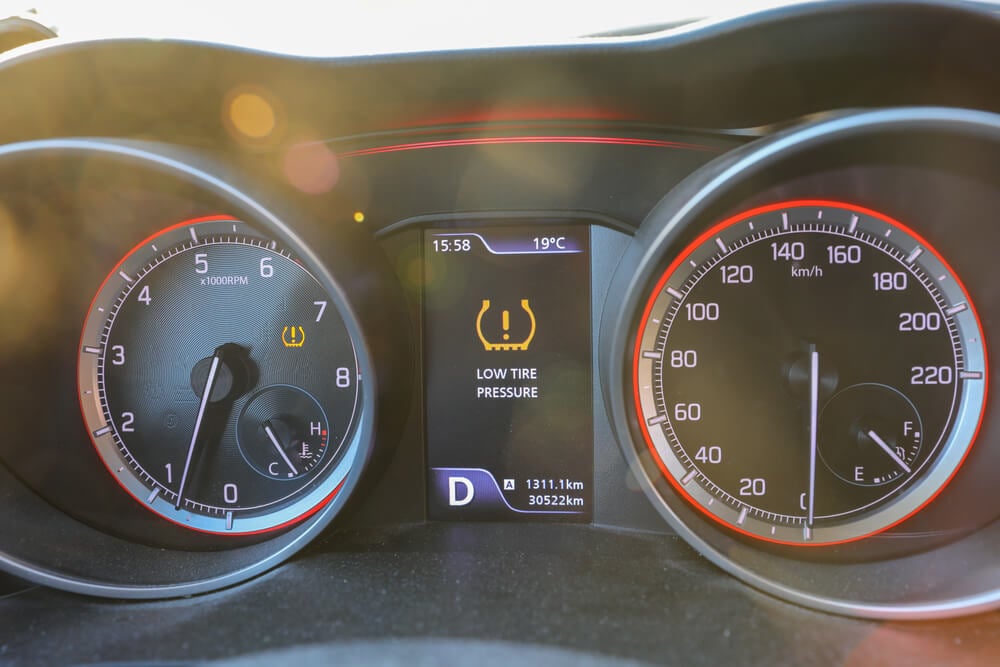
Any tire pressure below the recommended level is too low. A drop of more than ten percent is considered underinflated. For a car that needs a pressure of 35 PSI, a reading of 31 or 32 PSI is considered low. Some manufacturers allow up to twenty-five percent air loss before the TPMS light turns on.
Most car manufacturers put a sticker on the driver-side doorjamb that shows the correct PSI for tire inflation. If you can’t find this sticker, check the owner’s manual for the right inflation rates. It’s best to inflate your tires to the nearest value given by the car manufacturer.
What happens if your tire pressure is low?
Low tire pressure is dangerous for drivers. It can lead to unexpected loss of control and less grip on the road, especially in bad weather. When tires are not properly inflated, they can make handling worse and increase the chance of accidents, even if the vehicle seems to be driving fine.
Low tire pressure can cause blowouts because of the weight of the vehicle and heavy loads. These tire failures can happen suddenly and without warning, making them very dangerous.
What factors affect tire pressure?
The two main factors that affect tire pressure are slow leaks and air temperature. A slow leak can cause a tire to lose air over time. Changes in temperature also impact the air inside the tire. Heat makes the air expand, while coolness makes it contract. It’s best to inflate tires when they are cool.
What are the signs of low tire pressure?
- Warning light: The low tire pressure warning light on the dashboard lets you know that one or more tires need air. Since 2008, new cars have needed tire pressure monitoring systems (TPMS), but many cars made before 2008 may not have this feature.
- Reduced mpg: Underinflated tires can lower your fuel economy by up to three miles per gallon, especially if several tires are low on air. They can also cause your tires to wear out faster, leading to uneven tread patterns with thinner edges and thicker centers.
- Steering and driving: Low tire pressure can seriously affect how your car drives. You may notice that the steering feels loose, the car might pull to one side, and it can be hard to keep a straight line. This leads to a rough and uncomfortable ride.
Start now and save up to $971 a year!


Way.com Services
Simple. Fast. Free.
Get affordable rates from trusted insurers in just a few clicks.

Upload
Provide your existing policy information

View
Get instant, accurate quotes with no hidden fees

Compare
See how your coverage stacks up against leading insurers

Switch & Save
Lock in your new rate; we’ll cancel your old policy


