Suspension repair cost: How much should you charge?
Suspension repair is one of the most common repairs your shop will quote. This guide takes you through what customers expect to pay, how to calculate a quote from parts, labor, alignment, and what affects the final number.
October 23, 2026 · Arnold GoldLinkedIn profile of Arnold Gold · 6 minutes read

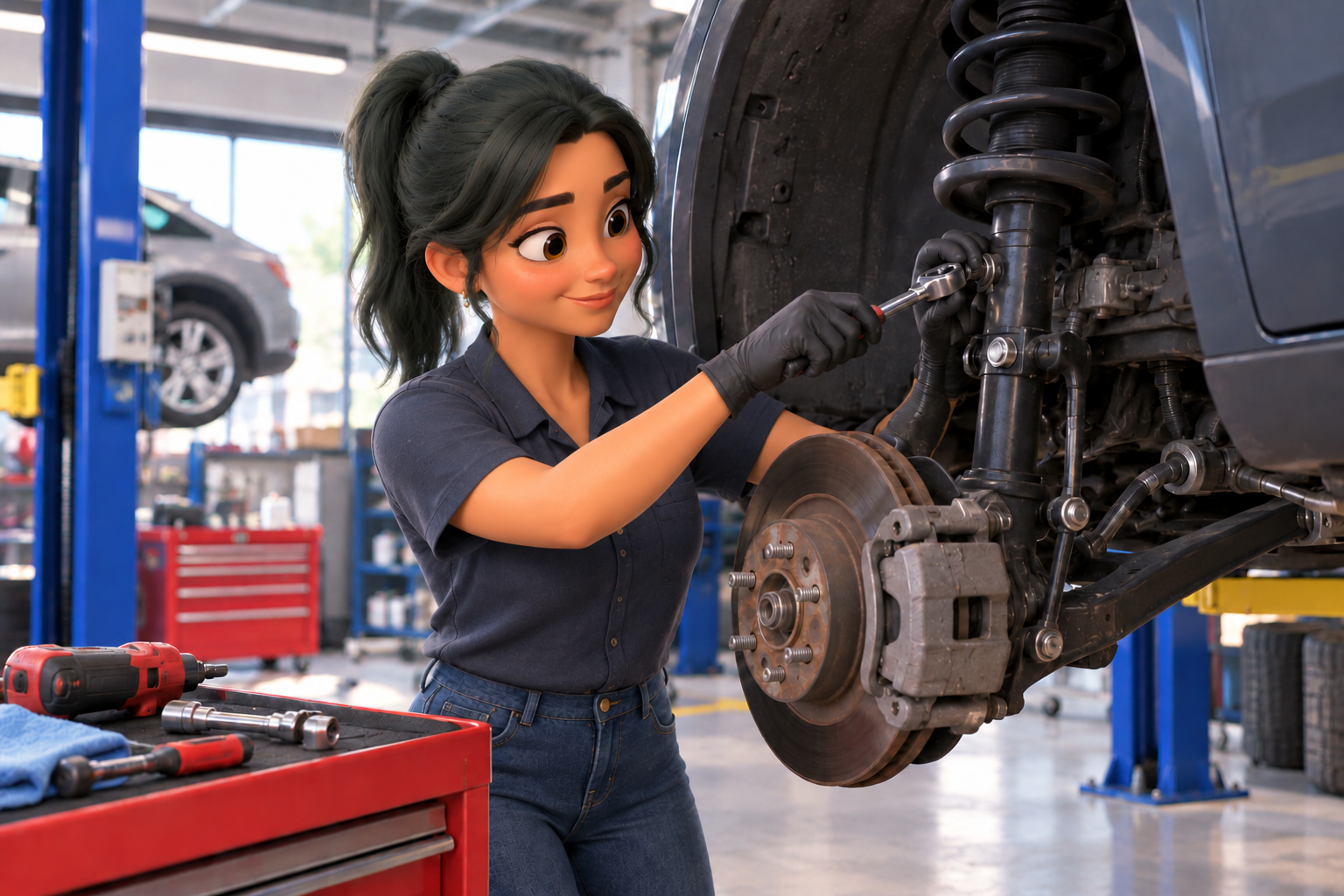
Most of your customers don’t figure out that their suspension is wearing out until something goes wrong. They notice a bouncy ride after a speed bump, a squeak or clunk over bumps, uneven tire wear, or steering that feels loose. Certain suspension parts like shocks and struts typically need replacing every 50,000 to 100,000 miles depending on the vehicle, so suspension work is one of the most common repairs your shop will quote. With so many different components and jobs, getting the suspension repair cost right is harder than it looks. So how much should you actually charge for it?
What does suspension repair include?
Suspension repair involves a lot of different components. It can mean replacing worn shocks or struts, swapping out a control arm or ball joint, or fixing smaller parts like sway bar links and tie rod ends. Depending on how complex the repair is, a suspension repair can take somewhere from a few hours to a full day. It’s worth knowing what each job involves before you set the price.
How much customers expect to pay
A typical range your customers might get quoted is anywhere from $150 to over $2,000. Sean Kim, an experienced mechanic from the Atlanta area, says that basic repairs run between $150 and $800. He also says luxury models with electronic or air suspension can run past $2,000.
If your customers have done their research or have had suspension work done before, the range above is what they’re expecting when they walk into your shop. However, the actual estimates depend on your labor rate, the book time for the job, your parts cost and markup, and the vehicle itself.
How to calculate your suspension repair price
In order to calculate your suspension repair price, start with just three numbers: your parts cost plus markup, your labor hours multiplied by your shop rate, and any add-ons like the alignment. Here’s an example with made-up numbers (swap in your own):
- Parts: $400 cost, marked up 40% = $560
- Labor: 2.5 book hours × $150/hour = $375
- Alignment: $120
- Total quote: $1,055
Then compare that total to the range your customers expect.
What affects suspension repair costs
Labor rate and book time
Book time is the number of hours you bill the customer for a job, no matter how long the repair actually takes. What it costs you depends on how you pay your techs. You can either pay them a flat rate or pay them hourly. On flat-rate pay, a tech who finishes under book time earns more per hour while your labor cost stays the same, and a job that runs over lowers your tech’s hourly earnings and ties up your bay. On hourly pay, every extra hour on the lift comes straight out of your margin.
Choice of parts
When it comes to parts, you can choose original equipment manufacturer (OEM), aftermarket, or even remanufactured parts. Each of these can change your margin as well as your warranty risk. Cheaper parts may look good on paper, but they carry a higher chance of comebacks, so they aren’t always the better choice.
Vehicle complications
In northern and coastal regions, road salts cause bolts to rust faster. A job that takes an hour in a warm climate can take more than two hours if you have to use a torch, air hammer, or extraction tools to free a seized part.
Air suspension, adaptive dampers, and many European vehicles require specialty tools and extra time for diagnosis. The cost of these parts is also higher. Don’t use your standard suspension pricing on these. Instead, quote them separately.
Alignment and pair replacement
Replacing most major suspension components changes steering geometry, so an alignment should be part of the quote. An alignment prevents rapid tire wear and pulling. Shocks, struts, and springs should also be replaced in pairs, so the car handles evenly. Both add to the bill, so explain them up front to your customers.
How long does a suspension repair take?
| Job | Typical labor time |
| Strut or shock replacement (per axle) | Roughly 1.5 to 3 hours |
| Control arm replacement | Roughly 1 to 2.5 hours per arm |
| Ball joint replacement | Roughly 1 to 2.5 hours per side |
| Tie rod end replacement | Roughly 0.5 to 1.5 hours per side |
| Sway bar link replacement | Roughly 0.5 to 1 hour |
| Complete front/rear overhaul | Roughly 4 to 8+ hours |
| Air suspension calibration/repair | Roughly 6 to 8+ hours |
These are general ranges for typical passenger vehicles. The actual book time varies by vehicle and is published in different labor guides. Make sure to always check the book time for the specific job.
How to quote suspension work
- Most of your customers aren’t mechanics, so explaining without visuals only goes so far. Photos and videos of leaking struts, torn boots, or worn bushings, along with measurements, show them why the repair is necessary.
- You may think you’re doing the right thing when you recommend the best parts, but your customers may feel you’re padding the bill. Offer them an economy option, a quality aftermarket option, and an OEM option, and let the customer choose the one they want. Make sure to let them know of the risks when using cheaper options.
- If you spot any other issues, like bad mounts or tired bushings, flag them during the same visit. Flagging them makes the repairs much easier to do while the car is already apart.
- Major suspension work is safety-critical, so get written approvals and keep your inspection notes. If a customer ever disputes a repair, that paperwork protects your shop.
Final thoughts
Suspension repair cost comes down to knowing your parts cost, your real labor time, and the vehicle-specific curveballs before you hand over the estimate.
When you’re running a busy shop, it’s easy for details to slip, either when you’re diagnosing or when you’re documenting the repair. This is when shop management software with digital vehicle inspection can help. It lets you capture photos and notes on every job and keeps everything consistent across your team.