How to start a car wash
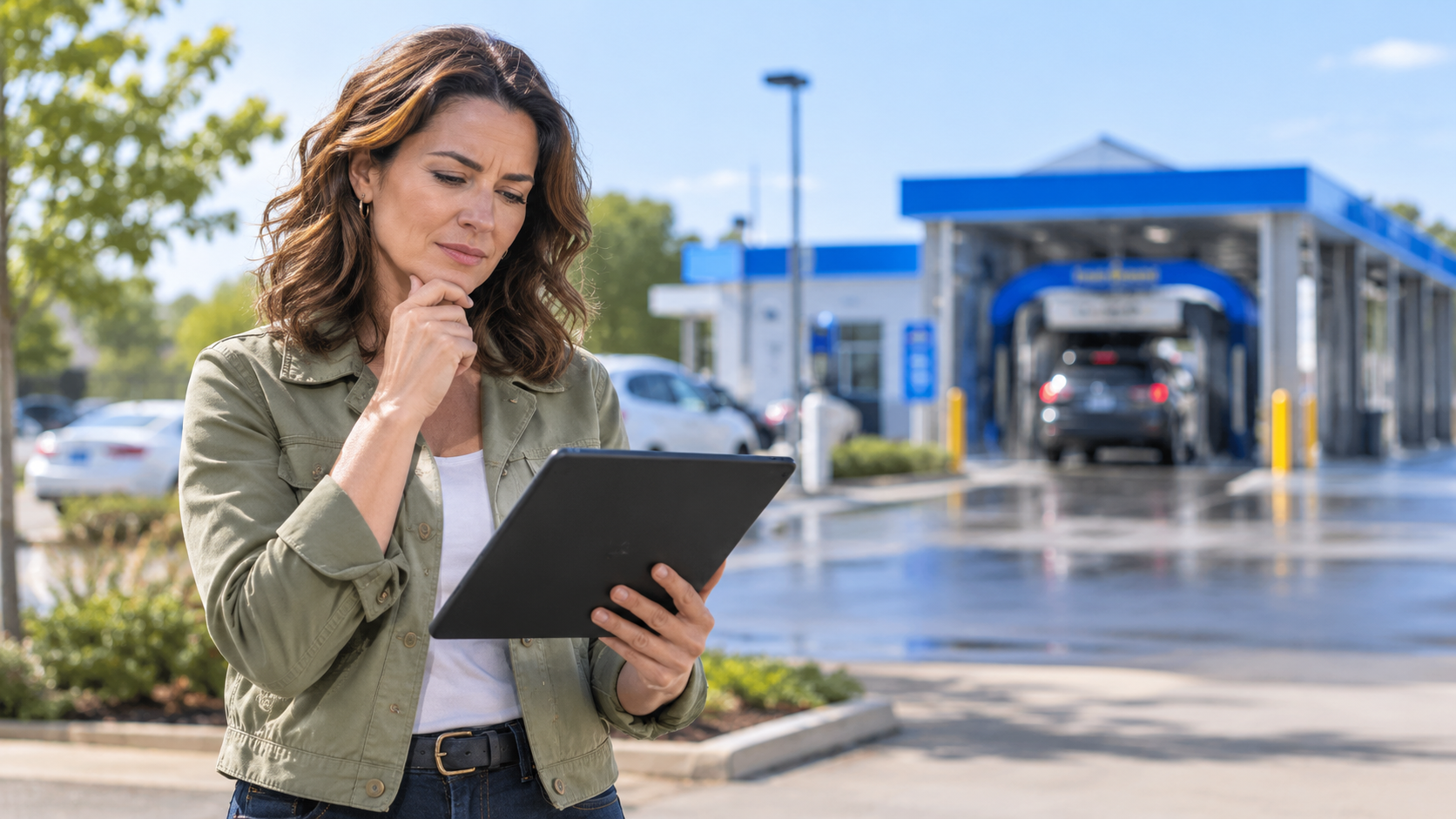
Rachel has been thinking of opening her own business for a while. Every Saturday, she drives past the express wash down the road and sees twenty, sometimes thirty, cars lined up. This gives her an idea.
One day, while she’s out having her brunch, she does the math on a napkin, and they look great. But is it really that simple?
To open a car wash, you need the right wash model, a realistic budget, financing, a site with the right utilities, permits, and quality equipment ready before you open. A membership program, a good team, and marketing follow.
If you’ve been thinking of how to start a car wash business yourself, here’s a step-by-step guide that walks you through it.
Step 1: Pick the type of wash model you’re going for
You probably assume that it’s better to start by looking for a location. The thing is, the type of wash actually decides everything else, including how much land you need for your business.
You might have noticed that there are multiple wash models you can choose from. Here’s a quick rundown:
The simplest ones are self-serve bays, because customers do the washing themselves and you only have to maintain the equipment. What you see mostly at gas stations and convenience store lots is in-bay automatics, where the car doesn’t move while the machine moves around it. The model most memberships are built around is express tunnels. They pull cars along a conveyor for a quick exterior wash. When your staff cleans the exterior and interior of the car by hand, it’s called a full-service wash. Then, there’s flex-serve, which pairs an automated tunnel with interior cleaning done by your staff.
According to Terrapin Construction Group, a commercial general contractor, and not counting land, a self-serve wash costs roughly $150,000 to $400,000. An in-bay automatic runs about $500,000 to $1.2 million (with each automatic unit costing $150,000 to $200,000), a new express tunnel $2.5 million to $8 million or more, and a flex or full-service wash roughly $3 million to $6 million or more.
Step 2: Decide how you’ll start the car wash
It isn’t necessary to start your business from scratch. If you want to pick your own brand identity, site, equipment, and membership program, then building an independent car wash is the right choice. You get full control, but you’re also figuring everything out yourself, and some lenders might want to see operating experience first.
Another option is to buy an existing wash. You get to skip the construction and permitting hassles, but you inherit the equipment and the previous owner’s reputation. You can also rebrand the car wash, but be careful, because if the brand already has a loyal customer base, you could lose it. So, make sure you look into the wash carefully before you sign.
The third way is to franchise. When you choose this option, you’ll pay for an established brand, but you must follow your franchisor’s rules on things like pricing, equipment, and marketing. The Franchise Disclosure Document (FDD) gives the estimated initial investment, ongoing fees, and any restrictions, so it’s important that you receive it.
Step 3: Build a budget you can handle
When it comes to setting up a budget, don’t bite off more than you can chew. Check your financials and see how much you can spend. Remember, there are going to be ongoing costs and not just the initial investment.
It gets confusing here. If you search online, one guide says opening a car wash only takes a couple of thousand dollars, and another puts a new tunnel wash somewhere around $2 million to $7 million. That’s because they’re describing different businesses. The first is a mobile setup, which is very different from the washes above.
The truth is, pricing comes down to the wash model, land, building, equipment, permits, and financing. So, you need to treat every figure as a starting point and only finalize your budget once you’ve gotten quotes from different vendors.
|
Expense category
|
What to include
|
Verification source
|
| Land and site work | Purchase or lease, grading, paving, landscaping | Local commercial listings, civil engineer |
| Building | Construction, finishes, signage | Three contractor bids |
| Wash equipment | Conveyor or in-bay machine, arches, dryers, hydraulics | At least three vendor quotes |
| Water systems | Reclaim, softening, filtration, backflow prevention | Equipment vendor and local water authority |
| Electrical and controls | Service upgrade, pay stations, tunnel controller | Electrician and vendor quotes |
| Vacuums and amenities | Vacuum islands, vending, mat washers | Vendor quotes |
| Planning and permitting | Engineering, architecture, zoning, environmental | City planning office |
| Insurance | General liability, garagekeepers, property, workers’ compensation | Commercial insurance broker |
| Marketing and launch | Signage, website, opening campaign | Agency or vendor quotes |
| Technology | POS, membership billing, online booking | Vendor proposals |
| Working capital | Cash for payroll, chemicals, utilities, and loan payments before break-even | Monthly cash-flow forecast |
Step 4: Think about your financing options
While it isn’t impossible, almost nobody pays for a car wash fully in cash. The right financing actually depends on what you’re doing. These are some of your main options.
SBA 504 loan
This loan is for land, buildings, and long-term equipment, so it’s the usual fit for a new car wash. A bank covers about half, a Certified Development Company (a nonprofit the SBA certifies) covers a large share, and you cover the rest. SBA guidance treats car washes as special-purpose property, so expect to put down about 15%, or 20% if the business is also new. The CDC portion has a fixed rate, terms run 10, 20, or 25 years, and it can’t be used for working capital. See SBA’s page on 504 loans.
SBA 7(a) loan
This is SBA’s most flexible loan program for real estate, equipment, working capital, or buying an existing wash. You can get a maximum of $5 million. See SBA’s page on 7(a) loans.
Conventional loan
Conventional loans are offered by banks and other private lenders without a government guarantee, so the lender carries the risk if you can’t repay. For such loans, you can expect a larger down payment, often 20% to 30% or more for special-purpose property. There will also be close scrutiny of your credit, finances, and experience.
Equipment financing
This is a loan or lease for the wash equipment only, with the equipment itself being the collateral. It’s often paired with a loan for land and building.
Seller financing
If you’re buying an existing wash, the owner can act as the lender. This means the terms might be flexible, but you should negotiate directly with the owner.
Step 5: Find your site
Before you decide on a location, make sure it passes the following checklist:
- How many cars pass each day, and can drivers see you in time to drive in?
- Is the entrance on the “going home” side of the road? Is there a turn lane? Can you get in and out without a risky left turn?
- Can 20 or more cars line up on your property?
- Is there enough water pressure and flow, and is there sewer capacity for your discharge?
- Does the site have the power service your model needs?
- Is a car wash allowed in that area, or does it need a special use permit or a hearing?
- Where are the nearest washes, and what services are they offering?
- How many households live within a reasonable drive?
Step 6: Sort out legal, permits, and compliance
This is the step where there’s going to be a lot of running around, and it can take the most time.
First, you’ll need to pick your business structure. Many owners go with a limited liability company (LLC) because it separates your personal assets from your car wash. Then select a name, register your car wash, and get an employer identification number (EIN) from the IRS. You’ll also need a business license, building permit, zoning approval, and occupancy permit. Make sure to check what your state and city require.
Car washes deal with a lot of wastewater, so there are some environmental permits involved as well. Depending on where you are, you may need to send it to a treatment facility, use a reclamation system, or both. California, for example, requires newer in-bay and conveyor washes to recycle a large share of their water. Before you commit to a site, ask your local water and sewer utility and your state environmental agency what applies to you, and see how NPDES permits work on EPA’s site.
Finally, there are rules about your employees. OSHA expects a workplace free of recognized hazards. Wage and overtime rules apply too, and the Department of Labor has a car wash fact sheet explaining how they work, so check your state’s minimum wage and tip rules. Since you’ll have customers’ cars in your care, general liability and garagekeepers coverage are the two insurance policies to prioritize, along with property and workers’ compensation.
Step 7: Buy equipment and hire employees
Once you’ve confirmed everything else, you can buy the equipment your specific car wash model requires. Buying brand-new equipment from a reputable supplier lowers the risk of downtime from faulty equipment, and a supplier with a strong service network helps when something does break. If your budget can’t handle it, good-quality used equipment is an option, but ask about its service history and warranty. You don’t have to buy everything before you open for business. Things like ceramic coating or specialty wax arches can usually wait. Our car wash equipment list breaks down the must-haves for each wash type and what can be kept for later.
Hiring comes next. If your wash is self-serve, then you really don’t need much staff. But if you’re planning on a full-service, you’ll need a bigger team. Whatever you choose, plan to train everyone on your POS and your membership offer before opening day.
Memberships are a big part of how many car washes make their money. Customers pay a monthly fee for unlimited washes. Since car washes are dependent on the weather, memberships can give you a steadier income. Make sure to decide your tiers, pricing, and billing before you open.
Step 8: Choose your car wash software
Your standard retail point-of-sale (POS) system doesn’t work for a car wash. A car wash POS handles more than payments and inventory. Then there is car wash management software that connects POS with customer recognition, membership management, and marketing automation in one system. Before choosing any software, ask your vendor some questions like:
- Does it integrate with the exact tunnel controller and equipment you bought?
- How are memberships billed?
- What are the full costs of hardware, software subscription, payment processing fees, setup, and contract length?
- How fast does customer support respond, and is it available 24/7?
- How is customer and payment data protected?
- Can you export your data if you switch vendors later, and can the system grow if you add a second location later?
If you need a deeper checklist covering features, total cost, onboarding, and security questions like PCI compliance and SOC 2, we have a guide to choosing the right car wash software.
Step 9: Market your car wash
Although the hope is that your car wash is crawling with customers from the get-go, that isn’t the reality. Most of your customers aren’t aware of your wash yet, so the next logical step is marketing.
Start by claiming and filling out your Google Business Profile. Make sure to include photos, accurate hours, phone number, address, and every service you offer.
There are tons of free website templates, so pick one that suits your car wash and add your prices and a membership signup. You can add online booking if you offer detailing or full service.
Owning and running any business today is about building a community. This means go local! Start with your neighborhood. Sponsorships and HOA newsletters can reach new residents who haven’t found a car wash yet. We cover more ideas in our local marketing ideas for car washes.
Conclusion
The first few months will surely test you. Even when wishing for sunshine every day, there will be days when the weather will ruin a few good Saturdays or the numbers look discouraging. But if you have fair prices, friendly staff, and software to manage everything, you’ll be able to build a steady customer base.
Rachel’s napkin was a decent start, but it just had rough prices and a number of cars. However, she now understands that knowing how to start a car wash is also about the site, the loan, the permits, the equipment, and software.

