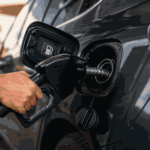
Many people need to fill up their cars with gas every week. But have you ever wondered what the capacity of your car’s gas tank is? Continue reading to learn everything you need to know.
The capacity of an average car’s fuel tank
The size of your car affects how much gas it can hold. Small cars usually carry about 12 gallons of gas, while larger cars can hold 15 gallons or more.
Gas mileage, or miles per gallon (MPG), is not linked to the size of the fuel tank. A larger tank lets you drive further before refueling, but it doesn’t change your gas mileage.
As gas tanks get bigger, they also weigh more. Instead of choosing a larger tank, it might be better to pick a smaller one and work on boosting your MPG. To improve fuel efficiency, keep your vehicle lightweight.
Most gasoline tanks hold between 13 and 16 gallons. For instance, a Ford Focus holds 13.5 gallons, a Hyundai Elantra can store 14 gallons, and a Mazda 3 holds between 14.9 and 15.9 gallons, depending on the model.
Reserve Fuel Tank Capacity
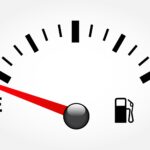
The low fuel warning light will turn on when the gas tank approaches reserve levels in most cars. The reserve fuel level is typically between 10% and 15% of the tank capacity.
Fuel Capacity vs. Size of the Engine
The more space inside the engine for gasoline and air, the bigger it is. The volume (amount of space) in an engine’s cylinders will be used to estimate the size of your engine. The mixture of air and fuel is ignited here to generate the energy required to turn the wheels.
The volume shared by all cylinders determines the engine’s overall size. The number of cylinders in an engine varies greatly, ranging from two to twelve. We’ve even seen some cars with 16 cylinders. On the other hand, the higher figures are usually linked with massive UTEs and supercars.
In general, the smaller the engine, the smaller the engine capacity and, as a result, the more fuel-efficient your car will be.
To have a better understanding, let’s look at the average size of gas tanks dependent on engine size:
Two-cylinder car Gas Tank Capacity
A two-cylinder car holds around 11–12 gallons of gas. Examples of two-cylinder cars are:
- Volkswagen XL Sport
- 2018 Morgan 3 Wheeler
- 2014 Alfa Romeo Mito
Four-cylinder car Gas Tank Capacity
A four-cylinder car holds approximately 14–15 gallons of gas. Examples of four-cylinder cars are:
- Chevrolet Malibu
- Ford Mustang EcoBoost
- Honda Civic Type R
- Honda Accord
- Subaru WRX STI 305-HP
Six-Cylinder Car Gas Tank Capacity
Typically, a six-cylinder vehicle will hold 15–16 gallons of gas. Examples of six-cylinder cars are the following:
- Alfa Romeo Giulia Quadrifoglio
- 1996 Ford F-150 XL
- Ford Taurus SHO
- 207 BMW 335i
- 1993 – 2002 Toyota Supra Mk
Eight-cylinder car Gas Tank Capacity
A car with eight cylinders can normally hold 16 gallons of gas or more. Examples of eight-cylinder cars are the following:
- Buick 215
- Dodge HEMI Series
- Ford Cosworth DFV
- Koenigsegg Spyker V8
- Lotus Type 918
Cars with the Biggest Gas Tank Capacity
You might be wondering what kind of car will allow you to get the most gas mileage without filling up your tank. The average gas tank size is bigger in larger cars.
Here are some of the best fuel-tank-capacity cars on the market:
- Audi Q7 – 22.5 gallons
- Bently Bentayga – 22.5 gallons
- Dodge Durango – 24.6 gallons
- Ford Expedition EL – 33.5 gallons
- GMC Yukon XL – 31 gallons
- Infiniti QX80 – 26 gallons
Cars with the Smallest Gas Tank Capacity
There are a variety of manufacturers and models of cars with small gas tanks. A good example is the Hyundai Ioniq Blue. The gasoline tank on this car is 11.9 gallons.
Gas Tank Capacity of a Smart Car
Smart cars are well-known for being inexpensive, fuel-efficient, and dependable. In addition, they have a good gas mileage of around 40 miles per gallon. They also weigh 700 pounds less than almost any other American vehicle.
When you consider the size of a Smart car, you might believe that the fuel tank is on the small side, as smaller cars typically have smaller gas tanks. You’d be correct; most Smart cars have an 8.7-gallon fuel tank.
Gas Tank Capacity of a Race Car
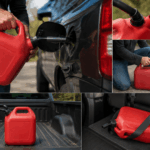
The gas tank of a race car is usually 22 gallons. The gas comes from the central tank to prevent teams from adding additives. The petrol cans used to refill race cars hold 11 gallons and weigh about 70 pounds when full.
Common Queries
Can I find my car’s gas tank size using the VIN?
No, the VIN doesn’t directly contain gas tank size info. But it can help! Find your car’s make, model, and year using a free VIN decoder, then look up the tank size in the owner’s manual, online specs, or fuel economy websites.
Is there a free VIN decoder that includes gas tank size?
Unfortunately, finding a free VIN decoder with gas tank size included can be tricky. While many decoders exist, gas tank info is only sometimes guaranteed, especially for free services.
What information does the VIN reveal about my car’s fuel tank?
The VIN itself doesn’t directly tell you the fuel tank size.
Which car has the biggest gas tank in the world (liters)?
The Ford Expedition EL, with a fuel tank capacity of 33.5 gallons, has the biggest gas tank in the world.
What’s the largest fuel tank capacity for a passenger car?
The Nissan Patrol Super Safari boasts a 135-liter tank, ideal for traversing vast distances. With its 117-liter tank and excellent highway fuel economy, the Chevrolet Suburban can travel over 1,600 kilometers before needing a refill!
How many liters does the highest-capacity car tank hold?
Ford Super Duty 450 can hold up to 181 liters (47.7 gallons) of gasoline in its fuel tank. Toyota Land Cruiser 79 Pick-Up and Nissan Patrol Super Safari boast about holding close to 180 liters (47.6 gallons).
Is a big gas tank always a good thing?
A big gas tank is only sometimes a good thing. It depends on various factors like your driving habits, budget,
How can I calculate my car’s gas tank size if I don’t know it?
Check your owner’s manual: It’s the easiest and most accurate source. You can normally find a digital version online!
- Search online: Enter your car’s make, model, and year to find specifications on car information websites.
- Ask a mechanic: They can usually tell you off the top of their head or look it up quickly.
Do I need a special tool to estimate my fuel tank capacity?
No, you usually don’t need a special tool! Here are a few easy ways to estimate your fuel tank capacity:
- Check your owner’s manual: The tank size will be listed.
- Look online: Enter your car’s make, model, and year into a car specifications website. They’ll list the tank size.
- Use a fuel tank capacity calculator: Some websites and apps let you enter your car details and calculate the tank size.
- Fill-up method: Note the odometer reading, fill your tank, drive until the low fuel light comes on, note the odometer again, then refill and record the amount used. Divide the distance by the fuel used for an estimate.
- Consult a mechanic: They can usually tell you the tank size from experience.
Is there a website or app to calculate my car’s gas tank size?
Unfortunately, there isn’t a dedicated website or app for calculating your car’s gas tank size.
Which vehicle holds the most fuel overall (not just cars)?
Ford Super Duty 450 can hold up to 181 liters (47.7 gallons) of gasoline in its fuel tank. Toyota Land Cruiser 79 Pick-Up and Nissan Patrol Super Safari boast about holding close to 180 liters (47.6 gallons).
Are there any trucks or SUVs with bigger gas tanks than cars?
Absolutely! Trucks and SUVs often boast significantly larger gas tanks than most cars.
What’s an SUV’s typical gas tank size in gallons/liters?
Typical Gas Tank Size for SUVs:
- Gallons – 18-28 gallons (average), can range up to 33 gallons for larger models.
- Liters – 68-106 liters (average), can reach 125 for bigger SUVs.
Is there a difference in average tank size between SUV types (full-size, compact, etc.)?
Absolutely! There’s a clear trend in average gas tank size among different SUV types.
Does fuel efficiency typically correlate with SUV tank size?
No, fuel efficiency and SUV tank size typically don’t correlate strongly.
How does the average SUV tank size compare to cars and trucks?
The average gas tank size is 16-18 gallons (60-70 liters). This range offers a good balance between driving range and practicality. The average gas tank size is 13-16 gallons (50-60 liters). Smaller tanks prioritize fuel efficiency and maneuverability. An average gas tank size is 20-25 gallons (75-95 liters). Larger tanks cater to towing, hauling, and longer driving distances.

Renée Martin is a travel and car expert who focuses on road and air travel in the U.S. For the past 6 years, she’s been helping make driving and trip planning easier and budget-friendly for everyday travelers.