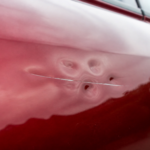
Somewhere on the internet right now, a video is promising that a plunger and a kettle will fix your dent for free. Sometimes that is true. Sometimes you end up with a scalded hand and the same dent looking back at you.
So here is how to get a dent out of a car, sorted by what actually works. A few of these methods are genuinely effective on the shallow, everyday dents most cars collect. A few work occasionally, on the right dent. One is folklore.
Key takeaways
- DIY works on shallow, rounded dents with undamaged paint, on a flat part of a panel.
- Plastic bumpers are the best candidates, because warm plastic wants to return to its molded shape.
- A glue-puller kit gives more control than a plunger and handles dents suction cannot grip.
- Cracked paint, a sharp crease, or a dent on a body line means stop. Those need a technician.
- Fifteen minutes of no progress is your answer. Pushing harder is how a cheap repair becomes an expensive one.
Which Dents Are Worth Trying
DIY dent removal is not magic, but it succeeds more often than skeptics expect — on the right dent. Good candidates share four traits: shallow, rounded rather than creased, paint fully intact, and sitting on a flat area rather than a body line or panel edge.
Material matters as much as shape. Plastic bumper covers have more give than steel and respond well to heat, which is why the bumper methods below have the best hit rate of anything here. Steel panels can work when the dent is genuinely shallow. Aluminum panels, increasingly common on hoods and doors, are far less forgiving and are best left alone.
If the dent fails those tests, skip to when to stop. Knowing which dents to leave is the part that saves money.
Method 1: The Plunger
The one everybody has heard of, and it mostly earns its reputation. Use a cup plunger — the flat sink type, not the flanged toilet type — because it needs to seal flat against the panel.
Wet the rim of the plunger and the panel so the seal holds, press it over the center of the dent, then push in and pull out firmly and repeatedly. On a wide, shallow dent in the middle of a hood or door, the metal often pops back.
Where it fails is small, sharp dents. There is not enough surface area for the suction to grip, and no amount of effort changes that.
Method 2: Hot Water on a Plastic Bumper
This one is specifically for plastic bumper covers, and it is more reliable than it sounds. Hot water poured over the dented area warms the plastic enough that it wants to return to its molded shape. Then either work the plunger over it, or reach behind the cover and push the dent out by hand.
Two practical notes. Work quickly, because the plastic stiffens again within a minute or two as it cools. And take the burn risk seriously: pour with care, keep your face away from the splash, and wear gloves if you are reaching behind a bumper you have just poured hot water over. This method is for plastic only — do not use it as a general-purpose trick on painted metal panels.
Method 3: A Glue-Puller Kit
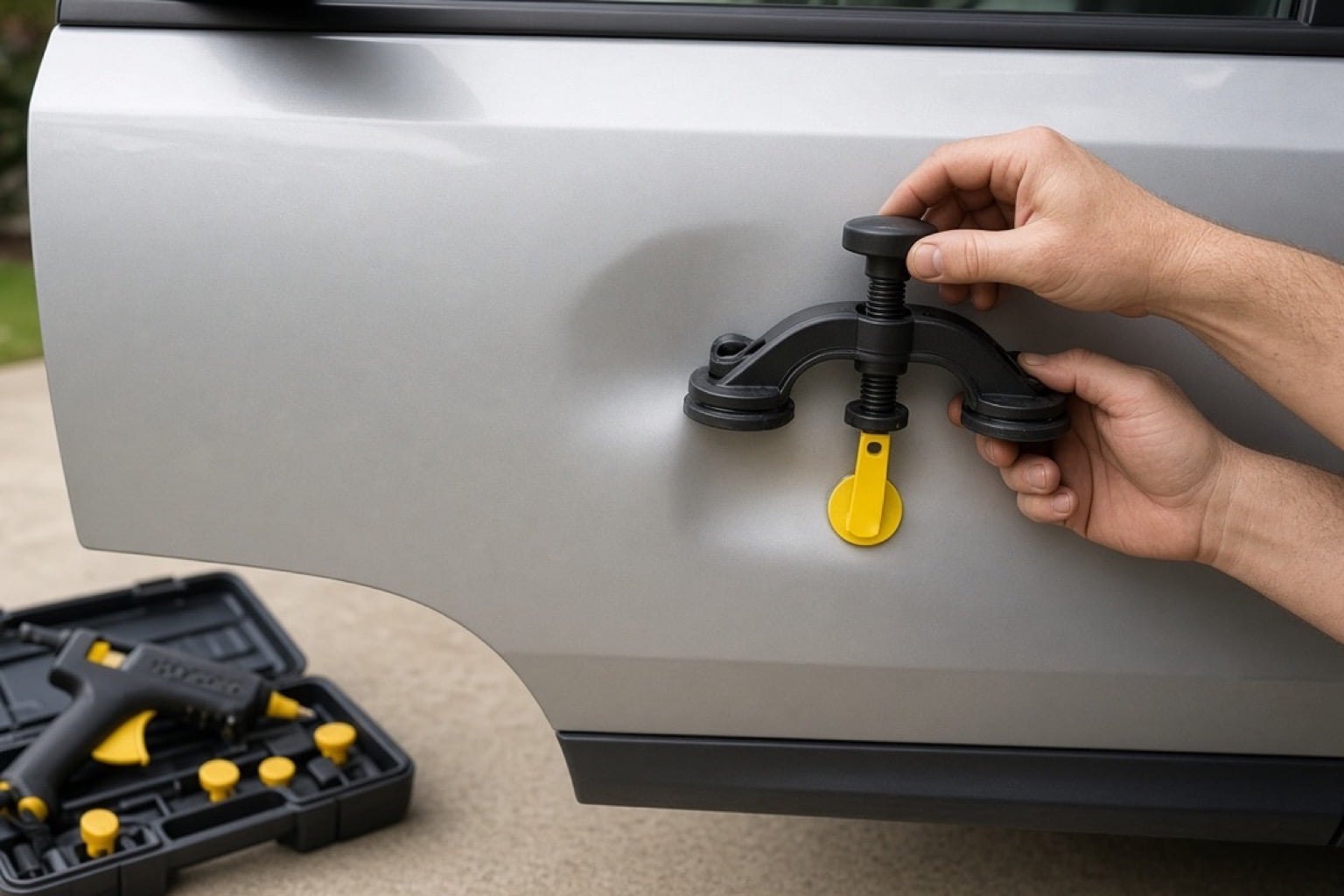
A dent repair kit takes the plunger idea and adds real, directed pulling force. Most kits include a hot glue gun, plastic pull tabs in several sizes, and either a bridge puller or a slide hammer.
The process rewards patience over strength. Clean the panel, glue a tab sized to the dent onto its center, let the glue set properly, then draw the metal out gradually with the puller — small pulls, repositioning the tab as the dent lifts, rather than one heroic yank. When the dent is out, the tabs release with the alcohol solution most kits supply.
This handles dents the plunger cannot, mainly because you choose exactly where the force is applied. It is also the method most likely to leave a small high spot if you overdo it, which is a reason to stop early rather than push for perfection.
Methods You Will See Online
Dry ice. Works on the same principle as hot water, in reverse: rapid contraction can pop a shallow dent back. It is harder to source, and it demands insulated gloves because contact causes cold burns almost instantly. Use it outdoors or in a well-ventilated space, since it sublimates into carbon dioxide gas.
Hair dryer, then compressed air. Heat the panel, then chill it fast with an inverted air duster, aiming for the same thermal shock. Results are inconsistent. Keep the dryer moving and do not overheat the paint, which can blister or lift if you park the heat in one spot.
Spraying lubricant on the dent. This one is folklore. A penetrating spray will not change the shape of a panel. It does nothing harmful, and it does nothing useful either.
Methods at a Glance
| Method | Best for | How well it works |
|---|---|---|
| Plunger | Wide, shallow dents on flat panels | Moderate; needs surface area to grip |
| Hot water | Plastic bumper covers | Good, within the first minute or two |
| Glue-puller kit | Small to medium dents needing control | Good; the most capable DIY option |
| Dry ice or thermal shock | Shallow dents, when nothing else is to hand | Inconsistent; handling precautions apply |
| Professional PDR | Almost any shallow dent with intact paint | Excellent, and usually quick |
When to Stop and Call a Shop
Four signals, any one of which is enough:
- Cracked or chipped paint. The surface is already compromised, and working it will spread the damage.
- A sharp crease. The metal has been stretched past the point where it springs back.
- A body line, door seam or panel edge. These are stiff by design and resist being reshaped from outside.
- Fifteen minutes with no movement. If it has not started to lift, more force is not the answer.
A paintless dent repair technician working with proper rods and a reflection board reads the panel in a way you cannot from the outside, and typically finishes a dent like this in well under an hour. What that costs is set out in how much a car dent repair costs — for a single small ding it is often less than people expect.
Frequently Asked Questions
Does the plunger method work on any dent?
No. It needs a wide, shallow dent on a flat panel so the cup can seal and grip. Small sharp dents and anything near an edge will not respond.
Will DIY dent removal damage my paint?
Usually not, since most methods pull from outside or push from behind rather than striking the surface. The exceptions are paint that was already cracked, and overheating a panel with a heat gun or dryer.
How long should I try before giving up?
Ten to fifteen minutes of genuine effort. If the dent has not begun to move by then, it is the wrong dent for the method.
What comes in a dent repair kit?
A hot glue gun, plastic pull tabs in a range of sizes, a bridge puller or slide hammer, and a release solution for taking the tabs off afterwards.
Can hot water damage my bumper?
On a plastic cover it is generally safe, which is what the method relies on. Keep it off painted metal panels, and treat the water itself as the real hazard.
Does a failed DIY attempt make professional repair more expensive?
Usually not, because most attempts either work or simply do not move the dent. The exception is forcing a creased or deep dent, where stretching the metal further can push a PDR job into bodywork.
Are glue pullers safe on factory paint?
Yes, used as intended: the supplied glue and release solution are designed to let go cleanly. Pulling a tab off dry, or leaving glue to sit, is what risks the finish.
Try the Easy Ones, Know the Limit
Match the method to the dent. Plunger for a wide shallow dent on a flat panel, hot water for a plastic bumper, a glue-puller kit when you need control. On a dent that fits those descriptions there is little to lose by trying.
On a creased, deep or paint-damaged dent, the sensible move is to skip straight to a technician. The car damage repair guide explains how dents sit alongside the other damage a car collects, and when DIY has run out of road you can compare and book shops through Way, with cashback on the receipt and up to 10% off auto repairs for Way+ members.
Get 10% off in the Way App in the Way App!

- Scan and get the Way App Download the Way App
- Log in to your account
- Use code FIRST10 at checkout