You glance at a tire and it looks fine, round, no obvious dents or bulges, nothing that would make you think twice. But “looks fine” and “properly inflated” aren’t the same thing, and tires can lose a noticeable amount of air over the course of a season without ever looking visibly flat.
Recommended tire pressure isn’t a one-size-fits-all number, and it’s definitely not whatever’s printed on the tire’s sidewall, despite that being where a lot of people look first. Getting it right matters more than most routine car maintenance, since both a soft tire and an overinflated one quietly work against you in ways you won’t notice until something else goes wrong.
Quick answer
Your recommended tire pressure is found on a sticker inside your driver’s side door jamb, not on the tire itself. Most passenger vehicles need somewhere between 30 and 35 PSI, but the correct number varies by vehicle. Check pressure monthly when tires are cold, since they naturally lose about 1 PSI for every 10°F drop in temperature.
Why Correct Tire Pressure Matters
Proper inflation affects far more than just ride comfort. It determines how evenly your tire’s tread contacts the road, which affects grip, braking distance, and how evenly the tread wears down over the tire’s life. Underinflated tires flex more with each rotation, building up heat that accelerates wear and increases the risk of a blowout. Overinflated tires ride harsher and wear unevenly too, concentrating contact in the center of the tread instead of across its full width.
Correct tire inflation also has a real effect on fuel economy, since underinflated tires create more rolling resistance, meaning your engine works harder to maintain speed. That difference adds up at the pump, and if you’re trying to stretch every fill-up further, comparing prices with Way’s gas price tool alongside keeping your tires properly inflated is a small combination that actually saves real money over a year of driving.
Way’s DIY hub has guidance on basic tire checks you can build into your regular routine without needing a shop visit for something this simple.
What Does PSI Actually Mean
PSI stands for pounds per square inch, the unit used to measure how much air pressure is inside your tire. Tire pressure and PSI often get used interchangeably, but technically, PSI is just the measurement unit, while tire pressure refers to the actual air pressure inside the tire itself. The recommended PSI for tires isn’t a universal number, it depends on your specific vehicle, its weight, and the tire size it was designed to use.
This is exactly why checking the tire’s own sidewall for a number is misleading. That figure represents the maximum pressure the tire can safely hold, not what your vehicle manufacturer recommends for everyday driving.
How to Find Your Recommended Tire Pressure
Your vehicle’s actual recommended tire pressure is printed on a sticker inside the driver’s side door jamb, visible when the door is open. The same information typically appears in your owner’s manual, and on some vehicles, inside the glove box door or fuel door as well.
Tire pressure by car varies more than most drivers expect, even among vehicles that look similar in size. A compact sedan might call for 32 PSI while a similarly sized SUV calls for 35, since the recommendation accounts for the vehicle’s specific weight distribution and tire specifications, not just its category. If you’re due for a broader inspection anyway, booking a visit through Way Auto Repair is a straightforward way to have pressure and tread checked together.
Underinflated vs. Overinflated vs. Correct Pressure
| Underinflated | Correctly Inflated | Overinflated | |
|---|---|---|---|
| Tread wear pattern | Wears faster on outer edges | Even wear across tread | Wears faster in center |
| Fuel economy | Reduced | Optimal | Slightly improved, but less traction |
| Ride feel | Soft, sluggish handling | Balanced | Harsh, bumpy |
| Heat buildup | Higher, increases blowout risk | Normal | Lower, but less grip |
| Braking distance | Increased | Standard | Can be inconsistent |
Correct tire inflation sits in a fairly narrow window, and both directions away from it carry real tradeoffs rather than one being a safe buffer against the other.
How to Check and Adjust Your Tire Pressure
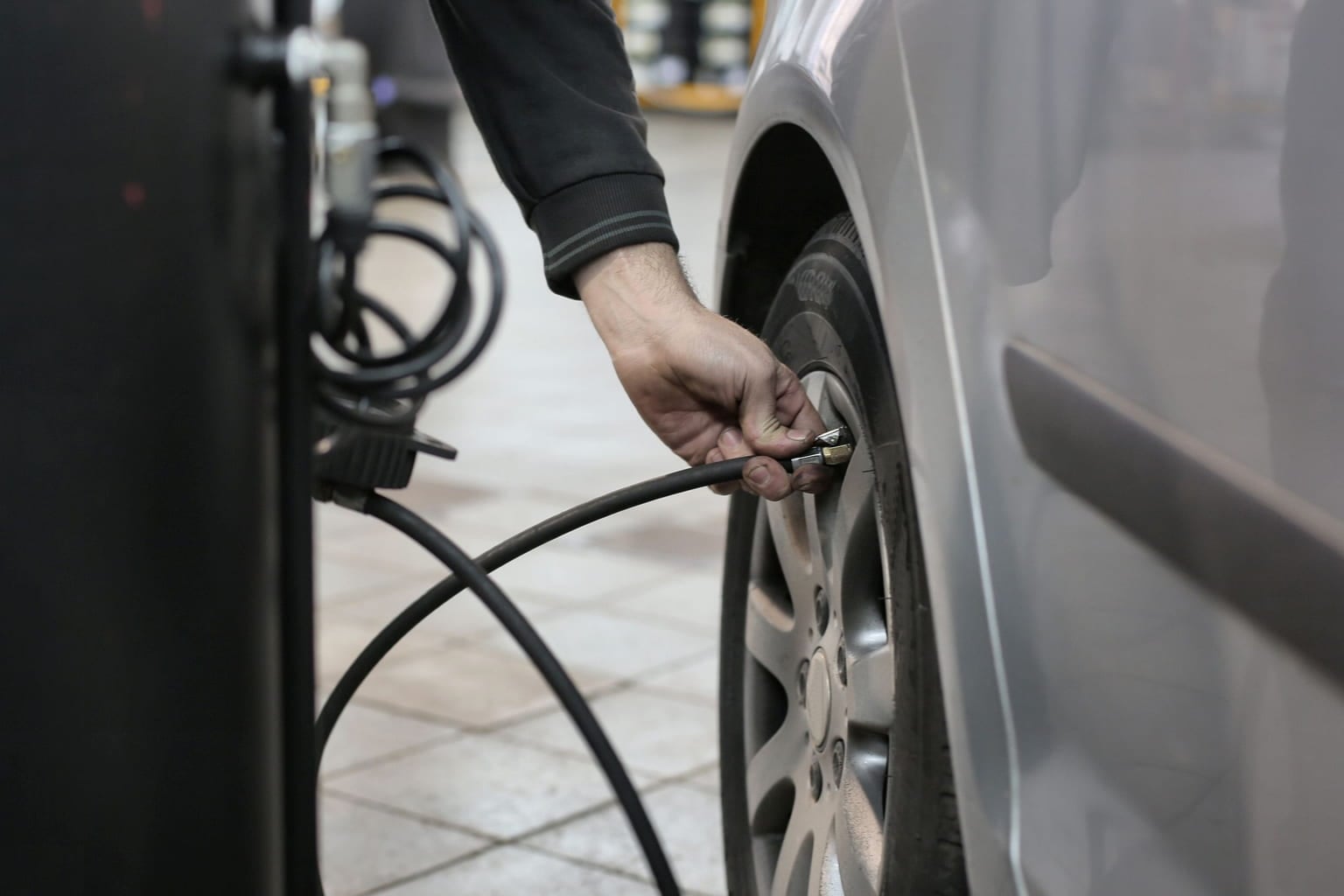
Check pressure when tires are cold, ideally before driving or at least three hours after, since heat from driving temporarily raises the reading. Remove the valve cap, press a gauge firmly onto the valve stem until the hissing stops, and read the number against your door sticker’s recommendation.
If the tire is under the target number, add air with a compressor in short bursts, checking frequently so you don’t overshoot. If it’s over, press the gauge’s release pin against the valve stem briefly to let a little air out, then recheck. Repeat across all four tires, plus your spare if it’s a full-size one, and don’t forget to twist the valve caps back on securely when you’re done. If your car’s dashboard flagged low pressure before you started, most vehicles will clear that warning automatically after a short drive.
Why Your Tire Pressure Light Comes On
Every vehicle manufactured after September 2007 in the US is required to have a tire pressure monitoring system, or TPMS, following a federal mandate. NHTSA’s guidance on TPMS explains that this system alerts you once any tire drops about 25% below its recommended pressure, which is a meaningful drop, not a minor fluctuation.
A steady warning light usually just means low pressure in one or more tires. A light that blinks repeatedly when you start the car, rather than staying solid, can indicate a fault within the TPMS system itself rather than a pressure problem, which is worth mentioning to a technician rather than assuming it’s the same issue.
When to Get a Professional Check
If you’re seeing a persistent warning light even after topping off all four tires, or if one tire keeps losing pressure faster than the others, that points toward a slow leak rather than normal seasonal fluctuation. Look for ASE-certified technicians when you need this looked at, since finding a slow leak often means a proper inspection for punctures, valve stem wear, or a bead seal issue rather than repeated top-offs.
What Ignoring Tire Pressure Can Cost You
Letting tires run underinflated for months accelerates uneven wear enough to shorten tire life significantly, sometimes by thousands of miles compared to properly maintained tires. Beyond the tires themselves, chronic underinflation reduces fuel economy consistently, and in more severe cases, contributes to a blowout that can total the tire outright and, depending on speed and road conditions, put you at genuine risk. For a broader look at how small maintenance habits affect what a car costs over time, Way’s ownership costs guide is worth a look.
Building a Simple Tire Pressure Habit
Check pressure roughly once a month and before any long road trip, since gradual air loss is normal even without a puncture. Pay attention to seasonal swings specifically, since a 20 to 30 degree temperature drop between summer and winter can meaningfully change your reading even if nothing else about the tire has changed. Way’s repair guides cover more routine maintenance habits like this one if you want to build pressure checks into a broader upkeep schedule.
If you’re already looking for ways to save on upkeep like this, it’s worth checking what Way+ includes, since routine checks like tire pressure and tread inspections are exactly the kind of small, recurring costs a membership like that is built to offset.
Conclusion
Recommended tire pressure isn’t printed where most people look for it, and getting it right takes about five minutes a month once you know where to check. The door jamb sticker, not the tire’s sidewall, is the number that actually matters for your specific vehicle, and sticking close to it protects your tread life, your fuel economy, and your margin of safety all at once.
If it’s been a while since anyone’s actually checked your tire pressure and tread together, it’s worth folding into your next auto insurance review too, since a well-maintained set of tires is one of the more overlooked factors in avoiding an accident claim in the first place.
Related guides
- TPMS Warning Light: What It Means and What to Do
- Slow Tire Leak: Common Causes and How to Find the Problem
- Wheel Balancing vs. Alignment: What’s the Difference?
Frequently Asked Questions
What PSI should my tires be if I can’t find the door sticker?
Check your owner’s manual as a backup, since the same figure is listed there. If both are unavailable, most passenger cars fall somewhere between 30 and 35 PSI, but this is a rough estimate, not a substitute for your vehicle’s actual specification.
Does tire pressure by car really vary that much between similar models?
Yes. Even vehicles of similar size and weight class can have different recommended pressures depending on tire specifications, load capacity, and how the manufacturer tuned the suspension, so it’s worth checking your specific vehicle rather than assuming a standard number applies.
How often should I check my tire pressure?
About once a month, and before any long trip. Tires naturally lose roughly 1 PSI for every 10-degree drop in temperature, so pressure can shift meaningfully with the seasons even without a leak.
Is it bad to use the maximum PSI listed on the tire’s sidewall?
Yes, that number represents the tire’s maximum safe pressure, not the recommended pressure for your vehicle. Using it as your target usually results in overinflation and uneven tread wear.
Can incorrect tire pressure affect my car’s handling in an emergency stop?
Yes. Both under- and overinflated tires reduce how evenly the tread contacts the road, which can increase stopping distance and reduce predictability during hard braking, particularly on wet roads.
Get 10% off in the Way App in the Way App!

- Scan and get the Way App Download the Way App
- Log in to your account
- Use code FIRST10 at checkout