Wheel alignment problems can affect how your car steers, handles, and wears its tires. You might notice your vehicle pulling to one side, a crooked steering wheel, or uneven tire wear. These symptoms can develop gradually, making them easy to overlook.
So, when does your car need a wheel alignment? The answer depends on how your vehicle behaves and whether its wheel angles still match the manufacturer’s specifications. Recognizing the warning signs early can help protect your tires and maintain predictable handling.
What Is a Wheel Alignment?
A wheel alignment adjusts the angles of your vehicle’s wheels to match the manufacturer’s specifications. These angles affect how the tires meet the road and how the vehicle responds when you steer.
A technician usually checks three main alignment angles:
- Camber: The inward or outward tilt of a wheel when viewed from the front.
- Toe: The direction the tires point when viewed from above.
- Caster: The angle of the steering axis when viewed from the side.
Incorrect settings can cause uneven tire wear, steering problems, and poor handling.
Wheel alignment does not mean balancing your tires. Alignment corrects wheel angles, while balancing corrects weight differences in the tire and wheel assembly.
7 Signs Your Car Needs a Wheel Alignment
1. Your Car Pulls to One Side
One of the most common signs of bad wheel alignment is a vehicle that drifts left or right while driving on a straight, level road.
You may need to keep correcting the steering to maintain your lane. This can make longer drives tiring and reduce your confidence behind the wheel.
However, alignment is not the only possible cause. Low tire pressure, uneven tire wear, and brake problems can also cause pulling.
Have a technician inspect the tires, brakes, and suspension before deciding which service you need.
2. Your Steering Wheel Is Off-Center
Your steering wheel should sit close to the center position when your vehicle travels straight.
If the car moves straight but the steering wheel sits at an angle, the alignment may need attention.
This can happen after hitting a pothole, striking a curb, or driving over rough roads.
A technician can measure the wheel angles and adjust them to the manufacturer’s specifications.
3. Your Tires Have Uneven Tread Wear
Check your tires for unusual wear patterns. Incorrect alignment can cause certain sections of the tread to wear faster than others.
Common patterns include:
- Inner-edge wear: The inside edge wears faster than the rest of the tire.
- Outer-edge wear: The outside edge shows greater wear.
- Feathering: Tread blocks feel smooth in one direction and sharp in the other.
- Uneven wear across the tire: Certain sections lose tread faster than surrounding areas.
Uneven wear can shorten tire life and increase replacement costs.
If you notice these patterns, have a professional inspect your alignment and suspension.
4. Your Steering Feels Loose or Unstable
Your steering should feel predictable when you make small corrections.
If your vehicle wanders, feels loose, or needs constant steering adjustments, alignment could be part of the problem.
However, worn tie rods, ball joints, and other steering or suspension components can cause similar symptoms.
A complete inspection can help identify the actual cause before you pay for an alignment.
5. Your Tires Squeal During Normal Turns
Tires should maintain proper contact with the road during normal turns.
When the wheel angles fall outside the correct range, the tires may scrub against the road instead of rolling smoothly.
This can create squealing sounds, especially during low-speed turns.
Check the tire tread and steering behavior if the noise happens regularly. A mechanic can determine whether alignment or another issue causes the sound.
6. Your Car Recently Hit a Pothole or Curb
A strong impact can change your vehicle’s alignment.
Potholes, road debris, and curb strikes can affect wheel angles or damage steering and suspension components.
You may not notice an immediate change. However, uneven tire wear or steering problems can appear later.
If you experience a strong impact, inspect your tires and watch for new vibrations, pulling, or steering changes.
7. You Recently Replaced Steering or Suspension Parts
Wheel alignment often becomes necessary after certain steering and suspension repairs.
For example, replacing tie rods, control arms, or other components can change the wheel angles.
An alignment check after this type of repair helps confirm that the wheels meet the correct specifications.
Always follow the vehicle manufacturer’s service recommendations.
When Should You Get a Wheel Alignment?
You do not need to wait for obvious symptoms before checking your alignment.
Consider scheduling an inspection in these situations:
| Situation | Recommended Action |
|---|---|
| Your car pulls to one side | Schedule an alignment check |
| Steering wheel sits crooked | Have the alignment inspected |
| Tires show uneven wear | Check alignment and suspension |
| You hit a deep pothole | Inspect wheels and suspension |
| You replace steering components | Follow alignment requirements |
| You install new tires | Check alignment if symptoms or wear suggest a problem |
There is no single alignment interval that applies to every vehicle. Driving conditions, road quality, vehicle design, and component wear all affect alignment.
Check your owner’s manual for manufacturer guidance.
Wheel Alignment vs. Wheel Balancing: What’s the Difference?
Wheel alignment and wheel balancing solve different problems. Understanding the difference can help you avoid paying for a service that does not address the issue.
| Feature | Wheel Alignment | Wheel Balancing |
|---|---|---|
| Main purpose | Corrects wheel angles | Corrects weight distribution |
| Common symptom | Vehicle pulls to one side | Steering wheel or vehicle vibrates |
| Main components | Steering and suspension geometry | Tire and wheel assembly |
| Common trigger | Potholes, curb impacts, worn parts | Tire installation or lost wheel weights |
| Main benefit | Better tracking and even tire wear | Smoother wheel rotation |
If your car pulls to one side, alignment may be the right service. If it shakes at certain speeds, balancing may be more appropriate.
Sometimes, both services are necessary. Our guide to wheel balancing vs. alignment explains how to identify the difference.
What Happens During a Wheel Alignment?
A wheel alignment service involves measuring and adjusting the angles of your wheels.
Here is what you can generally expect:
- Initial inspection: The technician checks the tires, steering, and suspension for visible damage or excessive wear.
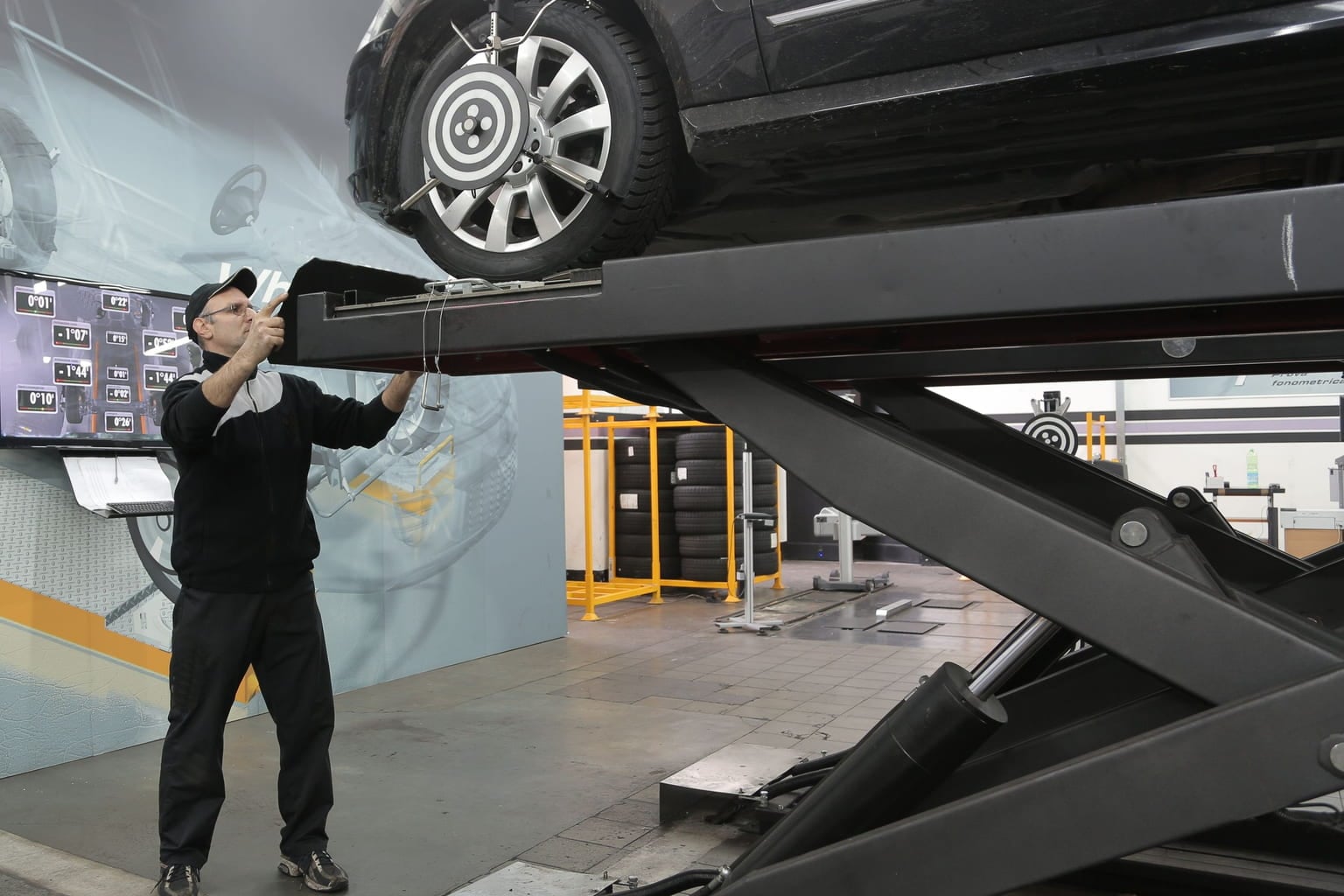
- Alignment measurements: Specialized equipment measures the current wheel angles.
- Angle adjustments: The technician adjusts the relevant components to match manufacturer specifications.
- Final measurements: The equipment confirms whether the angles fall within the recommended range.
- Road test: The technician may test the vehicle to check steering response and handling.
If worn or damaged components prevent proper adjustment, those parts may need repair or replacement first.
How Can You Prevent Wheel Alignment Problems?
You cannot prevent every alignment issue, especially when road conditions are poor. However, a few habits can reduce the risk.
- Avoid driving over potholes at high speeds.
- Slow down before speed bumps and rough road sections.
- Avoid hitting curbs while parking.
- Maintain the tire pressure recommended by your vehicle manufacturer.
- Inspect tires for uneven tread wear.
- Address steering and suspension problems early.
- Check alignment after relevant suspension or steering repairs.
If you also notice shaking or vibration, read our guide on why your tire may be wobbling. It explains other wheel and suspension problems that can affect vehicle stability.
Final Thoughts
Wheel alignment plays an important role in your vehicle’s handling and tire life. Pulling to one side, a crooked steering wheel, and uneven tire wear are common signs that your car may need an alignment.
Do not ignore these changes, especially after hitting a pothole or replacing steering and suspension parts. A professional inspection can identify the issue and help you choose the right service.
When you need vehicle maintenance, Way’s auto repair service makes it easier to find repair shops, compare services, and book an appointment.
Related guides
- Wheel Balancing vs. Alignment: What’s the Difference?
- Common Suspension Problems: Signs Your Car Needs Inspection
- Causes, Risks, and Repair Options For a Tire Wobble
Frequently Asked Questions
How often should I get a wheel alignment?
There is no universal interval. Follow your vehicle manufacturer’s recommendations and arrange an inspection if you notice pulling, uneven tire wear, or steering changes.
Can I drive with bad wheel alignment?
You may still be able to drive, but poor alignment can cause uneven tire wear and affect handling. Arrange an inspection soon, especially if steering feels unstable.
Does replacing tires require a wheel alignment?
Not every tire replacement requires an alignment. However, checking alignment can help identify problems that may cause your new tires to wear unevenly.
Can bad wheel alignment cause vibrations?
It can contribute to handling problems, but vibration often points to tire imbalance, wheel damage, or worn suspension parts. A technician should inspect the vehicle to identify the cause.
What causes wheel alignment to change?
Potholes, curb impacts, collisions, worn suspension parts, and certain steering repairs can change wheel angles.
Is wheel alignment the same as tire balancing?
No. Alignment adjusts wheel angles, while balancing corrects weight differences in the tire and wheel assembly. Each service addresses different problems.
Get 10% off in the Way App in the Way App!

- Scan and get the Way App Download the Way App
- Log in to your account
- Use code FIRST10 at checkout