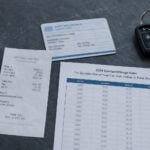
A mileage tracker app vs. manual mileage logs is not a lifestyle debate. Both can satisfy the IRS if they are complete and contemporaneous. They fail in different places: the notebook fails when you forget; the app fails when you never classify the trip.
Every business mile has a dollar value. For 2026 that is 72.5 cents through June 30 and 76 cents from July 1. That value reaches you as a deduction against your taxable income, or as a reimbursement from an employer, and neither one survives a mile you cannot prove. Publication 463 wants the date, start and end, distance and business purpose, recorded at or near the time of travel.
Key takeaways
- For anyone logging more than a handful of trips a month, an app is usually the better system.
- Manual logs fail on memory, not on the rules.
- GPS covers when, where and how far. You still classify the trip and write the purpose.
- A reconstructed year-end notebook is weak audit evidence even if the handwriting is neat.
- A paper log still works for light, disciplined drivers who write every trip the same day.
How Manual Logs Work
A notebook, printable template or spreadsheet where you write the date, route, purpose and miles, plus odometer readings when the year — or the vehicle’s business use — starts and ends.
Where they hold up: no cost, no install, full control, fine for a few business drives a month if you are honest with yourself about filling them in the same day.
Where they break: every entry depends on remembering to open the book; distances are often rounded; a week-later log is reconstructed; a lost notebook is a lost year. Auditors treat a suddenly complete, tidy book with suspicion.
How Tracker Apps Work
The phone’s GPS detects movement and records route, distance, date and time. You swipe or tap to mark the trip business or personal and add the purpose. The app builds an exportable log from that.
That is a division of labor, not a replacement for judgment. Way Mileage Tracker will capture the drive. It will not know a client meeting from a school pickup. The same standard applies whether you are building an IRS mileage log or a reimbursement report.
Side-by-Side
| Factor | Manual log | Tracker app |
|---|---|---|
| Distance | Odometer or estimate | GPS route |
| Time per trip | A minute or two of writing | Seconds to review and classify |
| Cost | Notebook or spreadsheet | Often free to start, paid for full export |
| Forgotten trips | High | Low unless the phone is off |
| Audit trail | No timestamp unless you add one | Time and location on the record |
| Backup | The book can be lost | Usually stored off the device |
| Classification | Entirely on you | Still on you, against captured data |
The Real Cost of Free
Fifteen business trips a week at two minutes each is about 26 hours a year of admin, before you count the short trips you never wrote down. Missed miles are the expensive part. At 76 cents, twenty forgotten 10-mile trips are $152. The subscription is rarely the larger number.
Apps have costs too: a fee on some plans, GPS battery use, and an initial setup. Privacy is a real preference — reputable apps let you stop tracking outside work hours, and personal trips stay in the log as personal.
Which One to Use
- Use a manual log if you drive for business a few times a month and will write the trip before the day ends.
- Use an app if you make several stops a day, manage more than one vehicle, or submit reports every month.
Either way, commuting is still commuting, and the 2026 split rate still needs dates on each entry. Compiling the chosen method into something you can file is how to create a mileage report. Choosing a deduction method is standard mileage vs. actual expenses.
Frequently Asked Questions
Does the IRS accept mileage tracker apps?
Yes, when the electronic record includes the required details. The IRS cares about the contents and the timing, not the brand of the notebook or the app.
Is a spreadsheet a manual log or an app?
Manual, unless something is writing the rows for you. A spreadsheet you fill in at the end of the week has the same memory problem as a notebook.
Will an app make every mile deductible?
No. It documents movement. The tax rules decide whether the trip qualifies, and you decide the classification.
What if my phone dies mid-trip?
That trip may not capture. Keep a charger in the car, and add a manual entry the same day if the phone was off.
Are reconstructed logs worthless?
They are weaker. Calendar, invoice and GPS history can support a gap. A year invented in April is the pattern that gets denied.
Do I still need odometer readings with an app?
Yes at year start and year end, and mid-year when a vehicle enters or leaves business use. Trip GPS does not replace those bookends.
Pick the System You Will Keep
The better method is the one that produces a complete, dated, classified log you can still explain in October. For most people who drive for work every week, that is an app plus a Friday review, not a glovebox notebook. Way Mileage Tracker is built for that capture-and-classify loop.
Get 10% off in the Way App in the Way App!

- Scan and get the Way App Download the Way App
- Log in to your account
- Use code FIRST10 at checkout