Your car struggled to start this morning. Maybe it cranked slow, maybe it just clicked. Now you’re standing there wondering whether you need a $150 battery or a $600 alternator, and guessing wrong means paying for a part you didn’t need while the real problem keeps getting worse.
Here’s the short version: if a jump-start gets your car running and it stays running after you disconnect the cables, your battery was probably the issue. If it dies again shortly after, that’s your alternator not keeping up. The two parts share symptoms often enough that plenty of people replace the wrong one first, so it’s worth understanding how they actually differ before you spend money on either.
Why Car Battery vs Alternator Confusion Happens in the First Place
The confusion makes sense once you see how closely these two parts work together. Your battery delivers the punch of electricity needed to crank the engine. Once the car’s running, the alternator takes over, converting mechanical energy from the spinning engine into electricity that recharges the battery and powers everything else, the lights, the radio, the windows.
One part starts things. The other keeps things running. When either one fails, you end up with strangely similar warning signs, a car that won’t start, dimming lights, electronics acting up, which is exactly why car battery vs alternator diagnosis trips people up so often. If you’d rather skip the guesswork entirely, Way Auto Repair can get a proper charging-system test booked instead of you troubleshooting in a parking lot.
Signs Pointing to a Bad Battery
Batteries typically last three to five years, and once they’re past that window, they’re living on borrowed time. Watch for these:
-
A clicking sound when you turn the key, rather than the engine catching
-
Slow, labored cranking that sounds sluggish compared to normal
-
A swollen or bloated battery case
-
A rotten-egg smell, which usually means the battery’s leaking and needs replacing right away
-
Corrosion building up around the battery terminals
If the battery tests fine but the car still won’t start, the starter itself might be the actual culprit, which is a separate part from either the battery or the alternator.
Signs Pointing to a Bad Alternator
Alternators generally outlast batteries by a wide margin, often running 7 to 10 years, but they still fail early sometimes. Here’s what to look for:
-
A battery warning light on the dashboard, which despite the name usually means a charging-system issue rather than the battery itself
-
Headlights that dim, flicker, or seem unusually bright
-
A battery that keeps dying repeatedly, even after replacement
-
Accessories acting sluggish, slow windows, a glitchy speedometer, dimmer interior lights
-
A whining or growling noise from under the hood, often from a worn belt or bearing
-
A burning smell from overworked wiring
Charging system problems like these tend to get worse gradually rather than all at once, which is exactly why they’re easy to write off as “probably nothing” until the car won’t start at all.
Car Battery vs Alternator: A Side-by-Side Comparison
| Bad Battery | Bad Alternator | |
|---|---|---|
| Jump-start result | Starts and stays running | Starts, then dies again shortly after |
| Dashboard light | Rarely lit, mostly a slow crank | Battery warning light stays on while driving |
| Headlights | Normal once running | Dim, flicker, or pulse with RPM |
| Typical lifespan | 3 to 5 years | 7 to 10 years |
| Noise | None unusual | Whining or growling under the hood |
| Smell | Rotten egg, if leaking | Burning rubber or wiring |
If you’re still unsure after running through this, a professional test resolves it in a few minutes rather than a weekend of guesswork.
The Jump-Start Test, Step by Step
This is the fastest way to tell the two apart without any tools beyond a set of jumper cables.
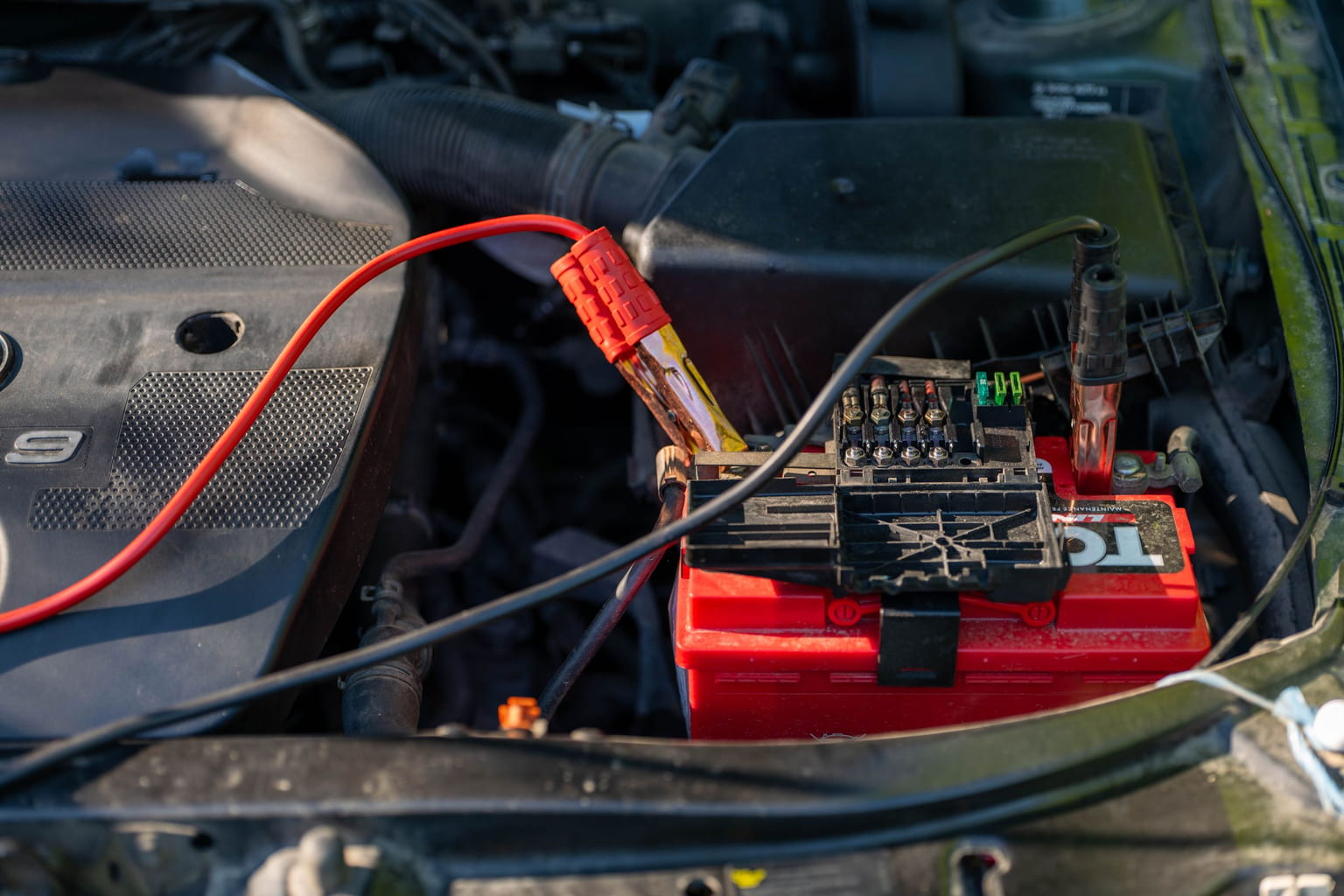
Connect the cables from a running vehicle to yours, following the correct positive-to-positive, negative-to-ground order. Let it sit a moment, then try starting your car. Once it’s running, disconnect the cables.
If the engine stalls shortly after you disconnect, the alternator likely isn’t charging battery voltage fast enough to keep the car running on its own. If the engine keeps running fine, your battery was the more likely culprit, and it’s probably nearing the end of its useful life anyway.
Keep in mind that root causes can sometimes trace back to something simpler, a corroded wire or a bad connection at the terminal, rather than either major part. If you’re stuck somewhere without a second vehicle to jump from, roadside assistance through Way can get you moving instead of waiting around hoping a stranger stops.
Getting a Professional Diagnosis
A shop visit settles this faster and more reliably than any DIY test. A technician checks battery voltage at rest, typically around 12.6 volts when healthy, and alternator output under load, which should run somewhere between 13 and 14.5 volts while the engine’s running. Anything meaningfully outside those ranges points to the part that’s failing.
Look for a shop with ASE-certified technicians, since charging-system diagnostics benefit from someone who actually understands the electrical side rather than swapping parts and hoping one sticks. It’s also worth running your VIN through NHTSA’s recall lookup, since certain models have had charging-system recalls tied to wiring or alternator components, and those repairs are covered free of charge.
What Each Repair Actually Costs
Replacing a battery usually runs $100 to $250 depending on the type and your vehicle. Alternators cost more, typically $300 to $900, since labor and part access vary a lot by make and model. Either way, it’s worth checking whether Way’s auto insurance includes roadside or towing coverage, since a dead charging system tends to strand people at genuinely inconvenient moments rather than in their own driveway.
How Way Makes This Easier
Once you’ve narrowed it down, whether through a jump-start test or a shop visit, finding somewhere reliable to get it fixed shouldn’t be its own hassle. You can compare and book trusted shops through Way Auto Repair, with access to a nationwide network of garages, mobile mechanics, and dealers, plus cashback when you upload your service receipt.
Way+ members get a bit more breathing room here too, including a free 100-point inspection and a mechanic’s hotline for quick questions if you’re standing next to your car trying to decide whether it’s safe to drive to the shop yourself.
Preventing Repeat Problems
A few habits go a long way toward avoiding round two of this whole situation. Have the charging system tested during routine service rather than only when something feels off. Keep terminals clean and free of corrosion. Avoid long stretches of running heavy accessories with the engine off. And if you’ve just replaced a battery because the car wouldn’t start, ask the shop to test the alternator too, since a weak alternator is often what wore the old battery out early in the first place.
When it’s finally time to retire an old battery, don’t just toss it in the trash. Lead-acid batteries are hazardous waste if handled carelessly, but they’re also one of the most recycled products around. The EPA reports a 99 percent recycling rate for the lead and casings in these batteries, and most auto parts stores will take your old one off your hands when you buy a replacement.
Conclusion
So, car battery vs alternator, how do you actually tell which one’s failing? Run the jump-start test first: stays running, it was the battery; dies again, it’s the alternator. From there, match what you’re seeing against the symptoms above, and if it’s still unclear, a proper shop test beats another morning of guessing.
If you’re dealing with this right now, book a repair through Way and get the charging system tested properly before you spend money on the wrong part.
Related guides
- Bad Alternator Symptoms: Signs Your Alternator Needs Repair
- Bad Starter Symptoms: Signs Your Car Starter Is Failing
- Car Clicks But Won’t Start: Common Causes and What to Check
Frequently Asked Questions
How to tell if battery or alternator is bad without tools?
The jump-start test is the simplest way. If the car stays running after you disconnect the jumper cables, the battery was the problem. If it dies again shortly after, the alternator isn’t charging it properly.
Is it a dead battery or bad alternator if my car won’t start at all?
A completely dead car with no clicking or dash lights usually points to the battery. A car that cranks weakly, or starts and then stalls, points more toward the alternator not keeping up with demand.
Can a bad alternator ruin a new battery?
Yes. An alternator that overcharges or undercharges puts real strain on a battery, and a new one can fail early if the alternator behind it isn’t working correctly.
What are the most common charging system problems besides the battery and alternator?
Corroded terminals, loose or damaged wiring, and a worn or slipping drive belt are common culprits. Any of these can cause charging system problems that look identical to a bad battery or alternator until someone actually tests the connections.
How much does it cost to replace a car battery vs an alternator?
A battery typically runs $100 to $250. An alternator costs more, usually $300 to $900, depending on the vehicle and labor involved in accessing it.
Get 10% off in the Way App in the Way App!

- Scan and get the Way App Download the Way App
- Log in to your account
- Use code FIRST10 at checkout