You’ve noticed your car drifting slightly to one side every time you brake, just enough that you’ve started correcting for it without really thinking. Then, after a longer drive, you catch a sharp, burning smell that wasn’t there before. Neither one feels like an emergency exactly, but together they’re worth paying attention to.
Bad brake symptoms tend to show up in exactly this combination, a pull here, a smell there, before they eventually affect stopping power altogether.
Quick answer
Bad brake caliper symptoms include your car pulling to one side while braking, a burning smell, one wheel running hotter than the others, uneven pad wear, and a soft or less responsive brake pedal. These signs mean it isn’t releasing properly, and left unchecked, it can damage the rotor and reduce your stopping power.
What a Caliper Actually Does
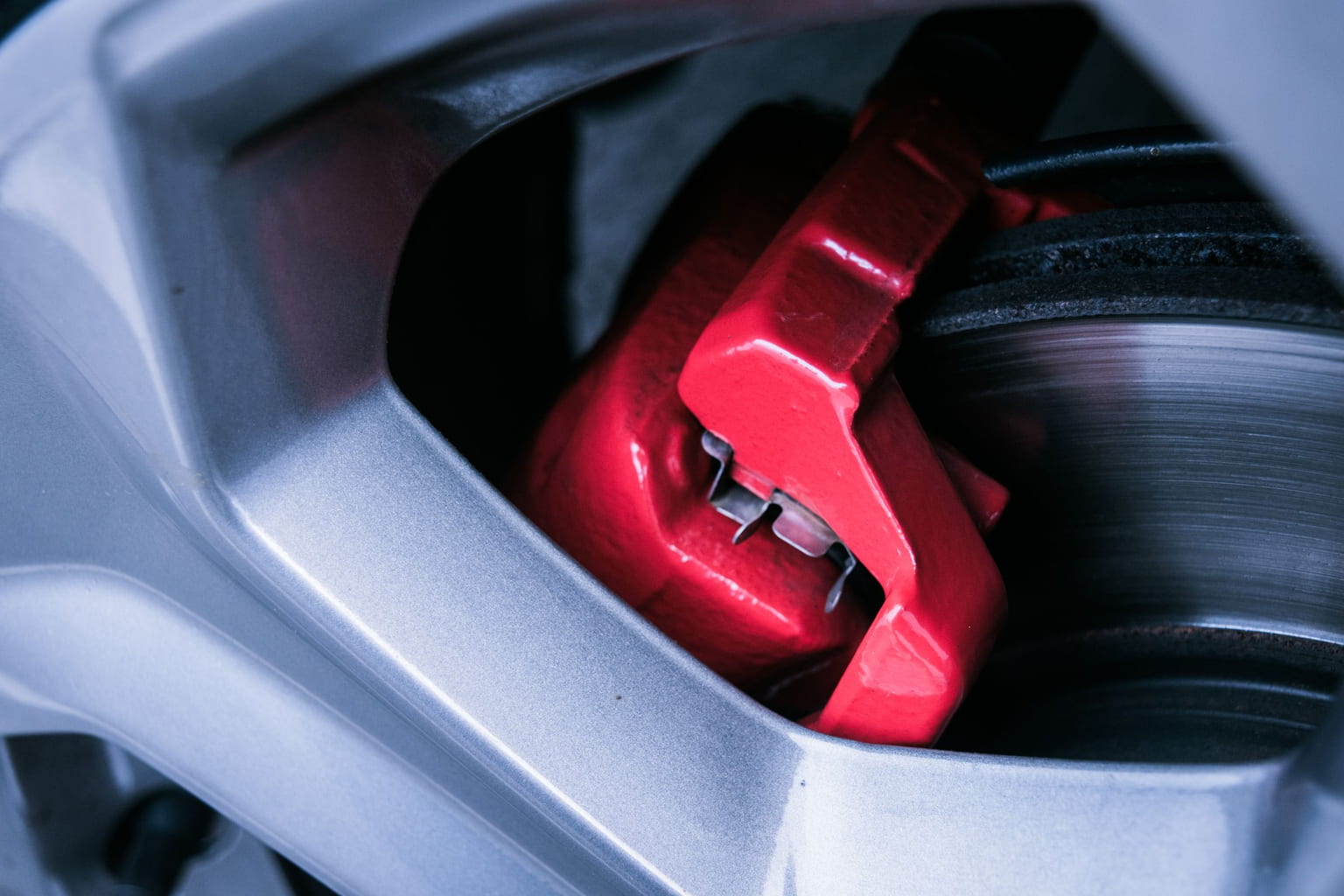
Each wheel with disc brakes has a caliper straddling the rotor, holding the brake pads on either side of it. When you press the brake pedal, hydraulic pressure pushes a piston inside, squeezing the pads against the rotor to slow the wheel down. Once you release the pedal, that same piston is supposed to retract, letting the pads pull back away from the rotor.
A sticking brake caliper is one where that release doesn’t happen cleanly, either intermittently or permanently. The pad stays partially or fully clamped against the rotor even when you’re not braking at all, which creates constant friction, heat, and wear on just that one wheel. Way’s repair guides cover a number of these individual brake components if you want more background before your next inspection.
Bad Brake Caliper Symptoms to Watch For
Car pulls while braking. This is one of the more noticeable bad symptoms, since a caliper that’s stuck applies extra, uneven braking force to one wheel, pulling the car toward that side every time you slow down.
A burning smell. Constant friction from a stuck caliper generates heat well beyond what normal braking produces. A sharp, acrid smell after a drive, especially if it’s stronger near one wheel, is a fairly reliable tell.
One wheel noticeably hotter than the others. After driving, carefully checking wheel temperature (from a safe distance, never by touching) can reveal a caliper that’s been dragging the whole trip, since that wheel runs significantly hotter than the rest.
Uneven or accelerated pad wear. A dragging caliper wears its pad down far faster than the others, so if one wheel’s pads are noticeably thinner at a routine check, that’s a strong clue.
Reduced braking power or a soft pedal. Seized brake symptoms sometimes show up as a spongier, less responsive pedal, or a noticeably longer stopping distance, since the affected wheel isn’t contributing its full share of stopping force.
Grinding or unusual noise from one wheel. As a stuck caliper wears its pad down to the metal backing, grinding can develop specifically at that wheel while the others remain quiet.
What Causes Calipers to Stick or Seize
A handful of things tend to be behind this, often working together rather than alone.
Corrosion from disuse. A car that sits for extended periods, particularly in damp conditions, can develop rust on the rotor surface where the pad rests. Mild cases free themselves once you start driving again, but more stubborn rust can keep the pad stuck in place.
Stuck slide pins. Calipers rely on slide pins to move smoothly as pads engage and release. Corrosion, road grime, or simply old, dried-out lubrication can cause these pins to bind, preventing the caliper from centering and releasing properly.
Worn hardware. The small springs, clips, and shims inside a caliper assembly keep pressure even across the pad. Heat cycles and road salt wear these down faster than most drivers realize, and worn hardware is a common, often overlooked contributor.
Contaminated brake fluid. Brake fluid absorbs moisture over time, which can lead to internal corrosion. That corrosion can cause the piston itself to stick, on top of contributing to a soft or spongy pedal feel.
A stuck parking brake. On vehicles where the parking brake operates through the rear calipers, a parking brake that isn’t releasing fully can mimic a failure entirely, keeping that wheel’s pad clamped even with the parking brake “off.”
Internal failure. Sometimes the caliper itself has simply failed, whether from a damaged seal, a fluid leak, or enough internal wear that the piston won’t retract properly no matter what else is fixed around it.
Caliper Issues vs. Other Common Brake Complaints
Since several brake problems can produce overlapping symptoms, here’s a quick way to separate them.
| Symptom | More likely caliper | More likely something else |
|---|---|---|
| Car pulls while braking | Common, especially one-sided | Could also be uneven tire pressure or alignment |
| Burning smell | Strong indicator | Rarely caused by anything else |
| Grinding at one wheel only | Common with a dragging caliper | Widespread grinding suggests worn pads overall |
| Soft or spongy pedal | Possible with fluid contamination | Could also be air in the brake lines |
| Vibration through the pedal | Less common | More likely a warped rotor |
If you’re seeing symptoms isolated to one wheel specifically, particularly the pull and the burning smell together, that combination points more toward a caliper than a broader brake issue.
How a Shop Diagnoses a Sticking Caliper
A technician doesn’t just look at the pads, they check the full assembly at the affected wheel. That includes testing whether the caliper slides freely on its pins, checking piston movement under pressure, inspecting brake hoses for internal collapse that could be trapping fluid pressure, and comparing pad wear side to side across the axle to confirm which wheel is actually dragging. Look for ASE-certified technicians when choosing a shop, since correctly diagnosing which fix applies takes proper testing rather than a guess based on symptoms alone.
Getting It Fixed
Not every sticking caliper needs full replacement. Sometimes the fix is servicing, cleaning corrosion off the slide pins, replacing worn hardware, and re-lubricating the assembly. Other times, particularly with a failed seal or a piston that won’t retract, replacement is the more reliable option. It’s also worth checking NHTSA’s recall lookup using your VIN, since brake component recalls do occur, and those repairs come at no cost if your vehicle qualifies.
What Repairs Typically Cost
Servicing a sticking caliper, cleaning, lubricating, and replacing worn hardware, typically runs $100 to $250 per wheel. A full replacement is more involved, often $250 to $600 per side including parts and labor, and it’s common for a shop to recommend replacing calipers in pairs to keep braking balanced across the axle. For a broader sense of how a repair like this fits into overall costs, Way’s ownership costs guide is a useful reference.
If a repair like this catches you off guard financially, it’s also worth checking whether your car insurance plan includes any roadside or towing benefits for situations where reduced braking made the drive to a shop a cautious one.
Preventing Caliper Problems
Drive the car regularly rather than letting it sit for long stretches, since disuse is one of the more preventable contributors to caliper sticking. Keep up with brake fluid flushes on your manufacturer’s recommended schedule, since fresh fluid resists the moisture buildup that leads to internal corrosion. Address a parking brake that feels stiff or doesn’t fully release right away rather than assuming it will work itself out. Way’s DIY hub has guidance on basic brake inspections you can do yourself between full shop visits, even though caliper service itself is best left to a professional.
If You Notice This While Driving
A car that’s pulling noticeably or showing reduced stopping power isn’t something to drive on longer than necessary. Roadside help can get you towed to a shop instead of risking a longer drive on a brake system that isn’t working evenly across all four wheels.
Conclusion
A sticking caliper rarely announces itself all at once. It’s a slight pull today, a faint burning smell tomorrow, and by the time you notice reduced stopping power, that one wheel has likely been working overtime for weeks. Catching it at the pull-and-smell stage is a far easier fix than waiting for the grinding to start.
If you’re noticing any of these signs, skip the guesswork and get it looked at through Way Auto Repair before a $150 service turns into a full caliper replacement. For more brake troubleshooting like this, the Way Journal has plenty more worth reading.
Related guides
- Driving with Worn Out Brake Pads: Risks and Warning Signs
- Hard Brake Pedal: Causes and When It Needs Attention
- Brake Shoes vs. Brake Pads: What’s the Difference?
Frequently Asked Questions
Can I drive with a sticking brake caliper?
Only as far as the nearest shop, and gently. A dragging caliper generates excess heat that can damage the rotor and wear the pad down to metal, turning an affordable fix into a more expensive one. That heat can also make the brakes fade, so if they smell hot, the car pulls hard to one side, or the pedal feels different, stop and have it towed.
What’s the difference between a sticking and a seized caliper?
A sticking caliper releases inconsistently, sometimes working fine and other times dragging. Seized brake symptoms are more severe and constant, meaning the piston isn’t retracting at all, keeping the pad clamped against the rotor continuously.
Why does my car pull while braking but drive straight otherwise?
This pattern points specifically toward a caliper issue rather than an alignment problem, since alignment issues typically cause pulling during normal driving too, not just when the brakes are applied.
How much does it cost to fix a sticking brake caliper?
Servicing an existing caliper, cleaning and lubricating the slide pins and hardware, typically runs $100 to $250. Full replacement is more, often $250 to $600 per side, and shops often recommend doing both sides of an axle together.
Can a bad caliper damage other parts of my car?
Yes. It generates excess heat that can warp the rotor, accelerate pad wear, and in more severe cases, contribute to a rotor eventually needing replacement alongside the caliper itself.
Get 10% off in the Way App in the Way App!

- Scan and get the Way App Download the Way App
- Log in to your account
- Use code FIRST10 at checkout