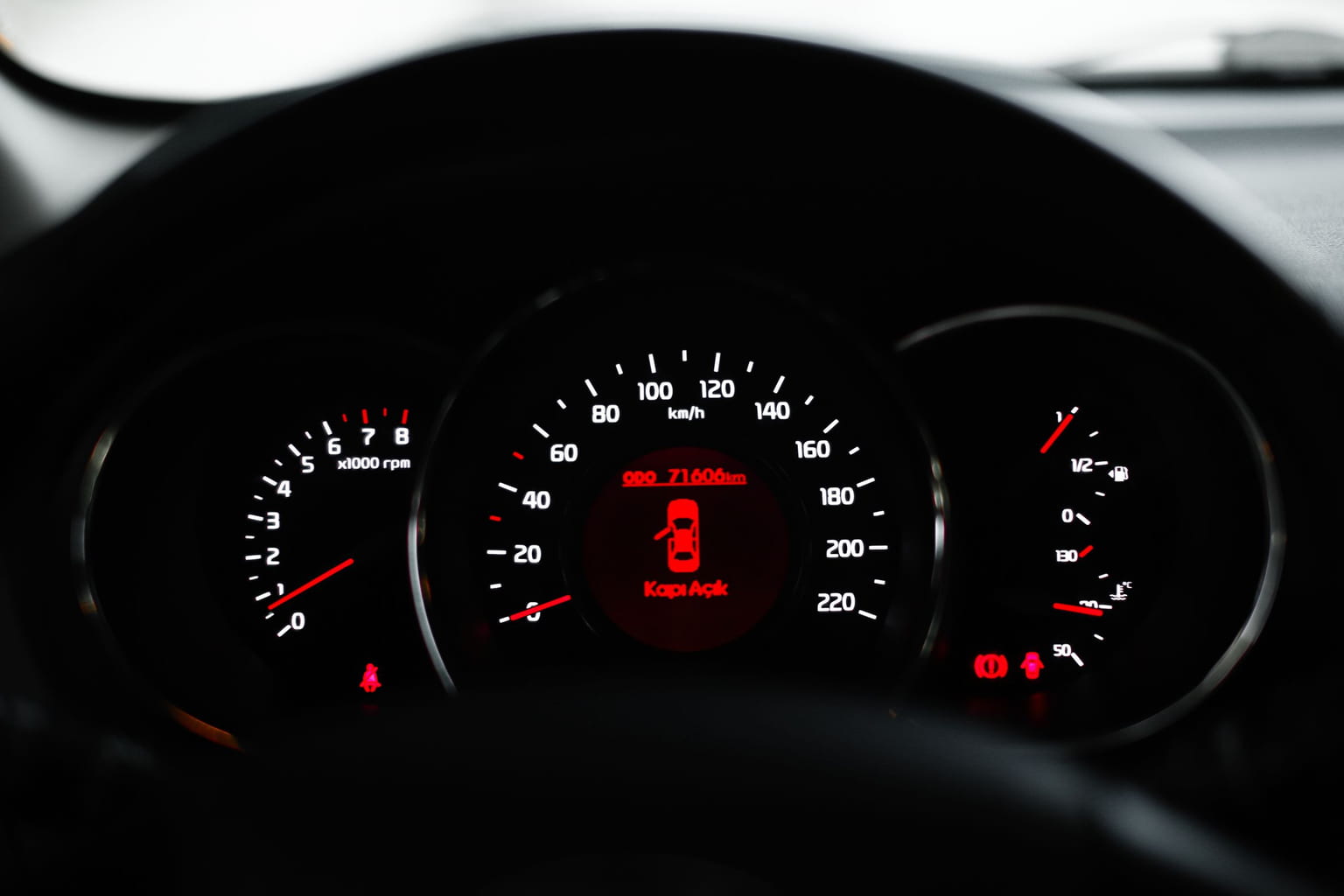
You start the car, and for a second the battery icon lights up along with everything else on your dashboard. That’s normal. But this time it’s still glowing a minute later, even as you’re pulling out of the driveway, and now you’re wondering whether this is a five-minute fix or the start of a much longer day.
A battery light on dash almost never actually means “replace the battery” on its own. Despite the icon, this light is really a charging system warning, and it can point to several different parts working together, or failing to.
What the Battery Light Actually Means
Every car briefly lights up the battery icon during a self-check when you first start the engine, and it should switch off within a few seconds. If it stays on while you’re driving, or comes on partway through a trip, that’s the car telling you the charging system isn’t maintaining proper voltage, not necessarily that the battery itself is dead.
The charging system includes the battery, the alternator, the voltage regulator, and the wiring connecting them all. A problem in any one of these can trigger the same warning light, which is exactly why “battery light” is a slightly misleading name for what’s really an alternator warning light more often than not.
Common Causes Behind a Battery Light on Dash
A failing alternator or voltage regulator. The alternator charges the battery and powers your electrical system while the engine runs. When it or the voltage regulator that controls its output starts failing, the battery light typically comes on alongside other clues like dimming headlights or a stereo that cuts out.
Loose or corroded battery cables. A weak connection between the battery and its cables can prevent the alternator’s charge from reaching the battery properly. Corrosion often shows up as a white or bluish crust around the terminals, and it’s one of the more fixable causes on this list. Way’s DIY hub has guidance on checking and cleaning terminals safely if you want to rule this out yourself before anything else.
An old or weak battery. Batteries typically last three to five years, and as they age, they lose their ability to hold and deliver a steady charge. A battery nearing the end of its life can trigger this light even when the rest of the charging system is working fine.
Faulty wiring. Damaged or frayed wires between the alternator and battery can interrupt the charging process entirely. This one’s harder to diagnose without a proper inspection, since the wiring itself isn’t always visible without taking things apart.
Should You Replace the Battery or the Alternator First?
This is where a lot of drivers guess wrong, and it’s an expensive guess to get wrong twice. A weak battery and a weak alternator produce nearly identical warning signs, so replacing whichever one seems easiest or cheapest first isn’t a great strategy.
The more reliable approach is a load test on the battery and an output test on the alternator, done together rather than one at a time. If the battery tests weak but the alternator is charging correctly, a new battery alone solves it. If the alternator is under-charging, a new battery installed into that same faulty system will likely drain and show the same symptoms again within weeks. Skipping straight to a battery swap without testing the alternator is one of the most common reasons people end up back at the shop twice for the same complaint.
Battery Light Trouble in Cold Weather
Cold temperatures make an already-weak charging system fail faster, which is why battery-related breakdowns spike every winter. Cold thickens engine oil, which means the starter has to work harder to turn the engine over, drawing more power from the battery right at the moment it has the least reserve capacity to give. A battery that’s been quietly weakening all through a mild fall can suddenly seem to fail overnight once temperatures drop.
If your battery light on dash starts flickering specifically on cold mornings, that’s often an early warning rather than a coincidence. It’s worth having the battery load-tested before winter fully sets in rather than waiting for a morning when you genuinely need the car to start.
Can You Drive With Battery Light On?
Technically, yes, at least for a short while, but it’s not something to push your luck with. Can you drive with battery light on all the way to work and back? Maybe, if the charging system is only mildly compromised. Can you drive with battery light on for a longer trip without checking it first? That’s a riskier bet.
The real concern is that your car is essentially running on borrowed power once the alternator stops charging the battery properly. Electrical components can start behaving strangely, headlights may dim, and eventually the engine can stall entirely once the battery’s remaining charge runs out. Continuing to drive on a charging system warning light also risks damaging other electrical components if the underlying issue is left unaddressed.
Charging System Warning Light vs. Other Dashboard Warnings
Since dashboard icons can look similar at a glance, it helps to know how this one differs from other common warnings.
| Battery / Charging Light | Check Engine Light | Oil Pressure Light | |
|---|---|---|---|
| Typical cause | Alternator, battery, wiring | Wide range of engine issues | Low oil level or pressure |
| Urgency | Address same day | Varies, flashing is urgent | Stop driving immediately |
| Can it strand you? | Yes, once battery drains | Rarely on its own | Yes, engine damage risk |
| Quick check | Battery terminals, cable connections | OBD-II scan | Dipstick, oil level |
A charging system warning light tends to sit somewhere between the two extremes, not always an immediate emergency, but not something to ignore for days either.
Troubleshooting Before You Head to a Shop
A few checks are worth doing yourself before assuming the worst. Look at the battery terminals for corrosion, that white or greenish buildup, and check whether the cable clamps feel loose. Cleaning corrosion and tightening a loose connection resolves this more often than people expect, and it costs nothing but a few minutes.
If the light stays on after that, pay attention to any other symptoms showing up alongside it, dimming lights, slow power windows, or a radio that cuts in and out. Those clues help a technician narrow things down faster once you do bring the car in.
Getting It Diagnosed
A shop technician tests battery voltage at rest and alternator output under load, which quickly identifies whether the charging system’s problem lies with the battery, the alternator, or the connections between them. Look for ASE-certified technicians when choosing a shop, since accurately separating these causes benefits from proper testing equipment rather than a guess.
It’s also worth running your VIN through NHTSA’s recall lookup, since certain models have had charging-system recalls tied to wiring or alternator defects, and those repairs are free if yours qualifies.
What Repairs Typically Cost
A battery replacement generally runs $100 to $250. An alternator repair is more involved, typically $300 to $900 depending on the vehicle. Cleaning corroded terminals or tightening a loose connection, if that’s all it turns out to be, costs little to nothing beyond your own time. If you’d rather book a diagnostic straightaway instead of guessing at the cause yourself, comparing shops through auto repair can save you the back-and-forth of calling around.
Preventing This From Happening Again
Have your charging system tested during routine service rather than waiting for a warning light to catch it. Keep battery terminals clean and connections tight, and pay attention to early clues like dimming headlights before the battery light actually comes on. If your battery is approaching four or five years old, ask about its condition at your next visit rather than waiting to find out on a morning you can’t afford it.
If You’re Dealing With This Right Now
If the light comes on and you notice the car struggling to stay running, don’t keep pushing through it hoping it resolves itself. Roadside help can get you towed to a shop instead of risking a stall somewhere inconvenient.
Conclusion
That little battery icon is doing you a favor, even when it feels like an inconvenience. It’s catching a charging system problem while it’s still a $150 fix instead of waiting until you’re stranded and need a tow on top of the repair. Test both the battery and alternator together, don’t guess at which one’s at fault, and you’ll avoid paying for the same problem twice.
If you’d rather have someone else run that test than DIY it in a parking lot, Way Auto Repair can get you to a shop that checks the whole charging system in one visit.
Related guides
- Bad Alternator Symptoms: Signs Your Alternator Needs Repair
- Bad Battery vs. Bad Alternator: How to Tell Which One Is Failing
- Oil Light on the Dashboard: What It Means and What to Do
Frequently Asked Questions
Why does my battery light on dash come on and off intermittently?
Intermittent flickering often points to a loose connection or a wiring issue rather than a fully failed part. It can also happen with a battery or alternator that’s degrading gradually rather than failing outright, so it’s still worth getting checked.
Is a battery light the same as an alternator warning light?
Often, yes. The icon is labeled for the battery, but it’s triggered by the broader charging system, which includes the alternator. In many cases, the alternator is actually the part responsible for the warning.
Can you drive with battery light on for a short errand?
Generally yes, for a brief, low-risk trip. It’s not something to rely on repeatedly, though, since the underlying cause typically doesn’t improve on its own and can eventually leave you stranded.
How is a charging system warning light different from a low battery message?
A charging system warning light points to a problem with how the battery is being charged while driving, which could involve the alternator or wiring. A low battery message is more specific to the battery’s own charge level or health.
How much does it cost to fix a battery light issue?
It depends on the cause. Cleaning corroded terminals costs very little, a new battery typically runs $100 to $250, and an alternator repair can run $300 to $900 depending on the vehicle and labor involved.
Get 10% off in the Way App in the Way App!

- Scan and get the Way App Download the Way App
- Log in to your account
- Use code FIRST10 at checkout