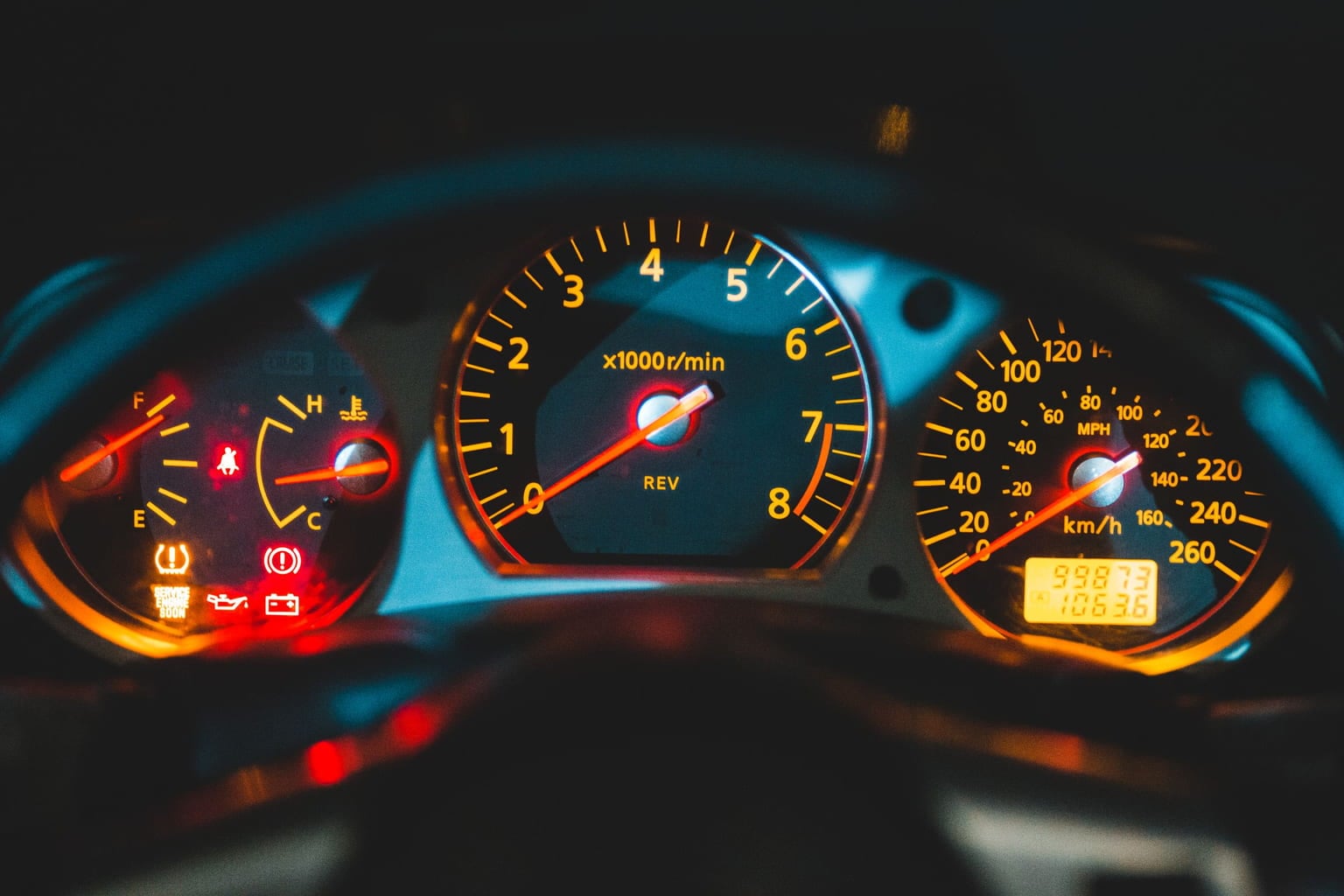
Is it possible to drive with oil light on? Short answer: not far, and not at all if it’s red. That little dripping can is one of the few dashboard symbols that deserves your full attention the second it lights up. Ignore a loose gas cap warning for a week, fine. Ignore this one and you could be shopping for a new engine.
Here’s what the light is really telling you, what to do in the first five minutes, and how to keep it from coming back.
Quick answer
If that red oil light comes on, pull over and shut the engine off. Don’t keep driving and hope it goes away. It usually means the engine isn’t getting the oil pressure it needs, and you can do some serious damage pretty quickly. Once the engine cools down, check the oil level and add oil if it’s low. If the light stays on, don’t drive it – get it towed to a shop. On many vehicles, an amber oil light usually means the oil level is low rather than an immediate oil pressure problem.
What the Light Is Telling You?
Every car has some kind of oil warning. Most show a little oil can, the one that looks like a genie lamp. Some spell it out: “Low Oil Pressure.” Others pair an engine oil warning light with a message in the driver display. Same idea either way.
It’s about one of two things. Either there isn’t enough oil in the engine, or the oil that’s there isn’t being pushed around hard enough. Both are bad, but the second one is worse, because oil that isn’t circulating means metal grinding on metal. You should see the light for a second or two when you start the car. That’s just the bulb check. If it stays lit, or comes on while you’re driving, something’s wrong.
Engines are tougher than people think, right up until they aren’t. Oil is the reason. For more routine care, you can browse Way’s maintenance guides.
Red vs. Amber: They’re Not the Same Warning
Color matters here. Not every car follows the same rules, so your owner’s manual wins any argument. But this is the usual pattern.
| Light | What it usually means | What to do |
|---|---|---|
| Red oil can | Oil pressure is low | Pull over and stop the engine now |
| Red oil can, flashing | Serious pressure problem | Stop immediately, don’t restart |
| Amber or yellow oil can | Oil level is low, on many cars | Check the dipstick and top up soon |
| Amber wrench or “Service” | Oil change or maintenance due | Book service, reset the reminder afterward |
| Oil can with a wavy line | Low level (some brands) | Check oil, top up as needed |
Yellow isn’t a green light to ignore it. It’s just less urgent. If the amber light is on and the car feels or sounds different, treat it like red.
Can You Drive With Oil Light On?
No. Well, mostly no. Red means stop. Not “finish your errand.” Not “make it home.” Stop. Within about a minute of your oil pressure dropping, parts that are supposed to float on a film of oil start touching. Bearings score, and the damage doesn’t reverse. People have ruined engines by driving a few miles on that light.
Amber is different. If it’s a low-level warning and you check the oil soon, you’re usually okay to drive a short distance to a gas station or shop. But “soon” means today, not next weekend. And if you’re on a highway, stuck in traffic, or anywhere unsafe, pull over first and think second. When the car won’t restart or you’re on a bad stretch of road, call roadside assistance and wait. A tow costs less than an engine.
What to Do, Step by Step
-
Pull over safely. Signal, find a flat spot, and stop.
-
Shut the engine off. Don’t idle it to “see what happens.”
-
Wait five to ten minutes. Oil needs time to drain back into the pan, or the dipstick will lie to you.
-
Pull the dipstick. Wipe it, push it all the way in, pull it out again, and read it. It has two marks. You want oil between them.
-
Add oil if it’s low. Use the grade printed in your owner’s manual. Go a little at a time, checking as you pour.
-
Restart the car and watch the light. If it goes out within a few seconds and stays out, you’ve likely found the problem. You still need to find out why it was low.
-
If the light stays on, switch the engine off straight away. Don’t drive it. Get a tow.
One warning: don’t overfill. Too much oil can foam up and cause its own trouble. And if you see oil dripping under the car or a puddle where you parked, mention it to whoever fixes it.
Could a Recall Be Behind Your Oil Light?
Sometimes the problem isn’t your driving or your maintenance habits. It’s the car. Manufacturers issue recalls for defects like faulty oil pumps, leaking oil lines, and engine components that wear out early. If your vehicle is affected, the fix is typically done at no charge by an authorized dealer.
You can check in about a minute using the NHTSA recall lookup, the U.S. government’s free database for vehicle safety recalls.
-
Find your VIN. It’s on the driver’s side of the dashboard (visible through the windshield) and on your registration or insurance card.
-
Enter it on NHTSA’s recall page. The tool shows any open recalls for your exact vehicle.
-
Look for engine, oil, or fire-risk notices. These are the ones most likely to tie back to your warning light.
-
Call a dealer if you find a match. Mention the recall number and ask them to schedule the repair.
What an Oil Pressure Warning Means?
Pressure is created by the oil pump, which pushes oil through tiny passages to lubricate the engine. A drop can come from a bunch of places.
The simplest cause is low oil. Engines burn a little, and older ones burn more. Leaks from a valve cover gasket, oil pan, or rear seal can drain the pan slowly. Then there’s a clogged oil filter, or oil so old and sludgy it doesn’t flow like it should. Skip a few changes and sludge builds. Using the wrong grade, too thin for the engine, can also drop pressure. A failing oil pump or worn engine bearings are the worst cases, and they’re expensive.
Sludge mostly comes down to neglect. If you tend to lose track of your last change, a mileage tracker makes it easy to see when you’re due.
When the Light Flickers
Flickering is annoying because it’s easy to dismiss. It shouldn’t be. A light that blinks at idle, especially when the engine’s hot, often means pressure is marginal. When you rev the engine, the pump spins faster and the light disappears. That’s a hint, not a fix.
Common reasons: low oil, thin oil, a worn engine, or a weak sensor. If your engine oil warning light flickers when you brake or turn, oil may be sloshing away from the pump pickup because the level’s low. Check the dipstick. Add oil if it’s low. If the flicker keeps coming back, get it looked at. A flicker today is often a steady light next month.
What This Can Cost
Here’s the range, roughly. Prices swing by car and region, so treat these as estimates.
| Problem | Typical cost |
|---|---|
| Oil top-up | $10 to $20 |
| Oil and filter change | $40 to $130 |
| Oil pressure sensor replacement | $100 to $300 |
| Oil leak repair (gasket or seal) | $150 to $600+ |
| Oil pump replacement | $500 to $1,500+ |
| Engine repair or replacement | $3,000 to $7,000+ |
See the gap? An oil change costs a fraction of what a dead engine does. That math is why mechanics get so intense about this light. If you’re weighing repair costs against everything else a car costs, Way’s cost breakdown for car ownership puts it in perspective.
Use the Right Oil, and Check It
Grade matters. Check your owner’s manual, or the cap on the oil fill port, for the viscosity your engine wants. Using the wrong one doesn’t just risk pressure trouble. Then there’s checking it yourself. Once a month is plenty, and before a road trip. Do it on level ground with the engine off and cool. It takes two minutes. Most people never do it, which is how a slow leak turns into a stranded car. If you need oil between changes, keep a quart in the trunk.
Getting It Fixed
Some fixes are easy. Others need a professional, particularly if the light’s on and the level’s fine, or if you’ve got a leak. When you choose a shop, ask what they found and why they recommend the repair. A decent technician will show you the leak or the reading.
Credentials help. ASE offers an ASE Auto Maintenance and Light Repair (G1) test aimed at technicians who handle everyday maintenance and light repair work, and it’s fair to ask whether the person doing the job holds that certification.
Need an oil change or a diagnosis? You can compare and book auto repair through Way.com. Way’s auto repair page has advertised discounts on oil changes at participating shops, so check current terms when you book.
Bottom Line
Treat the red oil light like an emergency. Because it is one. Pull over, check the dipstick, and don’t gamble with the engine. Then find out why it happened, because oil doesn’t vanish on its own.
If you’d like help keeping up with maintenance costs, Way’s Way+ membership is built around everyday car expenses like these.
Related guides
- How to Check Oil: A Step-by-Step Guide
- Why Is My Car Losing Oil but Not Leaking? Common Causes
- Battery Light on Dashboard: What It Means and What to Do
Frequently Asked Questions
1. Can you drive with oil light on?
If it’s red, no. Stop and shut the engine off, because low oil pressure can damage an engine within minutes. If it’s amber, you can usually drive a short distance to check the oil, but do it soon.
2. What does an oil pressure warning mean?
It means oil isn’t circulating with enough force to protect the engine. Causes range from low oil and a clogged filter to a failing pump or a bad sensor. Check the dipstick first.
3. Why did the oil light come on right after an oil change?
The shop may have underfilled it, or the filter may not be seated properly. A loose filter or drain plug can leak fast. Check the dipstick and look under the car, then call the shop.
4. Is the engine oil warning light the same as the check engine light?
No. The check engine light covers emissions and engine management faults. The oil warning is about lubrication and pressure. If both are on, stop and get help.
5. How much oil should I add if the light comes on?
Add a little at a time and recheck. A quart is often enough to bring the level back between the marks, but it depends on the engine. Don’t overfill, and use the grade in your manual.
Get 10% off in the Way App in the Way App!

- Scan and get the Way App Download the Way App
- Log in to your account
- Use code FIRST10 at checkout