You’ve noticed a faint squeal every time you brake, and it’s been there for a couple of weeks now. Busy schedule, one thing after another, and somehow “get the brakes checked” keeps sliding down the list. You’re not ignoring it exactly, just postponing it.
Driving with worn brake pads is one of those things that feels fine right up until it isn’t, since pads don’t usually fail all at once. They thin out gradually, and the car still stops, just with less margin than you’d want if something unexpected happens ahead of you.
Quick answer
Driving with worn brake pads is risky because stopping distances increase and your margin for error shrinks, even though the car may still feel normal at first. Once you hear brake pads grinding, that means the friction material is gone and metal is contacting metal, which can damage your rotors and requires immediate attention.
How Brake Pads Wear Down
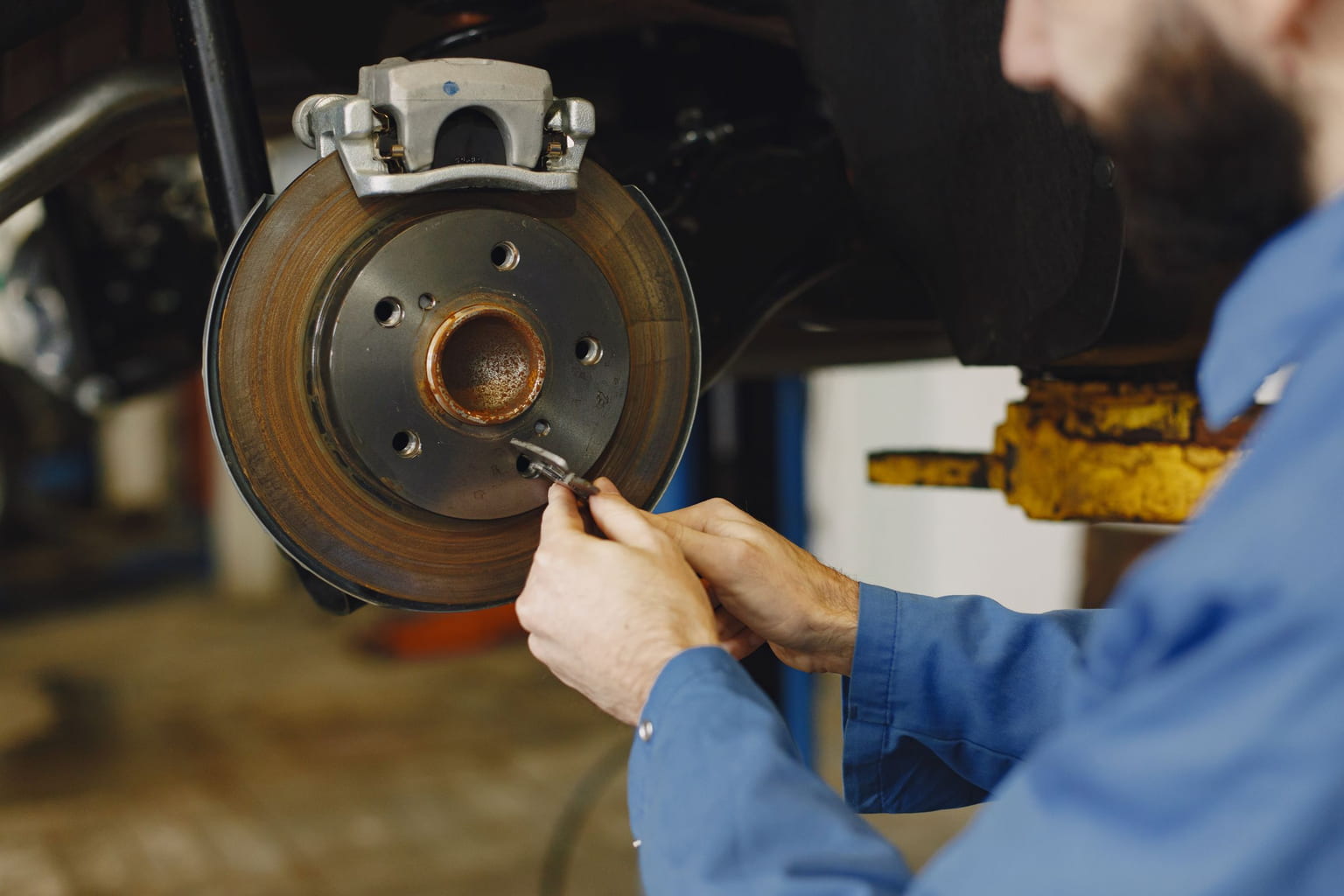
Every time you brake, a thin layer of friction material on the pad wears away against the rotor. This is expected and by design, pads are a wear item meant to be replaced periodically, not a permanent part of the car. How fast that wear happens depends heavily on your driving style, stop-and-go city traffic wears pads faster than steady highway driving, and aggressive braking accelerates the process further.
Most pads start with somewhere between 10 and 12 millimeters of friction material. By the time that’s worn down to around 3 millimeters or less, you’re in replacement territory, and continuing to drive on pads much thinner than that starts trading your margin of safety for time you’re saving by not scheduling a repair.
Brake Pad Wear Signs to Watch For
A squealing or squeaking noise is usually the first sign, and it’s often intentional. Many pads include a small metal wear indicator designed to scrape against the rotor once the friction material gets thin, producing that high-pitched sound on purpose as an early warning. A longer stopping distance than you’re used to, even if it’s subtle, is another brake pad wear sign worth paying attention to, since it means less friction material is doing the same job.
A pedal that feels like it needs to travel further before engaging, or vibration through the pedal during braking, can also point to uneven pad wear. And if you can visually see less than about a quarter inch of pad material through your wheel’s spokes, that’s a clear, visual confirmation worth acting on. Checking this yourself takes a couple of minutes, and Way’s DIY hub has guidance on how to inspect pad thickness without removing the wheel.
Is Driving With Worn Brake Pads Actually Dangerous?
In the early stages, driving with worn brake pads mostly means reduced performance rather than an immediate hazard, longer stopping distances, less confidence in an emergency stop, but the car still functions. The real danger builds as wear progresses further, particularly once you’re relying on a thin sliver of material to do a job it was designed to do with several times more thickness.
The danger compounds in situations that already demand more from your brakes: sudden stops in traffic, wet or icy roads, or driving down a long hill with a loaded car. These are exactly the moments where the extra stopping distance from worn pads matters most, and exactly when you have the least room to discover it.
When Brake Pads Grinding Means It’s Too Late for a Simple Fix
Brake pads grinding is a different situation entirely from squealing, and it’s not a sound to keep driving on. Grinding means the friction material is completely gone and the metal backing plate is now scraping directly against your rotor. This doesn’t just mean worse braking, it means you’re actively damaging an expensive component every time you brake from this point forward.
Once you hear brake pads grinding, what would have been a straightforward pad replacement often becomes a pad-and-rotor job instead, since a rotor that’s been ground into typically can’t be resurfaced and needs replacing alongside the pads. This is the clearest sign on this list that waiting has already cost you money, and continuing to wait will cost more.
Wear Stage at a Glance
| Stage | What you’ll notice | Action needed |
|---|---|---|
| Early wear | Occasional light squeal | Monitor, schedule inspection |
| Moderate wear | Consistent squeal, longer stopping distance | Replace pads soon |
| Severe wear | Grinding, pedal vibration | Replace pads and check rotors immediately |
| Neglected | Reduced braking, pulling, burning smell | Stop driving, get towed if unsafe |
When to Replace Brake Pads
As a general rule, when to replace brake pads comes down to two things: thickness and sound. Once pad material drops to around 3 millimeters, or once you’re hearing a consistent squeal rather than an occasional chirp, it’s time to schedule service rather than wait for a more obvious sign. Mileage alone isn’t a reliable guide, since pad lifespan varies enormously by driving style and conditions, ranging anywhere from 25,000 to 70,000 miles depending on how and where you drive.
If you’re due for a routine inspection anyway, or you’ve noticed any of the signs above, it’s worth booking a look through Way Auto Repair rather than waiting for a more expensive symptom to force the issue.
What Happens If You Keep Driving on Worn Pads
Beyond the immediate safety risk, continuing to drive on badly worn pads tends to snowball into a bigger repair. Rotors get scored and warped, calipers can wear unevenly from the altered pad contact, and in more neglected cases, the added heat and friction can affect wheel bearings and other nearby components. What could have been a $200 pad replacement can turn into a $600 or more job covering pads, rotors, and sometimes calipers together.
Getting It Diagnosed
If you’re not sure how much life is left in your pads, a shop inspection settles it quickly with an actual measurement rather than a guess based on sound or feel. Look for ASE-certified technicians when choosing a shop, since a proper inspection checks pad thickness, rotor condition, and caliper function together rather than just glancing at the pads alone.
It’s also worth checking NHTSA’s recall lookup using your VIN, since brake component recalls do happen, and those repairs come at no cost if your vehicle qualifies.
What Replacement Typically Costs
Brake pad replacement generally runs $150 to $300 per axle including labor. If rotors need replacing too, because wear progressed to grinding, that adds another $200 to $400 per axle on top of the pad cost. For a broader sense of how a repair like this fits into overall costs, Way’s ownership costs guide is a useful reference point.
Preventing Premature Pad Wear
Smooth, gradual braking rather than hard, last-second stops extends pad life noticeably over time. Keeping a safe following distance reduces how often you need to brake hard in the first place. Getting pads inspected at every routine service catches wear before it reaches the grinding stage, and Way’s repair guides cover more on how brake maintenance fits into a broader service schedule if you want the fuller picture.
If You’re Dealing With This Right Now
If your brakes are already grinding or the pedal feels noticeably different than usual, that’s not a drive to put off. Roadside help can get you towed to a shop instead of risking a longer trip on brakes that are actively damaging themselves with every stop.
Conclusion
Driving with worn brake pads rarely feels dramatic in the moment, which is exactly what makes it easy to postpone. The squeal that’s been there for two weeks isn’t going to fix itself, and the gap between “annoying noise” and “grinding metal” closes faster than most people expect. Catching it at the squeal stage is the difference between a simple pad swap and a bill that includes rotors too.
Worth checking while you’re thinking about it: whether your car insurance plan covers towing, in case worn brakes ever leave you needing one on short notice.
Related guides
- Brake Shoes vs. Brake Pads: What’s the Difference?
- Bad Brake Caliper Symptoms: Signs You Need Brake Service
- Hard Brake Pedal: Causes and When It Needs Attention
Frequently Asked Questions
How long can I drive on worn brake pads before it’s unsafe?
There’s no fixed mileage, since it depends on how thin the pads already are. A light, occasional squeal allows some time to schedule a repair, but grinding means you’re already causing damage and shouldn’t keep driving longer than necessary to reach a shop.
What’s the difference between brake pads grinding and normal brake noise?
Normal wear often produces an intentional high-pitched squeal from a built-in wear indicator. Grinding is a harsher, metallic sound that means the friction material is completely gone, which is a more serious and urgent signal than squealing.
Are all brake pad wear signs audible, or can they be silent?
Not all of them. Longer stopping distances, a pedal that travels further before engaging, or vibration during braking can all indicate wear without any accompanying noise, which is why a periodic visual or professional check matters even if things sound fine.
When to replace brake pads if I don’t hear any noise at all?
Check pad thickness during routine service regardless of noise, since some vehicles and pad materials wear more quietly than others. A general guideline is replacing pads once material drops to around 3 millimeters, but a technician can measure this precisely.
Does driving with worn brake pads damage other parts of the car?
Yes, especially once wear reaches the grinding stage. Continued driving at that point typically scores or warps the rotors, and in more advanced cases can affect calipers, turning what would have been a pad-only repair into a more expensive one.
Get 10% off in the Way App in the Way App!

- Scan and get the Way App Download the Way App
- Log in to your account
- Use code FIRST10 at checkout