You’re cruising along fine, then out of nowhere the car jerks, stumbles, and settles back into normal driving as if nothing happened. It only lasted a second, but it was enough to make you grip the wheel a little tighter. A minute later, at the next stoplight, the engine feels shakier at idle than it did this morning, and now you’re second-guessing whether you imagined the whole thing.
This guide walks through what’s actually happening inside your engine during a misfire, the full range of symptoms worth paying attention to, and the specific systems, air, fuel, and spark, most likely to be behind it. You’ll also find a quick comparison to help narrow down what you’re dealing with, a few checks you can safely do yourself before calling a shop, and a realistic sense of what repairs typically cost.
What a Misfire Actually Is
Your engine’s cylinders fire in a precise, timed sequence, each one igniting an air-fuel mixture at exactly the right moment to keep everything running smoothly. A misfire happens when that timing breaks down, whether the mixture ignites too early, too late, or not at all in a given cylinder. The result can range from a barely noticeable hiccup to a persistently rough running engine, depending on how often it happens and how many cylinders are affected.
Engine Misfire Symptoms to Watch For
Here’s what a misfire typically feels and sounds like, in the order most drivers notice it.
A rough or shaky idle. The engine vibrates more than usual while sitting still, sometimes enough that you can feel it through the seat or steering wheel.
Jerking or stumbling while driving. This is one of the more common engine misfire symptoms, and it often shows up specifically as a misfire when accelerating, since that’s when the engine demands the most consistent combustion.
A noticeable loss of power. The car feels sluggish or hesitant to respond, even on flat ground, as though something’s holding it back.
Worse fuel economy. A misfiring cylinder forces the engine to work harder to produce the power it should, which burns more fuel than normal to get the same result.
Unusual noises. Popping, banging, or knocking sounds, sometimes described as a sneezing or coughing noise from under the hood, often accompany a misfire.
A strong exhaust smell. Unburnt fuel passing through the exhaust system can create a noticeably strong, gas-like odor.
A flashing or steady check engine light. A flashing light usually signals a more urgent, active misfire, while a steady one can point to a milder or intermittent issue.
Why Is My Engine Misfiring? The Three Core Causes
Combustion depends on three things working together: air, fuel, and spark. Why is my engine misfiring almost always traces back to a breakdown in one of these three areas.
Air-related causes. A faulty oxygen sensor or mass airflow sensor can feed the engine’s computer bad data, leading to a fuel mixture that’s too rich or too lean. A clogged catalytic converter or a vacuum leak in the intake system can throw off the same balance, particularly at idle.
Fuel-related causes. A clogged fuel filter restricts flow to the engine, especially under the higher demand of acceleration. A failing fuel injector can’t deliver fuel accurately to its cylinder, and a weak fuel pump may not maintain enough pressure to keep combustion consistent at higher speeds or under load.
Spark-related causes. Worn spark plugs or damaged plug wires struggle to produce a clean spark, especially once the electrode gap has widened with age. A failing ignition coil can deliver inconsistent voltage to the plugs, which tends to get worse under load or at higher RPMs.
Other Mechanical Culprits
Beyond the air-fuel-spark triangle, a few deeper mechanical issues can also cause misfires. Worn piston rings reduce compression inside the cylinder, which shows up alongside poor fuel economy and increased oil use. A stretched timing chain or a slipping timing belt throws off the sync between valve movement and piston position, which can cause misfires and, left unaddressed, more serious engine damage. Way’s repair guides go into more depth on several of these underlying engine issues if you want additional background before your next service visit.
Comparing the Common Causes
Since so many possible causes produce similar symptoms, here’s a quick side-by-side to help narrow things down before a shop visit.
| Cause | When it’s most noticeable | Additional clue |
|---|---|---|
| Bad oxygen sensor | Idle and low speed | Poor fuel economy |
| Clogged fuel filter | Misfire when accelerating | Sluggish response uphill |
| Worn spark plugs | Cold starts, idle | Rough running engine |
| Failing ignition coil | Higher RPM, under load | May worsen over weeks |
| Vacuum leak | Idle specifically | Hissing sound near intake |
| Worn piston rings | Constant, gradual | Increased oil consumption |
If your misfire fits one row clearly, that’s a useful starting point for a mechanic. If it fits several, a proper diagnostic scan will narrow it down faster than guessing.
Can You Keep Driving With a Misfire?
Technically the car may still move, but continuing to drive on an active misfire isn’t a good idea. Unburnt fuel passing into the exhaust system can overheat and damage the catalytic converter, turning a relatively affordable repair into a much more expensive one. A misfire also tends to worsen the longer it’s ignored, since the engine keeps compensating in ways that add strain to other components.
Look for a shop with ASE-certified technicians when you need this diagnosed, since a misfire’s real cause often isn’t obvious without proper testing across the air, fuel, and ignition systems.
Simple Checks You Can Do Before Calling a Shop
A few things are worth ruling out yourself before you book an appointment, since they’re quick to check and occasionally solve the problem outright. Make sure the gas cap is fully tightened. A loose one won’t cause a misfire, but it can turn the check engine light on by itself, which muddies the picture. Pop the hood and look for any spark plug wires or vacuum hoses that appear cracked, disconnected, or chewed through, since visible damage there is an easy giveaway.
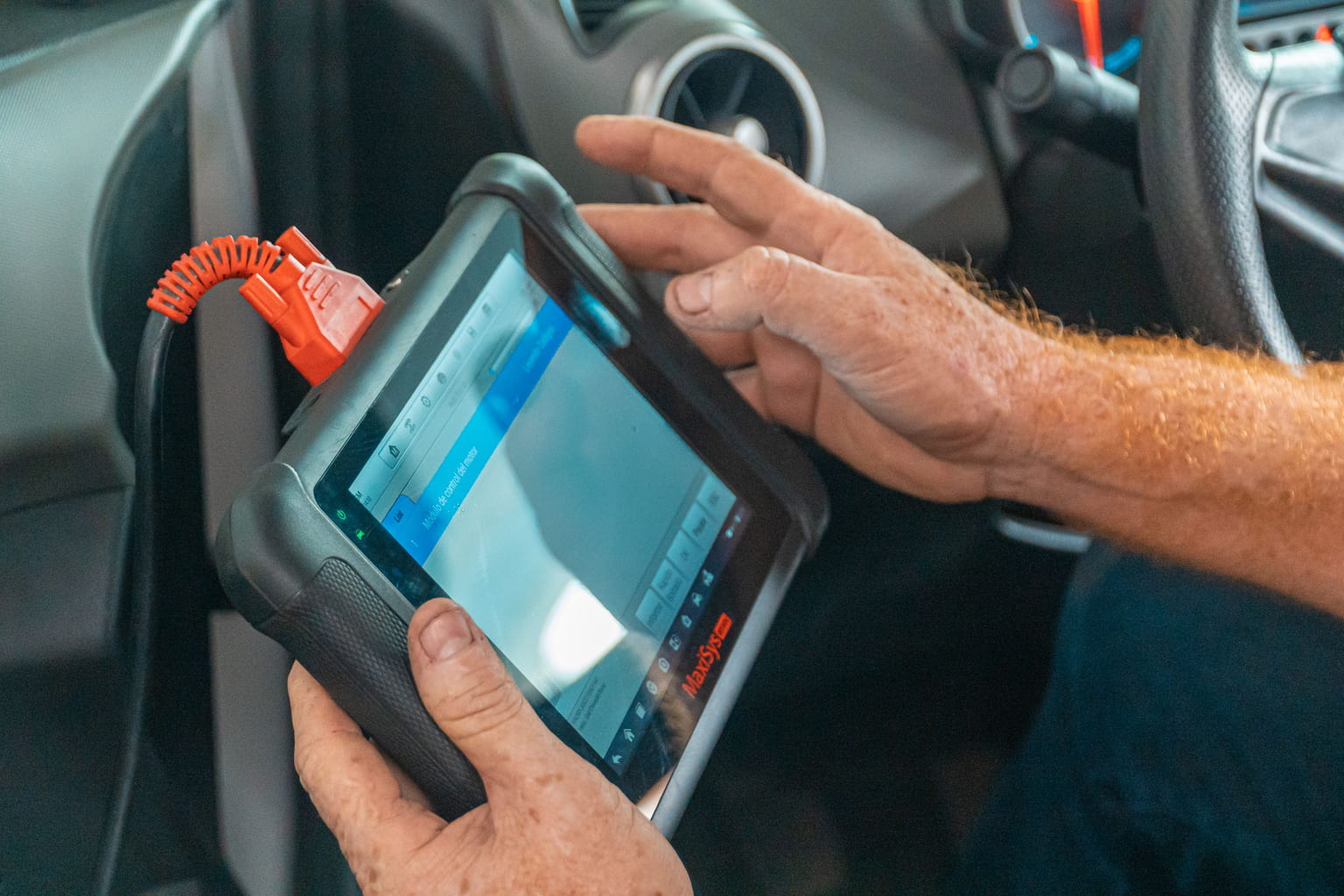
If you own a basic OBD-II code reader, plugging it in can tell you which cylinder is misfiring, which saves diagnostic time once you do see a mechanic. Way’s DIY hub has guidance on running a basic scan and a few other checks that are safe to do yourself, even if the actual repair ends up needing a professional.
Getting It Fixed
A shop typically starts with an OBD-II scan to identify which cylinder or cylinders are misfiring, then narrows down the cause through targeted testing rather than replacing parts on a guess. Depending on what’s found, the fix might be as simple as new spark plugs or as involved as replacing an ignition coil, injector, or addressing a vacuum leak. It’s also worth checking NHTSA recalls with your VIN before paying for anything, since certain models have had ignition or sensor-related recalls tied to misfire complaints, and those repairs come at no cost if yours qualifies.
Costs vary widely depending on the cause. Spark plugs typically run $100 to $300 for a full set including labor, while an ignition coil replacement often falls in a similar range per coil. A vacuum leak repair or sensor replacement tends to land between $150 and $400. For a broader sense of how repairs like these fit into what a car costs over time, Way’s ownership costs guide is a useful reference.
Preventing Future Misfires
Routine maintenance goes a long way here. Replace spark plugs on the schedule your manufacturer recommends rather than waiting for symptoms. Keep up with fuel filter and air filter replacements, since both directly affect the air-fuel balance a misfire depends on. Use quality fuel from a station you trust, and don’t ignore a check engine light, since catching a misfire early is almost always cheaper than letting it run. When it’s time for that inspection, comparing options through auto repair booking can help you find a shop without the extra legwork of calling around.
If You’re Dealing With One Right Now
A car that’s misfiring badly enough to stumble or lose power isn’t one to push through on a long drive. If you’re not confident it’s safe to continue, roadside help can get you towed instead of risking a bigger problem on the road.
If the repair bill ends up higher than expected, it’s also worth checking whether your car insurance plan includes any roadside or towing benefits that could help soften the cost.
Conclusion
Engine misfire symptoms almost always trace back to a breakdown somewhere in air, fuel, or spark, and rarely fix themselves. A jerk here, a rough idle there, none of it feels urgent in isolation, but together it’s worth a proper diagnostic before a manageable repair turns into something bigger.
Whatever the diagnostic turns up, from a $30 spark plug to something bigger, Way+ members get a break on the labor.
Scan tool giving you a code that doesn’t match what you’re feeling? Send it to our team and we’ll match you with a shop that digs past the obvious answer.
Related guides
- Bad Ignition Coil Symptoms and When Your Car Needs Repair
- Check Engine Light Flashing: Causes, Risks, and What to Do
- Bad Fuel Injector Symptoms: Causes, Signs, and Repair Options
Frequently Asked Questions
Why is my engine misfiring only when I accelerate?
A misfire when accelerating often points to fuel delivery struggling to keep up with demand, commonly from a clogged fuel filter, a failing fuel injector, or a weak fuel pump. It can also point to a spark issue that only shows up under load.
Is it safe to drive with a rough running engine?
For a short distance, often yes, but it’s not something to continue doing. A persistent misfire can overheat the catalytic converter and cause damage that costs far more to fix than the original issue.
How much does it typically cost to fix an engine misfire?
It depends entirely on the cause. Spark plugs or a coil might run $100 to $300, while more involved issues like a fuel injector or sensor replacement can run higher. A proper diagnostic narrows this down before any repair begins.
Can a check engine light misfire go away on its own?
Rarely. An intermittent misfire might cause the light to flicker off temporarily, but the underlying cause typically remains until it’s diagnosed and repaired.
What are the most common engine misfire symptoms besides jerking?
A rough idle, reduced fuel economy, unusual popping or knocking noises, a strong exhaust smell, and a flashing or steady check engine light are all common signs alongside the more obvious jerking or stumbling.
Get 10% off in the Way App in the Way App!

- Scan and get the Way App Download the Way App
- Log in to your account
- Use code FIRST10 at checkout