Your tires look fine, yet every week or two the dashboard nags you or the car feels a little soft. That’s the classic pattern of a slow tire leak: air escaping so gradually that you never see a flat, but you keep topping off the same tire anyway. It’s an easy problem to shrug off, and an easy one to fix if you know where to look. This guide covers what causes it, how to track it down at home, and when a professional needs to step in.
Quick answer
Most slow leaks come from small punctures, a leaking valve stem, or a poor seal where the tire meets the wheel. Check pressure when the tires are cold, then spray soapy water on the tread, valve, and bead to find bubbles. A nail or damaged valve needs a professional repair, and driving on a low tire is unsafe.
Why a Slow Leak Matters More Than It Seems
It’s tempting to treat a leak that only costs a few PSI a week as a minor nuisance. The trouble is that a tire running low all the time flexes more than it should, which builds heat, wears the edges of the tread faster, and makes the car handle less sharply. Underinflation also nudges fuel economy in the wrong direction, so rising gas prices make a soft tire a little more expensive with every fill-up.
The bigger concern is what a slow leak can turn into. The small hole or weak seal that lets out a pound or two of air today can worsen on a hot highway drive, and a tire that has run underinflated for weeks is more likely to fail. Catching it early keeps a five-dollar fix from becoming a new tire.
Common Causes of a Slow Tire Leak
Air can escape from more places than most drivers expect. The tread is only one of them. The most common sources are a small puncture in the tread, a leaking valve stem or valve core, a bad seal between the tire bead and the wheel rim, corrosion on the wheel where the bead sits, and damage to the wheel itself, such as a hairline crack after a pothole. On cars with direct tire pressure monitoring, the sensor and its seals are another possible weak spot.
Time and habit play a role too. Rubber valve stems dry out and crack with age, and alloy wheels can build up corrosion that lets air creep past the bead. A car that sits unused for weeks can also come back with soft tires, which is one reason travelers should check pressure after leaving a car in long-term parking for an extended trip. And a puncture causing slow leak behavior is often the sneakiest of all: a tiny nail or screw can plug its own hole while it stays in the tread, letting air out at a rate you only notice over days.
Where the Air Is Escaping: A Quick Comparison
Different leaks behave differently, and knowing the pattern helps you narrow it down before you start spraying.
| Leak Source | Typical Clue | How to Find It | Usual Fix |
|---|---|---|---|
| Puncture in the tread | Steady loss in one tire; may have a visible nail or screw | Soapy water on the tread, or look for embedded objects | Patch-plug repair by a shop |
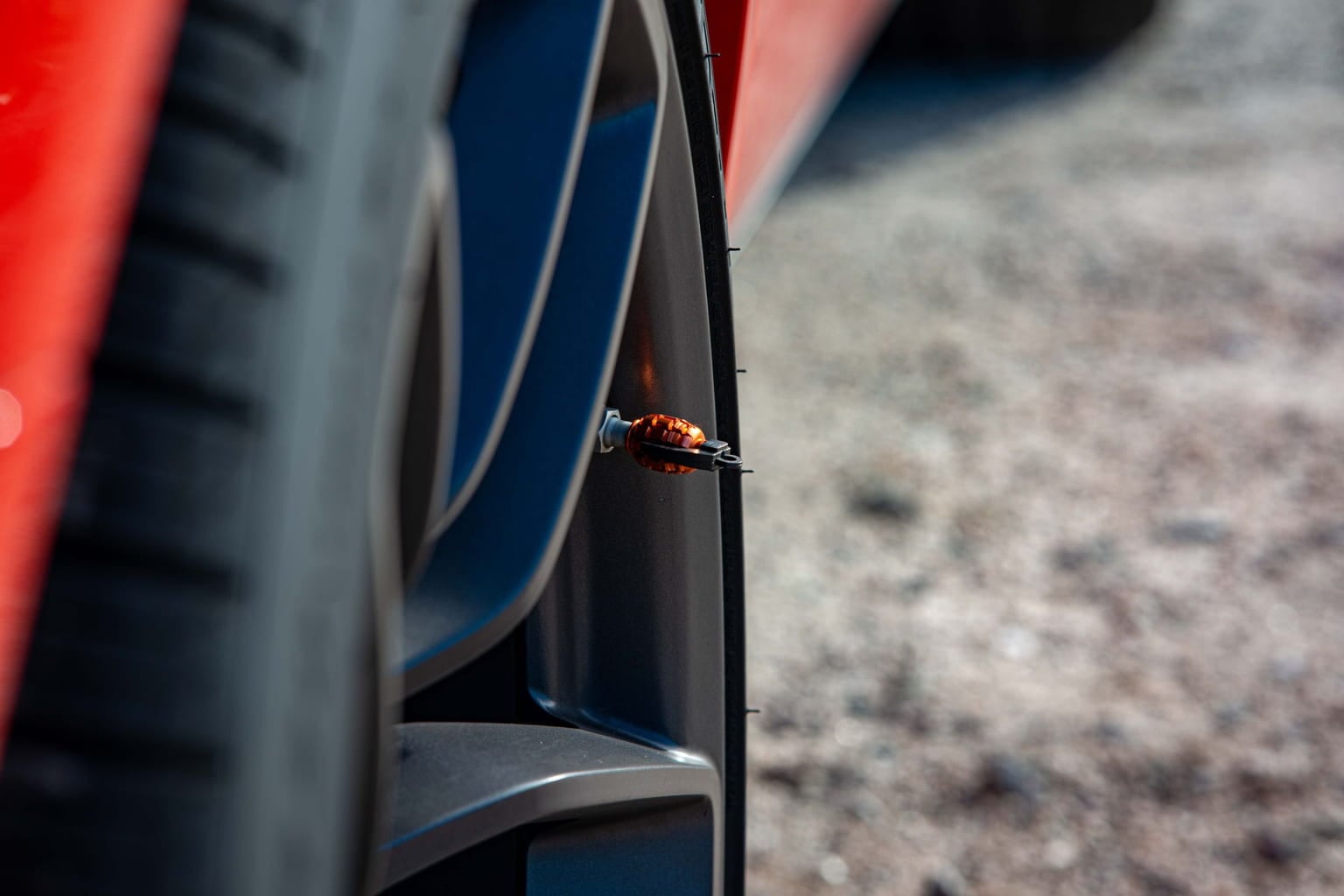
| Tire valve leak | Slow loss, sometimes worse after temperature changes | Soapy water on the valve tip and base of the stem | Tighten or replace valve core; replace stem |
| Bead seal or rim corrosion | Loss around the edge of the wheel, often on older alloy wheels | Soapy water along the rim where the tire meets the wheel | Clean and reseal the bead |
| Cracked or bent wheel | Loss after a pothole or curb strike | Soapy water on the wheel; look for cracks or dents | Wheel repair or replacement |
| Sensor or valve-hardware seal | Loss near the valve after tire service | Soapy water around the sensor and stem base | Replace seals or service kit |
How to Find a Slow Leak Step by Step
You don’t need special tools to find most leaks, just a spray bottle of soapy water and a little patience. If you drive an electric vehicle, the time you spend at EV chargers is a convenient window for a pressure check. Then follow these steps:
-
Check every tire cold with a gauge and note the pressures. Inflate them to the number on the door jamb placard.
-
Mix dish soap with water in a spray bottle until it’s slightly sudsy.
-
Spray the valve first. Cover the tip, the cap area, and the base of the stem. Bubbles that grow mean a leak.
-
Spray the tread slowly, working around the tire. Look for a bubble stream or an embedded nail, screw, or shard.
-
Spray the bead where the tire meets the rim, all the way around the wheel.
-
Check the wheel for cracks, dents, or corrosion near the bead.
-
Mark anything suspicious and, if you can’t find it, ask a shop to submerge the wheel or inspect it on a stand.
Some leaks are too slow to bubble immediately, so give each spot a minute or two before moving on.
Repair Options and Typical Costs
Most slow-leak repairs are inexpensive compared with replacing a tire. The table below shows typical U.S. price ranges. These are estimates only, and costs vary by vehicle, region, and shop.
| Repair | Typical Cost |
|---|---|
| Valve core replacement | $5 to $15 |
| Valve stem replacement | $10 to $30 per wheel |
| Puncture repair (patch-plug) | $15 to $45 |
| Bead cleaning and resealing | $20 to $60 per wheel |
| TPMS service kit or seal replacement | $10 to $40 per wheel |
| Wheel repair (cracks or bends) | $75 to $250 |
| New tire | $100 to $400+ each |
Small savings add up over a year of driving. Memberships like Way+ are built around everyday car costs, including gas, parking, car washes, and maintenance, so they can take a bit of the sting out of routine repairs.
Is It Safe to Drive on a Slow Leak?
For a short, careful drive to a shop, usually yes, provided the tire has enough air and shows no bulges or sidewall damage. The safest approach is to inflate the tire to the recommended pressure, drive directly to a repair facility, and avoid highway speeds if you can. Driving for days or weeks on a tire you keep topping off, and hoping the slow tire leak will sort itself out, is where the real danger sits.
Slow Leaks and Road Trips
A slow leak that barely bothers you around town can become a real problem on a long drive. Highway speeds build heat inside the tire, and a tire that started the trip a few pounds low can be dangerously soft by the time you reach the next rest stop. If you’ve been topping off a tire and haven’t had it checked, get it fixed before you leave, not while you’re packing the car.
It helps to build a short pre-trip routine: check every tire cold, including the spare, look over the tread and sidewalls, and confirm the pressures match the door jamb placard. For more ideas on getting ready to hit the road, Way’s travel tips cover planning and preparation for drivers.
Cold Weather and Seasonal Pressure Changes
Winter can make a slow leak harder to spot. Tire pressure falls roughly 1 PSI for every 10°F drop in temperature, so the first cold snap can leave all four tires a few pounds low without any leak at all. The difference between weather and a leak is the pattern. If all four tires drop by about the same amount overnight and come back up as the day warms, the temperature is the cause. If one tire keeps falling behind, that’s your leak.
The reverse can happen in summer. Heat raises pressure, which can mask a small leak until the tire cools. That’s why cold-tire checks matter, and why you should record your numbers instead of trusting your memory. If you’re not sure what a tire should read, use the placard on the door jamb, not the maximum printed on the sidewall.
How to Prevent a Slow Leak
You can’t stop every nail, but you can make leaks less likely and catch them earlier. Check your pressure once a month, and again before any long trip, with the tires cold. Keep the valve caps on, since they block dirt and moisture from reaching the valve core. Replace the valve stems whenever you buy new tires, because the rubber ages with the tires. And look at the tread each time you check the pressure, so a nail or screw doesn’t ride around unnoticed for weeks.
Pairing the check with a routine you already have makes it stick. If you fill up regularly, take a minute at the pump and look for fuel discounts while you’re there, then check the tires before you drive off. A habit that takes two minutes is far cheaper than a roadside call or a ruined tire.
Final Thoughts
Air that disappears a little at a time is easy to ignore, but a slow tire leak is a problem with a clear path to a fix. Find the source with soapy water, top off the tire safely, and get a proper repair instead of relying on shortcuts. Small habits, like a monthly pressure check and a look at the tread, catch most leaks before they turn into a bigger bill. For more practical advice on keeping your car in good shape, read Way’s latest guides.
Related guides
- Tire Patch vs. Tire Plug: Which Fix Is Better for a Flat Tire?
- TPMS Warning Light: What It Means and What to Do
- What Should Be Your Recommended Tire Pressure? A Driver’s Guide to PSI
Frequently Asked Questions
1. Why does my tire pressure keep dropping even though I can’t find a hole?
Small leaks are often at the valve, the bead, or a hairline crack in the wheel, not in the tread. Use a soapy water test on the valve and around the rim. If you still can’t find it, a shop can submerge the wheel or use other methods to locate it.
2. Can a tire valve leak cause a flat?
Yes, but usually slowly. A loose valve core or a cracked stem can let air escape over days. Replacing the core or the stem is a quick, inexpensive repair. Don’t ignore it, since a leak that worsens can leave you stranded.
3. Can a puncture causing slow leak problems be repaired safely?
Often yes, if the puncture is in the tread area and no larger than about a quarter inch. The proper method uses both a plug and a patch after the tire is removed and inspected. Sidewall or shoulder damage generally means replacement.
4. How much air should a tire lose in a month?
A healthy tire may lose about 1 to 2 PSI per month. Losing more than that, or losing air much faster in one tire than the others, suggests a leak that should be checked.
5. Are tire sealants a good fix?
Sealants are a temporary measure at best. They can mask the problem and make later repairs messier, and some shops need to know a sealant was used. Get the tire inspected and repaired properly.
Get 10% off in the Way App in the Way App!

- Scan and get the Way App Download the Way App
- Log in to your account
- Use code FIRST10 at checkout