Most people check their oil about as often as they clean the inside of the gutters. Which is to say, never, until something goes wrong. That’s a shame, because how to check oil takes five minutes and needs nothing more than a paper towel. Skip it and you’re gambling with the most expensive part of your car. Here’s the whole process, from parking spot to dipstick to what you’re actually looking at when you pull it out.
Quick answer
Park on flat ground, shut the engine off, and give it ten minutes. Pull the dipstick, wipe it clean, push it back all the way, then pull it again. The oil should sit between the two marks. Below the bottom one? Add oil, a little at a time. Above the top? Get the extra drained.
Why Bother Checking at All?
Because engines burn and leak oil, and they don’t tell you. There’s no gentle warning. By the time the dashboard light comes on, you may already be in trouble.
Low engine oil is the sneaky one. A car can lose half a quart between changes without leaving a spot on your driveway, and older engines can lose more. Run low for long enough and the parts that depend on that film of oil start wearing fast. That wear doesn’t reverse. An oil change costs maybe $50. A replacement engine costs thousands. Way’s car costs breakdown shows where those numbers land next to everything else you pay for.
Before You Start
You don’t need much:
-
A clean paper towel or rag
-
A flashlight if it’s dim
-
A funnel, only if you think you’ll need to add oil
-
The right oil, kept in the trunk, if you’ve had trouble before
Also, grab your owner’s manual. Not every car wants the same procedure. Some say check it cold. Others want the engine warm and then a wait. The manual wins every argument.
How to Check Oil, Step by Step
-
Park on level ground. A slope tilts the oil in the pan and throws off the reading. A driveway with a lean won’t work.
-
Turn the engine off and wait. Ten minutes is a decent rule if you’ve just been driving. Some carmakers ask for fifteen. That gives the oil time to run back down into the pan.
-
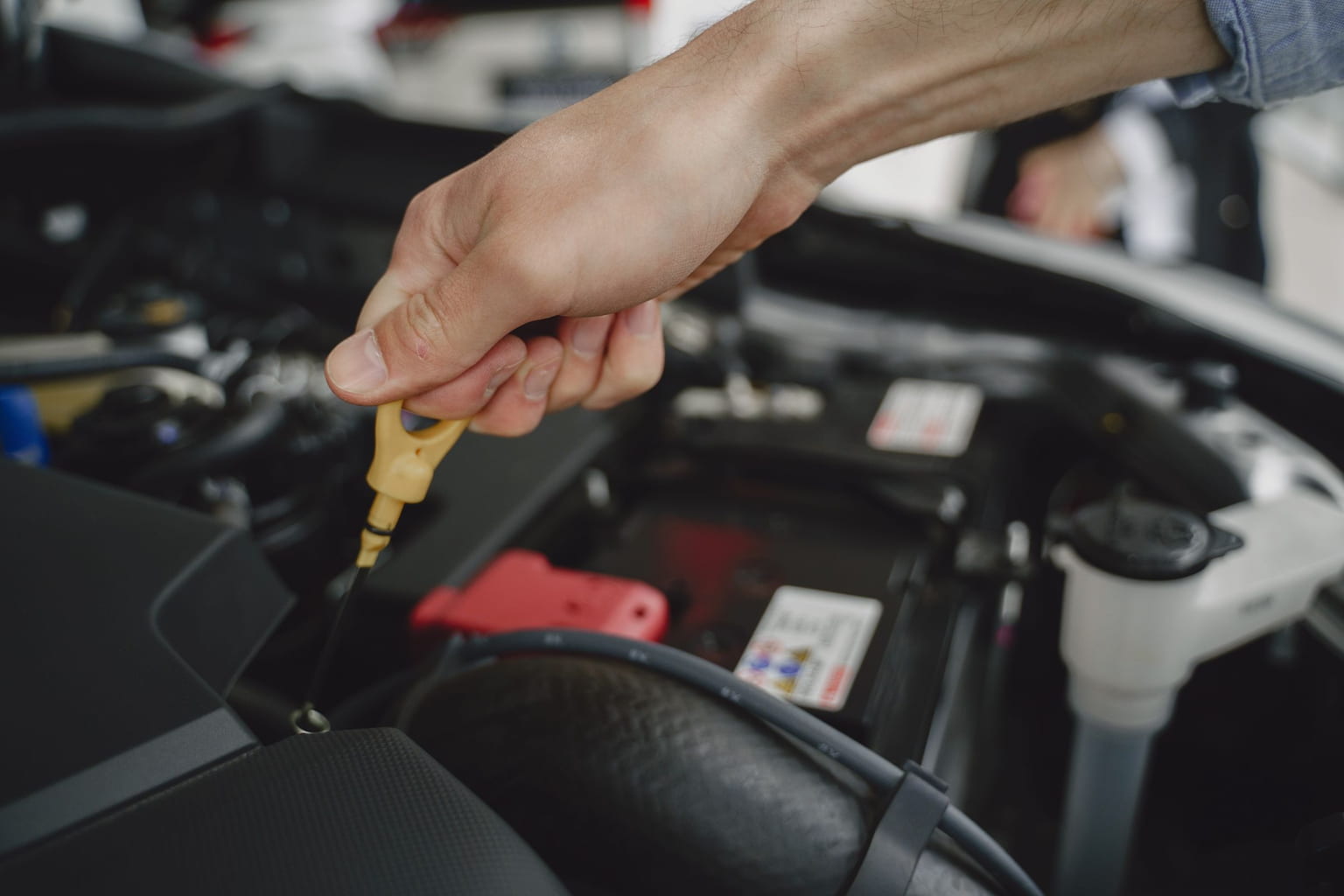
Open the hood and find the dipstick. It usually has a bright handle, yellow or orange, sometimes a ring. If you can’t find it, the manual has a diagram. Stay clear of hot parts.
-
Pull it all the way out and wipe it clean with your rag. The first pull tells you nothing, because oil has been splashing on it.
-
Push it back in, fully. All the way, until it seats. Half-in gives a false reading.
-
Pull it again and read it. Hold it level and look at where the oil stops. Tilt it a bit if you have to.
That’s it. Really. If the oil sits between the two marks, you’re fine. The gas station is a handy place to do this, since you’re already stopped. Use Way’s gas stations finder to grab a spot, pop the hood while you fill up, and you’ve made it part of a routine.
Getting an Accurate Oil Dipstick Reading
The reading is where people go wrong. Not because it’s hard. Because they rush.
The dipstick has two marks near the tip. Sometimes they’re two dots, sometimes two lines, sometimes a cross-hatched patch or a pair of holes. The bottom one means add. The top one means full. Oil somewhere in that band is okay. Keep an eye out for the smear, too. If the oil looks smeared across the stick instead of ending in a clear line, wipe and re-do it, because you probably got splashed.
A few habits help. Check at the same time under the same conditions, so your numbers compare. Same spot, same wait time. And don’t trust a single reading if it looks strange. Do it twice. If you get two different answers, the car may be on a slope, or the stick wasn’t fully seated, or you didn’t wait long enough for the oil to settle.
How Much Oil Should Be in My Car?
Two answers here, and they sound alike but they aren’t.
First, the level: it should sit between the marks, ideally near the top one without going past it. Second, the capacity: the total amount your engine holds. That varies by engine. Most small cars hold around four to five quarts, V6 engines often five to six, and trucks and V8s can hold more. Your owner’s manual lists the exact number, including how much a filter change adds.
The gap between the two dipstick marks is often about a quart, though not always. That’s a useful rule of thumb when you’re topping up, but confirm it in your manual. Don’t guess. If you’re looking for more general upkeep advice, Way’s maintenance guides cover the rest of the routine.
Reading the Color and Condition
While the oil’s on the stick, look at it. It tells you plenty.
| What you see | What it likely means | What to do |
|---|---|---|
| Amber or light brown | Fresh or fairly new oil | Nothing, you’re fine |
| Dark brown or black | Oil has been working hard | Fine if the mileage is right; change if overdue |
| Thick, sludgy, gritty | Oil is overdue or breaking down | Get it changed soon |
| Milky, like chocolate milk | Coolant may be mixing with oil | Stop driving and get it inspected |
| Smells like gasoline | Fuel may be diluting the oil | Have a shop check it |
| Metal flecks | Internal wear | Get it inspected right away |
Dark oil isn’t automatically bad. Oil does its job by picking up dirt, so it darkens. Color alone doesn’t tell you when to change it. Level and mileage matter more. The milky look, though, deserves real concern, since it can point to a head gasket problem.
What to Do About Low Engine Oil
If the level sits at or below the bottom mark, add oil. Simple. But do it right.
Use the grade your manual specifies. The viscosity number, like 5W-30, is usually printed on the oil fill cap too. According to FuelEconomy.gov, the joint Department of Energy and EPA site, using the wrong grade of motor oil can lower gas mileage by 1% to 2%. So this isn’t only about protection.
Then go slowly. Remove the fill cap, use a funnel, and pour in about a quarter to half a quart. Wait a couple of minutes for it to drain down, then check the dipstick again. Repeat until you reach the upper part of the band. Overfilling causes its own trouble, since excess oil can foam and hurt lubrication. So how much oil should be in my car after topping up? Near the top mark. Not past it.
Add a quart between changes now and then? Probably normal. Adding one every few hundred miles? That’s a leak or heavy burning, and it needs a shop.
| Job | Typical cost |
|---|---|
| Quart of oil | $6 to $15 |
| Oil and filter change | $40 to $130 |
| Leak diagnosis | $50 to $150 |
| Gasket or seal repair | $150 to $600+ |
These are estimates, and they vary. If you’re planning car expenses, Way’s affordability calculator can help you see how maintenance fits your budget.
Cars Without a Dipstick
Some newer cars don’t have one. They use an electronic sensor and show the level on the dashboard or in a menu. You might have to start the engine, wait, then look at the display, or check with the engine off depending on the car.
The catch is accuracy. Electronic readings can lag, and a car parked on a slope may report something off. Read your manual for the exact steps, and don’t panic if the display asks you to wait. And if the screen says the oil is low, treat it as real. An oil dipstick reading you can hold in your hand is easier to trust, but the sensor is the tool you’ve got on these cars.
Before a Road Trip
Long drives are hard on engines. Sustained speed and heat use up oil. NHTSA’s summer driving tips say drivers should check their oil level periodically and, if an oil change is almost due, do it before traveling. It also advises checking other fluid levels, like brake fluid and washer fluid, and taking the car in if you see signs of leaking.
So make it a habit. Check the oil the day before you leave, not the morning of. That gives you time to fix a low reading. For more on getting ready, Way’s travel tips cover the rest of the trip prep.
The Takeaway
Now you know how to check oil, and it really is a five-minute job. Park level, wait, wipe, reinsert, read. Do it monthly and before trips, and you’ll catch problems while they’re small. If the level’s low and you can’t figure out why, or the oil looks strange, don’t guess. You can compare and book auto repair through Way.com and let a shop take a look.
Related guides
- Oil Light on the Dashboard: What It Means and What to Do
- Why Is My Car Losing Oil but Not Leaking? Common Causes
- Types of Car Maintenance Services: What Your Vehicle Needs
Frequently Asked Questions
1. Can I check the oil when the engine is warm?
Yes, if you wait. Most manuals say to shut the engine off and wait ten to fifteen minutes so the oil drains back into the pan. Some prefer a cold engine. Check your owner’s manual.
2. How much oil should be in my car?
The level should sit between the two dipstick marks, ideally near the top. The total capacity depends on your engine, and it’s listed in your owner’s manual. Don’t fill past the top mark.
3. Why is my oil dipstick reading different each time?
You may be on a slope, or the stick wasn’t pushed in fully, or you didn’t wait long enough. Wipe, reinsert all the way, and read again on level ground.
4. How often should I check my oil?
Once a month is a good baseline, and before long trips. Some manuals suggest checking at every fill-up, particularly for older engines or ones that burn oil.
5. What causes low engine oil with no leaks?
Engines burn a small amount as part of normal operation, and older or high-mileage engines burn more. Heavy loads, towing, and aggressive driving increase it. If it keeps dropping, get it checked.
Get 10% off in the Way App in the Way App!

- Scan and get the Way App Download the Way App
- Log in to your account
- Use code FIRST10 at checkout