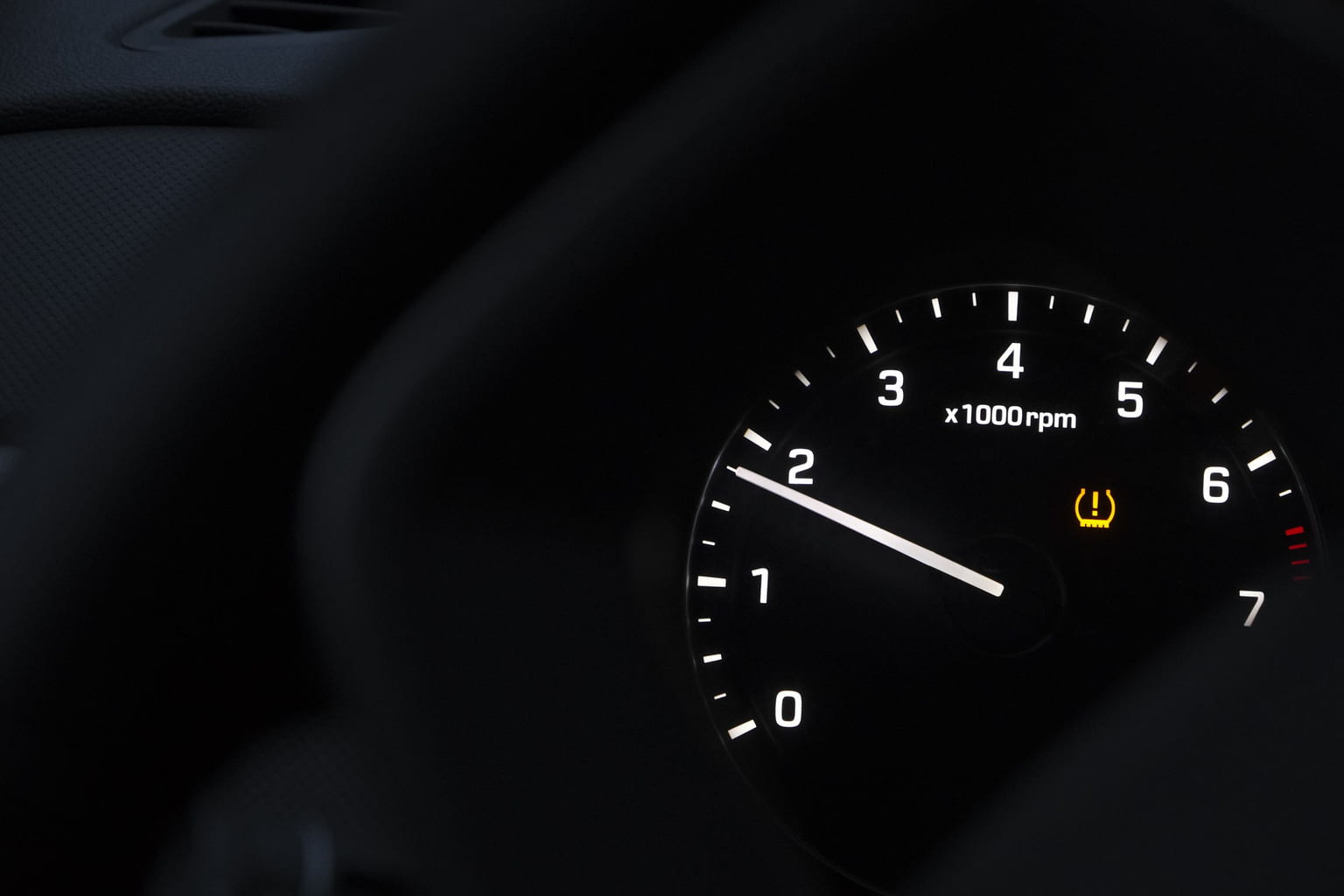
That amber, horseshoe-shaped symbol with an exclamation point has a way of showing up at the worst possible moment. If a TPMS warning light just appeared on your dashboard, don’t panic. In most cases the fix takes about ten minutes and a basic tire gauge. Still, the alert exists for a reason: underinflated tires reduce braking control, wear out faster, and raise the risk of a blowout. This guide explains what the symbol means, why it turns on, and how to respond safely.
Quick answer
When the TPMS symbol on your dashboard lights up, one or more tires are usually at least 25% below the recommended pressure. If it flashes for about a minute and then stays solid, the system itself has a fault. Check each tire with a gauge, inflate to the door-jamb PSI, and see a technician if it stays on.
Why Is Your TPMS Warning Light On?
Several things can trigger the alert:
-
Normal air loss. Tires can lose about 1 to 2 PSI per month even when nothing is wrong.
-
Temperature drops. Tire pressure falls roughly 1 PSI for every 10°F drop in temperature.
-
Punctures and slow leaks. A nail, a damaged valve stem, or a poor bead seal can bleed air over days or weeks.
-
A neglected spare. Some vehicles monitor the spare tire too.
-
Skipped relearn steps. After a tire rotation or replacement, some vehicles need the system to relearn each sensor’s position.
-
TPMS sensor problems. A failing sensor can trigger the alert even when your pressure is perfect. More on that below.
Knowing the likely cause helps you decide whether this is a five-minute fix or a shop visit. For more guidance on keeping your car in good shape, browse Way’s Repair & Maintenance guides.
What Does the TPMS Symbol on Your Dashboard Mean?
TPMS stands for tire pressure monitoring system. Since the 2008 model year, every new passenger vehicle sold in the U.S. has come with one, under Federal Motor Vehicle Safety Standard No. 138. The standard requires a dashboard alert when a tire’s pressure falls 25% or more below the manufacturer’s recommended cold pressure.
According to the National Highway Traffic Safety Administration (NHTSA), these systems work in one of two ways. Some use a pressure sensor inside each tire. Others use wheel speed data and other vehicle sensors to estimate pressure. Either way, the symbol appears when a tire is significantly underinflated. NHTSA also stresses that TPMS is not a substitute for regular tire maintenance.
Think of it as a smoke detector, not a fire prevention plan. It tells you something is wrong after the problem has already become serious. If you’d rather have a professional take a look, you can compare and book auto repair through Way.com.
Solid vs. Flashing: Two Different Warnings
The symbol can behave in two ways, and each one means something different.
Solid light. A TPMS light on and steady means at least one tire is low on air. This is the most common scenario, and it’s usually fixable at home.
Flashing, then solid. If the symbol blinks for roughly a minute after you start the car and then stays lit, the system has detected a malfunction. Your tires may be fine, but the monitor can’t be trusted until it’s repaired. Common triggers include a dead sensor battery or a communication fault.
Some vehicles pair the symbol with a message like “Check Tire Pressure” or show the pressure for each wheel on the instrument cluster. If yours does, use that display to find the low tire quickly. It’s also worth knowing that the tire pressure light can turn on during a cold snap and go out after a few minutes of driving. Don’t assume that’s the cause, though. Verify with a gauge.
What to Do When the Light Comes On
Follow these steps in order:
-
Ease off. Slow down smoothly and avoid hard braking or sharp turns.
-
Pull over safely. Find a flat, safe spot and look at all four tires. If one is visibly flat, has a bulging sidewall, or is hissing, don’t keep driving on it.
-
Switch to the spare or call for help if a tire is clearly damaged.
-
Check the pressure in every tire with a gauge (steps in the next section).
-
Inflate to the recommended PSI.
-
Drive for 10 to 15 minutes. On many vehicles the symbol turns off on its own once the system reads normal pressure.
If the symbol stays on after that, or returns within a few days, you likely have a slow leak or a sensor issue.
How to Check and Inflate Your Tires Correctly
You need a tire pressure gauge and access to an air pump. Many gas stations offer air, though availability and fees vary. You can find one with Way’s gas stations tool.
-
Check tires cold. Measure before driving, or after the car has sat for at least three hours.
-
Find the right number. Look for the placard on the driver’s door jamb or in your owner’s manual. Don’t use the maximum pressure printed on the tire sidewall.
-
Remove the valve cap and press the gauge firmly onto the stem.
-
Compare the reading to the recommended PSI.
-
Add air in short bursts, rechecking as you go. If you overshoot, press the valve pin to release some.
-
Check all four tires and the spare, then replace the valve caps.
Direct vs. Indirect TPMS: How They Differ
Knowing which system your car has explains why certain repairs cost more than others.
| Feature | Direct TPMS | Indirect TPMS |
|---|---|---|
| How it measures | Pressure sensor inside each wheel | Compares wheel speeds using the ABS sensors |
| Reports actual PSI | Yes, often per tire | No, only detects relative differences |
| Extra hardware | Battery-powered sensor in every wheel | None beyond existing ABS sensors |
| Accuracy | High | Lower, and slower to detect gradual loss |
| Common failure | Dead sensor battery, corrosion, damage | Needs a reset after inflating or rotating tires |
| Typical repair | Sensor replacement and programming | Recalibration or reset |
Most modern vehicles use direct systems. Indirect systems are simpler but must be reset whenever you adjust pressure or rotate tires, or they may keep reporting the old baseline.
Common TPMS Sensor Problems (and How to Spot Them)
Direct systems rely on small battery-powered sensors that live inside your wheels. Those batteries can’t be replaced separately, and they commonly last around five to ten years. When they fade, you may see these signs:
-
The symbol flashes for about a minute at startup, then stays solid.
-
The alert appears even though every tire measures correctly.
-
One wheel position shows no reading on the dashboard display.
-
The problem started right after new tires, new wheels, or a tire rotation.
Other TPMS sensor problems include corrosion around the valve stem, damage during tire mounting, and sensors that were never registered to the vehicle after installation. Aftermarket wheels sometimes arrive without compatible sensors at all.
A failing sensor is a maintenance cost worth planning for. If you want a broader view of what keeping a car on the road really costs, see Way’s guide to the average cost of owning a car.
How to Reset the Light and What Repairs Cost
Resetting only works once the underlying problem is fixed. Depending on your vehicle, you may need to:
-
Inflate and drive. Many systems reset automatically after a short drive.
-
Use the reset button. Some cars have one under the steering column or in the glovebox. Check your owner’s manual.
-
Cycle the ignition as described in the manual.
-
Have a technician run a relearn with a scan tool, which is common after sensor replacement.
Never reset the system just to make the symbol disappear while a tire is still low. The table below shows typical U.S. price ranges. These are estimates, and prices vary by vehicle, region, and shop.
| Service | Typical Cost |
|---|---|
| Adding air | Free to about $2 |
| Puncture repair (patch or plug) | $15 to $45 |
| TPMS relearn or reset service | $0 to $100 |
| Single sensor replacement (installed) | $60 to $250 |
| Full set of four sensors (installed) | $240 to $1,000 |
When to Call a Professional
You can handle most low-pressure alerts yourself. Get help if:
-
The symbol returns within days of inflating the tires, which points to a slow leak.
-
The symbol flashes and then stays on, which points to a system fault.
-
You see a sidewall bulge, deep cut, or embedded object.
-
A tire won’t hold air or you can’t inflate it safely.
-
You don’t have a spare or the tools to change a flat.
For complex diagnostics, look for an ASE-certified technician. ASE is the independent nonprofit that tests and certifies automotive professionals in the U.S. If you’re stranded, Way’s roadside assistance can help you get moving again.
Cold Weather and Your Tires
Winter is peak season for this alert. A 30°F overnight drop can lower pressure by about 3 PSI, which is enough to push an already borderline tire past the threshold. That’s why the tire pressure light often appears on the first cold morning of the season.
If it comes on and then goes out after driving, the tire warmed up and pressure rose slightly. That doesn’t mean everything is fine. The tire is still underinflated when cold. Inflate to the door-jamb number, and recheck every couple of weeks while temperatures swing.
Habits That Keep the Light Off
A little routine prevents most alerts:
-
Check pressure monthly and before long trips, with the tires cold.
-
Don’t forget the spare, if your vehicle monitors it.
-
Follow your manual’s rotation schedule. Ask the shop to relearn the sensors afterward if your car requires it.
-
Ask for new valve stems or service kits whenever you buy tires.
-
Pick a shop that handles TPMS so sensors aren’t damaged during mounting.
An easy trick is to pair the tire check with something you already do. Grab the gauge next time you book a car wash near you, and you’ll rarely be surprised by a dashboard alert again.
Final Thoughts
Seeing a TPMS light on isn’t an emergency, but it’s a signal worth acting on the same day. Check your pressure, inflate to the door-jamb spec, and pay attention to whether the symbol is solid or flashing. If it keeps coming back, get the tires and sensors inspected. A quick fix now beats a roadside breakdown later, and the next time your TPMS warning light appears, you’ll know exactly what to do. For more practical car care advice, explore the Way Journal.
Related guides
- What Should Be Your Recommended Tire Pressure? A Driver’s Guide to PSI
- Slow Tire Leak: Common Causes and How to Find the Problem
- Tire Patch vs. Tire Plug: Which Fix Is Better for a Flat Tire?
Frequently Asked Questions
1. Can I drive with the TPMS light on?
For a short distance, usually yes, but only after you’ve confirmed the tires aren’t flat or damaged. Drive slowly to the nearest air pump and inflate to the recommended PSI. Driving for long on a low tire increases the chance of a blowout and damages the tire beyond repair.
2. Why is the tire pressure light on when my tires look fine?
Tires can be 25% underinflated without looking noticeably flat, especially radials. Cold weather can also lower pressure overnight. If a gauge shows normal readings in all tires, a faulty sensor or system fault is the likely cause.
3. Why is the TPMS light flashing?
A light that blinks for about a minute at startup and then stays solid signals a system malfunction, not low pressure. Common causes include a dead sensor battery or a missing sensor. A technician can diagnose it with a scan tool.
4. How long does it take for the light to go off after I add air?
On many vehicles it turns off within a few minutes of driving once pressures are correct. Some cars need a reset button press or a relearn procedure. Check your owner’s manual for the exact steps.
5. How much does it cost to fix TPMS sensor problems?
Expect roughly $60 to $250 per sensor, installed, depending on the vehicle and shop. A relearn or reset alone often costs much less. Ask for a written quote before approving work.
Get 10% off in the Way App in the Way App!

- Scan and get the Way App Download the Way App
- Log in to your account
- Use code FIRST10 at checkout